Gyeongdong Market in Seoul is where Koreans buy the dried roots, bark, berries and ginseng that go into herbal tonics. Many of Seoul’s grandparents also still do their weekly food shop here. The market is in Dongdaemun-gu, at 3 Gosanja-ro 36-gil, close to Cheongnyangni Station, and it has been trading officially since June 1960.
Gyeongdong Market’s opening hours vary by stall. The Korea Tourism Organization says each store sets its own hours and days off, and Google Maps lists 09:00–18:00 every day. Mid-morning to early afternoon is the safest window. Entry is free and you don’t need to book.
Is it worth a morning of a short trip? If you like markets, yes. You walk past sack after sack of jujubes, roots and dried mushrooms, ginseng in every size, fish on ice and fruit piled into pyramids. Hardly anyone else there is a tourist. On Google Maps it has a 4.1 from 11,071 reviews. That’s a solid score for a working market that makes no effort to look nice for visitors.
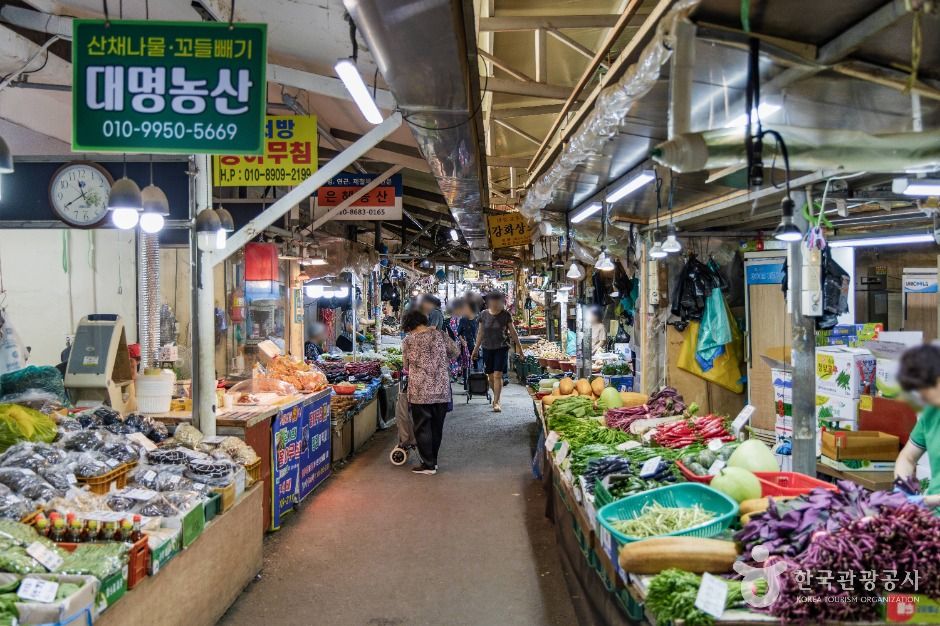
Most of the practical detail below comes from the Korea Tourism Organization’s (KTO) listings: hours, closing days, parking, toilets, a contact number, and where to find the accessible toilet and the nursing room. That last part is hard to find in English.
🌿 What Gyeongdong Market Seoul actually is
After the Korean War, as life in Seoul started to recover, traders began gathering on open ground near Cheongnyangni Station. Gyeongdong Market grew out of that and opened officially in June 1960. Today it’s a big traditional market built around two things: food and medicinal herbs.
Visitors keep calling it the biggest herbal medicine market in the country, and once you’re inside that’s easy to believe. If someone’s mother wants a particular root for a winter tonic, people in Seoul send her here.
Look at who is shopping. Most customers are older: couples pulling wheeled carts, and women checking ginseng roots one by one. That’s the best reason to come. You see how Seoul actually shops, at prices reviewers keep saying are clearly lower than at supermarkets.
🧺 What you’ll find inside
KTO’s official list of what Gyeongdong Market sells is short: oriental medicine ingredients, dried seafood, vegetables, “etc.” Here’s what that looks like in practice.
Herbs, roots and tea ingredients
Herbs are what made the market famous. Expect open sacks and trays of dried things you won’t recognise, sold by weight, plus loose medicinal teas. You smell the stalls before you see them: earthy, a little sweet, slightly bitter.
You don’t need to know what any of it is to enjoy walking through. If you want to buy something, the buying section further down has a few Korean words that make it much easier. Everything is weighed out to order, so you can ask for a very small amount and keep the cost low if you’re only curious.
Ginseng, fresh and dried
Fresh ginseng is pale and soft-looking, with the fine root hairs still on. Dried ginseng is darker and harder. You’ll find both.
Fresh roots are fun to look at and harder to take home. Dried ones pack flat and keep. If you have more sightseeing planned that day, buy dried. Fresh roots need to stay cool and won’t do well after hours in a warm bag.
Produce, fish, meat and dried seafood
The rest of Gyeongdong Market is an ordinary Korean food market, only larger: seasonal fruit, vegetables, fresh fish, meat counters and long stretches of dried anchovies, squid and seaweed. Several reviewers say they were surprised how clean it is. If you’re staying somewhere with a kitchen, this is where to buy fruit for the week.
Buy fruit here even if you buy nothing else. It’s the easiest purchase in the market, and you can eat it on the train.
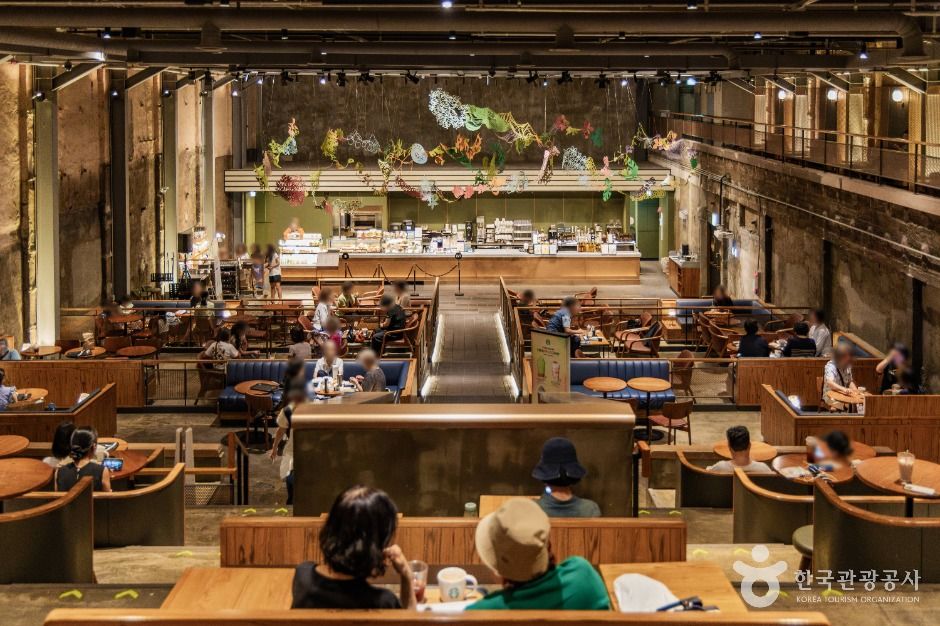
🎬 The old Gyeongdong Theater upstairs
Younger people come to Gyeongdong Market for one particular spot. The Gyeongdong Theater, an old cinema inside the market, sat abandoned for years. KTO says it has since been renovated into a cultural space, and it draws a much younger crowd than the herb aisles do.
Most visitors know it as the Starbucks upstairs. It’s inside the old cinema and decorated in a 1960s style. Plenty of reviewers say it was the main reason they came, and the market turned out to be the bonus.
Do it the other way round: market first, coffee afterwards. After an hour on your feet you’ll want to sit down, and you’ll be carrying bags by then.
🕘 Hours, closing days and phone numbers
Gyeongdong Market has no single opening time. KTO says hours and closing days vary by store, while Google Maps lists 09:00–18:00 every day with no closing day. The two sources disagree a little, and the difference matters.
| Item | Korea Tourism Organization (official) | Google Maps |
|---|---|---|
| Opening hours | Varies by store | 09:00–18:00, every day |
| Closing days | Varies by store | None listed |
| Phone | +82-2-969-7218 | 02-967-8721 |
| Parking | Not available | Not listed |
| Toilets | Available | Not listed |
| Booking | Not needed. You just walk in | |
Go with the official version. Gyeongdong is a collection of separate businesses, and each owner decides when to open and which day to take off. Treat Google’s 09:00–18:00 as the window when most stalls are probably open. Any single stall may keep different hours, so check before you go if one shop is the reason for your trip.
In practice, come between mid-morning and early afternoon. Show up at 17:30 and some stalls will already be packing up. If you need a specific shop, ask your hotel front desk to call ahead, or look up that shop’s own Naver Map listing for its hours. A quick call in Korean can save you a wasted trip, because the owner can tell you straight away whether they’re open that day.
KTO also notes that foot traffic is heavy on weekdays as well as weekends. Switching from Saturday to Tuesday still means sharing the aisles with plenty of shopping carts, just a slightly different set of them.
♿ Step-free access, toilets and the nursing room
KTO’s barrier-free travel listing covers Gyeongdong Market. It’s written for wheelchair users, but parents with strollers will get the same answers from it.
- Main entrance: no threshold or step. The route up to the entrance is step-free too, so a wheelchair or stroller can roll straight in.
- Accessible parking: the barrier-free listing says there are accessible parking spaces. To get from the car park into the market in a wheelchair, use the car park’s ramp.
- Accessible toilet: in the NH Nonghyup building (농협건물). Show that Korean to any stallholder and they can point you to it. KTO’s general listing also confirms regular toilets in the market.
- Nursing room: inside Shinsegae E-mart, at its “Hope Playground” (신세계이마트 희망놀이터). Go there for feeding or a nappy change.
That’s all the listing covers. It describes entrances and facilities and says nothing about how wide the aisles are. The herb aisles fill with shoppers and their carts by late morning, so bring a stroller early in the day. Carts move slowly and stop often while their owners compare prices, so leave extra time and expect to wait for a gap now and then.
🚇 Getting there
The easiest way to reach Gyeongdong Market is the subway. The closest station is Jegi-dong on Line 1, and the market starts right by it. Cheongnyangni Station, where the market first grew up, is a short walk further on and is served by more lines, including some intercity trains.
Arriving at Cheongnyangni with luggage? A large suitcase will be awkward to steer through the busier aisles.
Don’t drive. KTO’s general listing says parking is not available. The accessible spaces in the barrier-free listing are for disabled-badge holders. Even if you found a space, you’d be crawling through narrow market streets full of delivery scooters to reach it.
For navigation, search “경동시장” in Naver Map or Kakao Map. The English name works too, but with the Korean name the pin lands on the market itself, so you won’t end up at some shop that happens to share the name.
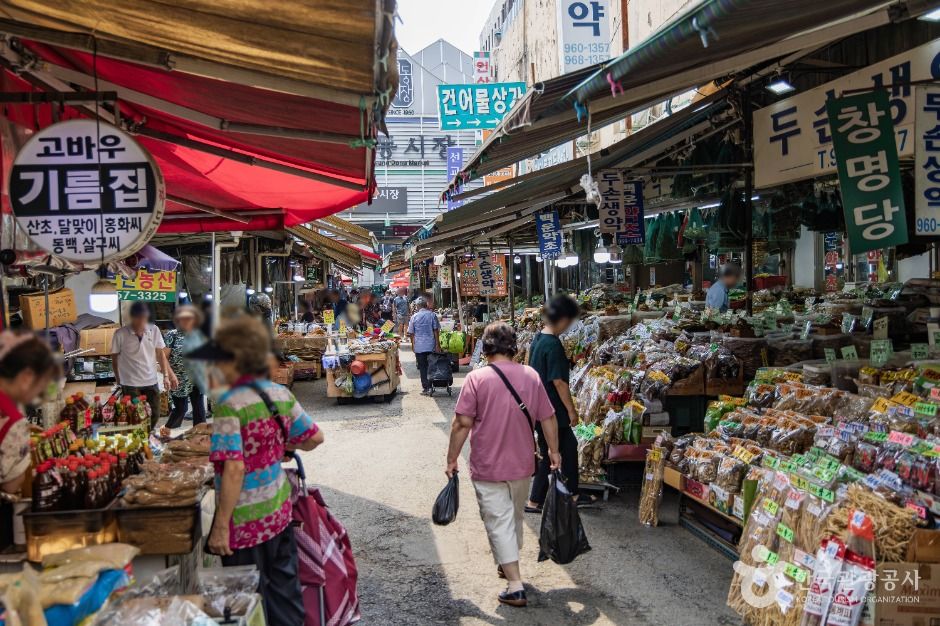
🛍️ Buying herbs when you can’t read the signs
Most stallholders at Gyeongdong Market are older, and they serve Korean regulars. Don’t count on English. Pointing works, smiling works, and a phone screen with Korean words on it works best of all.
Save these before you go:
| English | Korean | What it is |
|---|---|---|
| Ginseng | 인삼 | The basic root, fresh or dried |
| Red ginseng | 홍삼 | Ginseng that has been steamed and dried |
| Jujube | 대추 | Dried red dates, used in tea and soups |
| Omija | 오미자 | “Five-flavour” berry, made into a sweet-sour tea |
- Buy a small amount first. Herbs are sold by weight, and a little goes a long way in tea.
- Ask for a price before they weigh it. Typing the amount into your phone calculator and showing it back is normal here.
- Check your home country’s rules before packing. Fresh roots with soil on them are the item most likely to be stopped at customs. Dried, sealed goods are easier to declare.
- If it’s for someone on medication, have them ask their doctor before they start boiling roots. Some herbs interact with prescription drugs.
When you’re handed a bag, check that it’s tied or sealed tightly. Dried herbs crumble easily, and a loose bag can leave dust over the rest of your shopping by the time you’re back on the train.
You don’t have to buy anything. Walking slowly through the herb aisles, smelling everything, and leaving with a bag of fruit counts as a good visit.
🗓️ Fitting it into a Seoul day
Give Gyeongdong Market about two hours. Spend one on a slow loop of the market, and the other on coffee in the old theater and picking up whatever you decided to buy on the way round. Start by 10:00 so you’re done well before stalls begin closing in the late afternoon.
Jegi-dong and Jongno 5-ga are both on Line 1, so a second market is easy to add. Gwangjang Market works well as the second half. You come to Gyeongdong for raw ingredients and go to Gwangjang to eat at the counters. Shop here in the morning, then go there for lunch.
If you’d rather spend the afternoon on old houses, head west. Bukchon Hanok Village shuts its streets to visitors at five, so leave Gyeongdong by early afternoon. Gyeongbokgung Palace is right next to Bukchon if you want both.
- 10:00 Arrive at Jegi-dong. Walk the herb and ginseng aisles first, before the crowds build.
- 11:00 Produce, fish and dried seafood. Buy fruit.
- 11:45 Coffee in the old Gyeongdong Theater.
- 12:30 Line 1 to Jongno 5-ga for lunch at Gwangjang, or on toward Bukchon.
✅ Checked against official sources (October 2026)
These Gyeongdong Market details were checked against the Korea Tourism Organization’s TourAPI data, including its barrier-free travel listing:
- Address: 3 Gosanja-ro 36-gil, Dongdaemun-gu, Seoul
- History: formed near Cheongnyangni Station after the Korean War, official opening June 1960
- Opening hours and closing days: vary by store
- Contact: +82-2-969-7218
- Parking: not available (general listing)
- Toilets: available
- Goods sold: oriental medicine ingredients, dried seafood, vegetables and more
- The renovated Gyeongdong Theater as a cultural space; heavy foot traffic on weekdays and weekends
- Barrier-free: accessible parking, step-free route and main entrance, car park ramp into the market, accessible toilet in the NH Nonghyup building, nursing room at the Shinsegae E-mart Hope Playground
The KTO data lists no official website for the market. The 09:00–18:00 hours and the 02-967-8721 number appear only on Google Maps; KTO’s listing doesn’t include them.
🔗 More for the same trip
- Gwangjang Market: Shop Before Six, Eat Until Eleven. The lunch stop in the plan above, also on Line 1.
- Ikseon-dong: Get There Before the Alleys Fill Up. Old hanok alleys, if you want a shorter afternoon than Bukchon.
- Deoksugung: The Seoul Palace That Stays Open Until Nine. A palace you can still visit in the evening after a full day.
📍 On Naver Map: Korea’s most-used map app gives better walking and transit directions here than Google Maps. Search 「경동시장」. Address to show a taxi driver: 서울특별시 동대문구 고산자로36길 3 (checked October 2026).
❓ Short answers
What are Gyeongdong Market’s opening hours?
Gyeongdong Market’s hours vary by store, according to KTO. Google Maps lists 09:00–18:00 every day, which is a fair guide to when most stalls are open. By 17:30 some stalls are already packing up, so aim for mid-morning to early afternoon. If you need one particular shop, have your hotel call ahead or check that shop’s Naver Map listing.
Does Gyeongdong Market close on a particular day?
No market-wide closing day is listed. KTO says days off vary by store, and Google Maps shows the market as open every day. Individual stalls choose their own day off, so a single shop you want may be shut even when the rest of the market is busy.
Is Gyeongdong Market free to enter?
Yes. Gyeongdong Market is a public market with no ticket and no booking. You only pay for what you buy.
Which subway station is closest?
Jegi-dong on Line 1, and the market starts right by the station. Cheongnyangni is a short walk away and has more lines.
Is there parking?
Not for general visitors. KTO’s barrier-free listing mentions accessible spaces, with a ramp from the car park into the market.
Are there toilets?
Yes. KTO lists toilets at the market, and the accessible toilet is in the NH Nonghyup building.
Can I bring a wheelchair or stroller?
Yes. The route to the main entrance and the entrance itself are step-free. The nursing room is at the E-mart Hope Playground. Come early, before the aisles fill with carts.
Is the Starbucks really inside a cinema?
Yes. It’s upstairs in the old Gyeongdong Theater, which sat abandoned before it was renovated and now has a 1960s look.
📝 Summary
- Seoul’s big herbal medicine and food market, near Cheongnyangni, open officially since June 1960.
- Opening hours: KTO says hours and days off vary by store. Google lists 09:00–18:00 daily. Go mid-morning to early afternoon. Busy on weekdays too.
- Rated 4.1 from 11,071 Google reviews. Few tourists, mostly older local shoppers.
- Phones: +82-2-969-7218 (KTO), 02-967-8721 (Google). Free entry, no booking needed.
- No general parking. Take Line 1 to Jegi-dong.
- Step-free main entrance, toilets on site, accessible toilet in the NH Nonghyup building, nursing room at the E-mart Hope Playground.
- Finish with coffee in the 1960s-style Starbucks in the old Gyeongdong Theater, then take Line 1 to Gwangjang Market for lunch.