Gyeongbokgung Palace was the main royal palace of the Joseon dynasty. It was built in 1395 and is still the largest of Seoul’s five palaces. If your trip only has room for one palace, make it this one. It’s at 161 Sajik-ro in Jongno-gu, in the middle of the city, with a mountain behind it.
Before you plan the day: it closes every Tuesday, and its closing time changes with the season. Google Maps shows 18:00 for every open day, but the official schedule only agrees for five months of the year. Anyone wearing hanbok gets in free, which is why you see so many rented hanbok in the courtyards.
It has 4.6 stars from 46,920 Google reviews. Read enough of them and the same comment keeps coming up: it’s bigger than people expected. Leave more time than you think you need.
🏯 Why Gyeongbokgung Palace is worth your morning
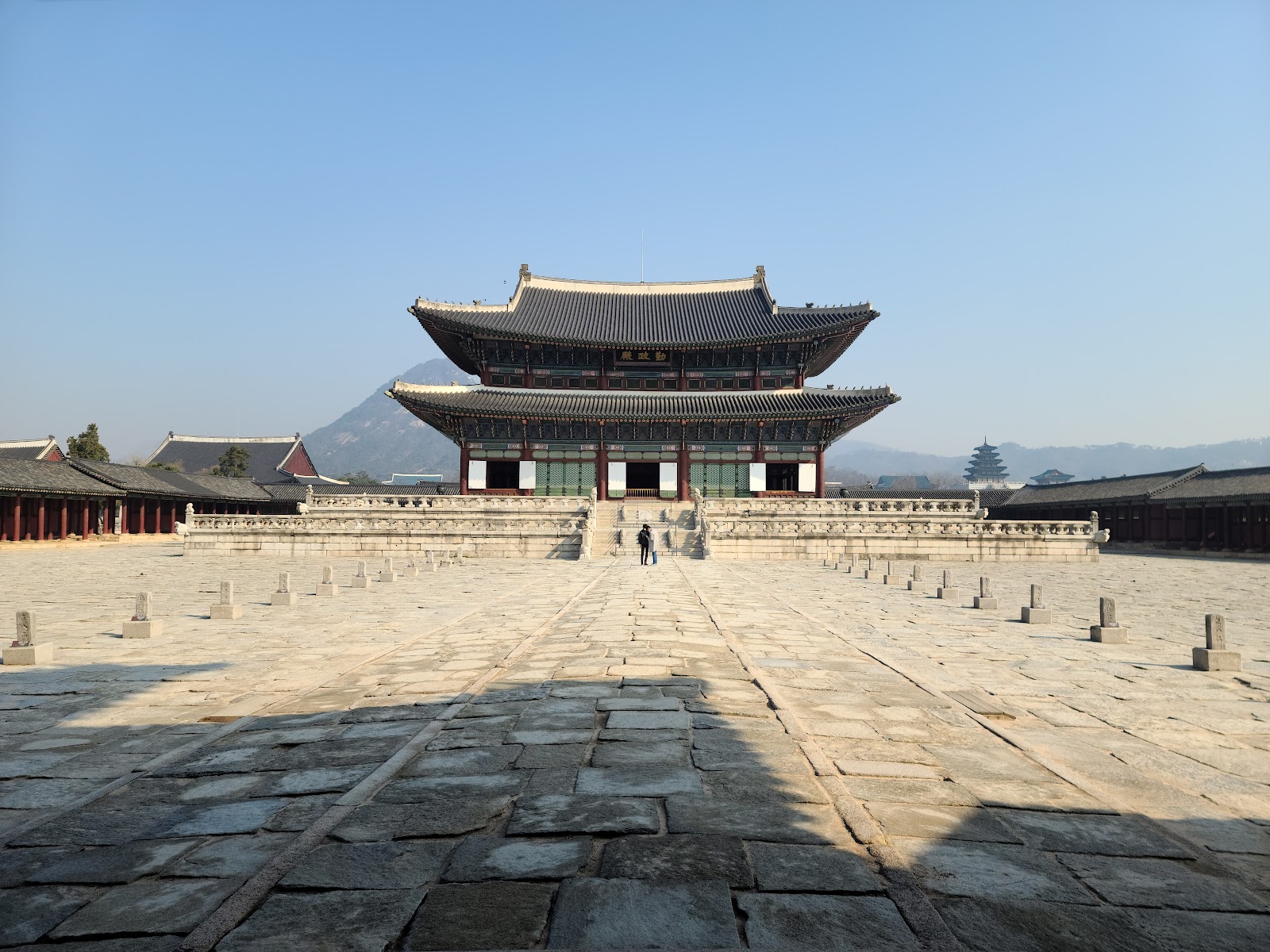
You feel the size as soon as you pass Gwanghwamun, the main gate. You cross a wide courtyard, go through a second gate, cross another courtyard and go through a third before you reach the throne hall. Everything sits on one straight line pointing at the mountain, so you always know which way is forward.
If you’ve been to the Forbidden City in Beijing, this will feel smaller. One reviewer said the same about China’s palaces, and that’s fair. What Gyeongbokgung has is the mountain. It sits right behind the throne hall and gets into almost every photo you take facing north.
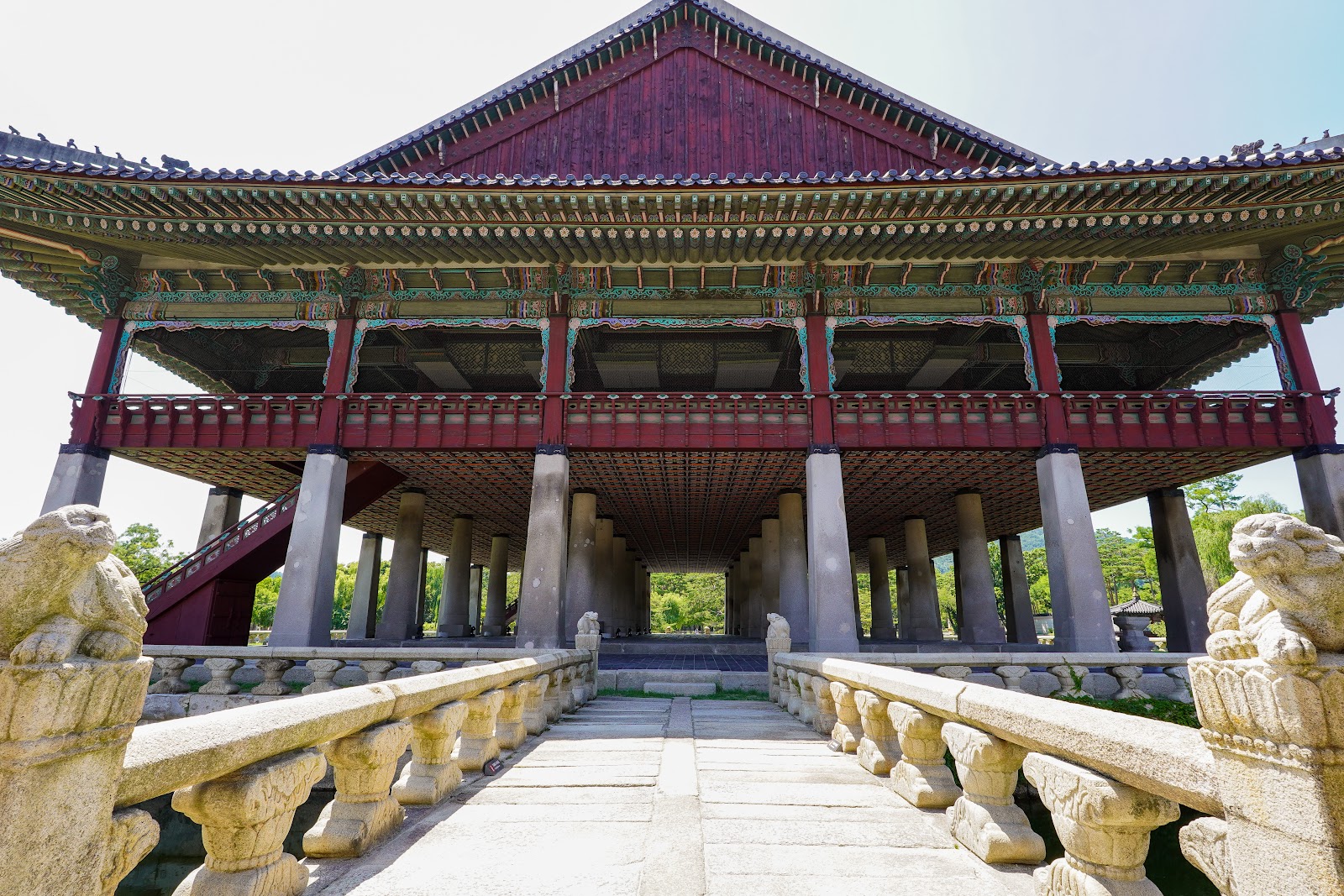
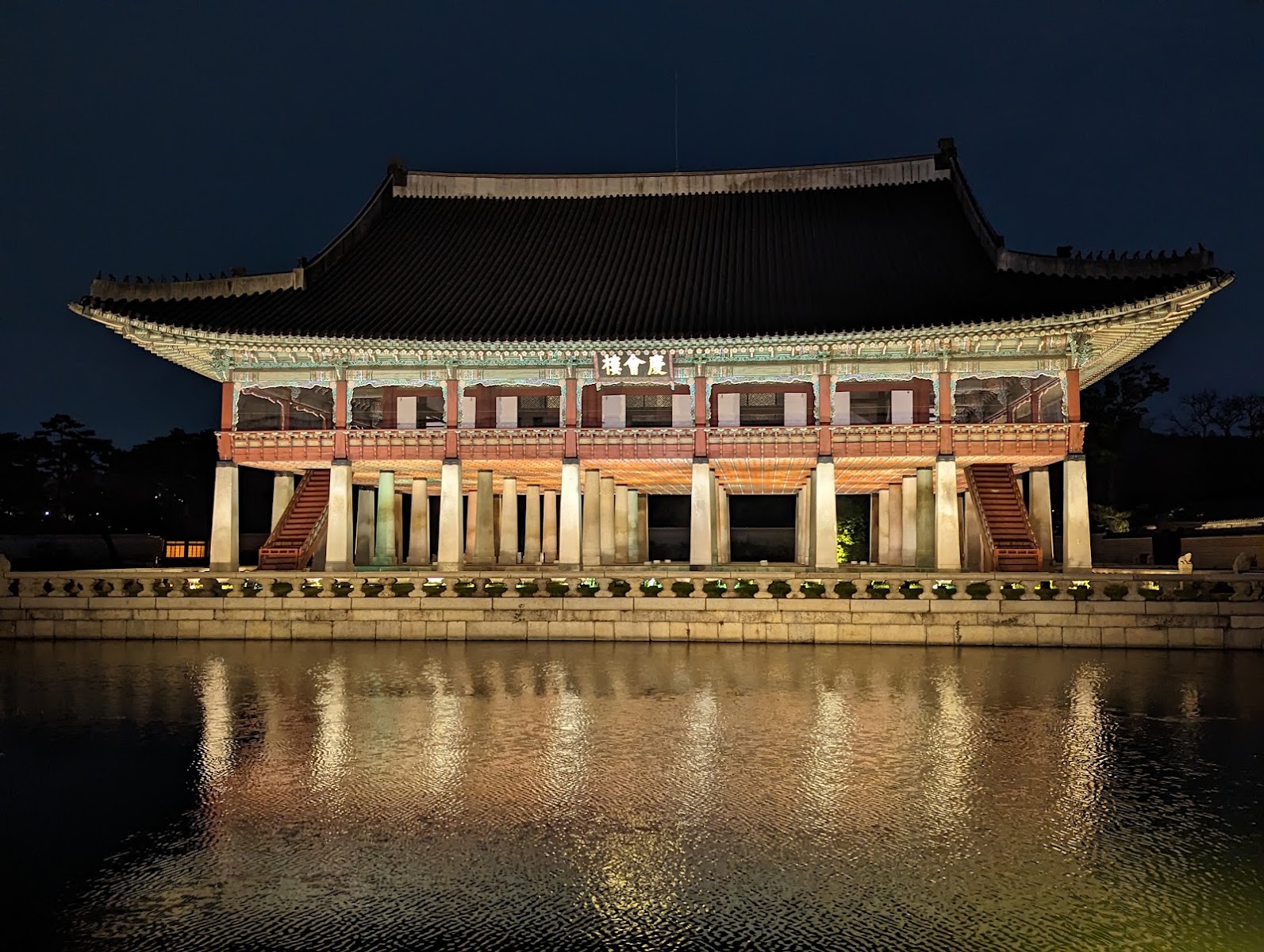
Fire destroyed the palace during the Imjin War (1592 to 1598), and it was rebuilt much later under King Gojong. Of the buildings standing today, the Korea Tourism Organization (KTO) points to Gyeonghoeru, the banquet pavilion in its pond. It calls it original and a prime example of Joseon architecture.
Add the guard-changing ceremony at the main gate and the free guided tours, and a morning goes quickly. The National Palace Museum is on the west side, outside the second gate, if you still have the energy afterwards.
🕘 Opening hours by season, and the Tuesday rule
These are the KTO’s official hours, as listed when I checked in October 2026. Google Maps shows 09:00 to 18:00 on every open day. That’s correct from March to May and in September and October. For the other seven months, use this table.
| Months | Gates open | Last entry | Gates close |
|---|---|---|---|
| November to February | 09:00 | 16:00 | 17:00 |
| March to May | 09:00 | 17:00 | 18:00 |
| June to August | 09:00 | 17:30 | 18:30 |
| September to October | 09:00 | 17:00 | 18:00 |
Last entry is always one hour before closing. From November to February that’s 16:00. Turn up at 16:30 and all you’ll get is a photo of the gate.
Summer gives you the most time. Last entry is 17:30 and the gates close at 18:30, so a late-afternoon visit works. In winter, go in the morning.
The palace closes every Tuesday. When a Tuesday is a public holiday, it opens that day and closes on the next working day instead. If you’re in Seoul during a holiday week, check before you plan a Wednesday visit.
For anything else, the inquiry number is +82-2-3700-3900 (02-3700-3900 from a Korean number).
🚇 Getting there
Take subway Line 3 to Gyeongbokgung Station and follow the signs to Exit 5. It brings you out on the palace’s west side, by the National Palace Museum. This is the quickest way in.
To walk in through the front gate, take Line 5 to Gwanghwamun Station and walk north through Gwanghwamun Square. The gate is at the top of the square, and from there you pass through every gate in order.
In Naver Map or Kakao Map, search 경복궁. Show the same word to a taxi driver. If you’re driving, there’s parking on site, and the accessible bays are listed further down.
🎟️ Tickets, hanbok and free tours
The official listing doesn’t give the admission price, so I won’t guess at one. Ask at the ticket booth, or check before you go on the Korea Tourism Organization’s English site.
Plenty of visitors never pay at all. Anyone wearing hanbok gets in free, and there are rental shops close to the palace. Reviewers who wore one say it changed how the place felt, which makes sense in courtyards built for those clothes.
Think about this before you pick a long skirt. The courtyard in front of the throne hall is paved with rough, uneven stone, and you’ll walk a lot. A long hem hides your feet, so wear shoes with good grip.
There are free guided tours too. Ask at the ticket booth when the next English one starts. The same booth rents audio-guide handsets and handheld PDA guides if you’d rather go at your own pace.
♿ Wheelchairs, strollers and nursing rooms
This section comes from the KTO’s barrier-free travel data. It’s written for wheelchair users, but it also answers most of what parents ask.
- The main entrance has a ramp and is wheelchair accessible.
- You can borrow wheelchairs and strollers on site. Ask at the ticket booth first.
- There’s a nursing room at Heungnyemun, the second gate, and another inside the women’s toilet in the car park.
- Nappy (diaper) changing tables are in those nursing rooms and in the regular toilets.
- There are accessible toilets on site.
- Accessible parking: 9 bays in the outdoor car park to the right of Gwanghwamun.
- Audio-guide handsets and PDA guides are rented at the ticket booth.
One thing the official data doesn’t mention: small stroller wheels will feel the rough stone in the throne-hall courtyard.
If staff at the counter don’t speak English, show them these three lines:
유모차 빌릴 수 있어요? (Can I borrow a stroller?)
휠체어 빌릴 수 있어요? (Can I borrow a wheelchair?)
수유실 어디예요? (Where is the nursing room?)
💂 The guard change, and a morning built around it
The royal guard-changing ceremony takes place at Gwanghwamun. Visitors report one at 10:00 and another in the afternoon, and people who saw it liked it a lot. One reviewer said you need luck to catch it. Really that means checking the schedule, so confirm the times on the day.
A morning plan:
- 09:45 Get to Gwanghwamun and find a spot where you can see the gate.
- 10:00 The guard change.
- After that In through Heungnyemun to Geunjeongjeon and Gyeonghoeru, then on to Hyangwonjeong at the back.
- On the way out The National Palace Museum, if you still have the energy.
- Lunch East to Gwangjang Market (more on that below).
Want to be first through the gate? Go in at 09:00 and plan your exit around the afternoon ceremony. Ask at the ticket booth what time it starts.
🗺️ Walking it front to back
The gates are at the south end and the gardens are at the north end. Walk it in that order and save the museum for the way back.
Gwanghwamun and Heungnyemun
Gwanghwamun is the main gate, the one facing the square. Heungnyemun is the second gate. The National Palace Museum takes up the west side of the area between them, and one of the two nursing rooms is at Heungnyemun.
Geunjeongjeon, the throne hall
Geunjeongjeon is the big hall raised on a stone platform. The two rows of small stone markers in the courtyard show where officials stood, by rank. From the far end of the courtyard, you can get the hall and the mountain behind it in one photo.
Then walk up close. The KTO calls the stone sculptures at Geunjeongjeon a textbook example of Joseon carving. Look for the carved animals around the stone platform. They’re easy to miss when you’re looking up at the roof.
Gyeonghoeru, the pavilion in the pond
To the left of the throne hall as you face it, a large pavilion stands in a square pond. This is Gyeonghoeru, where the court held banquets. The ground floor is a grid of stone pillars, and the hall sits on top of them.
For the classic photo, walk along the edge of the pond until the whole pavilion and its reflection fit in the frame. It works best on a still day, because wind breaks up the reflection.
Hyangwonjeong, at the back
As you keep heading north, the stone courtyards give way to trees. Hyangwonjeong is a small six-sided pavilion on an island in its own pond. If you’re tempted to turn back after the throne hall, this is the reason to keep going.
The National Palace Museum, on the way out
Back near the front, the National Palace Museum is on the west side, outside Heungnyemun. Reviewers mention a few other museums nearby too. Check their opening hours before you plan around any of them.
📜 The history, briefly
Yi Seong-gye, who became King Taejo, built Gyeongbokgung in 1395 as the official palace of his new Joseon dynasty. Many Joseon kings were crowned here.
You’ll also see it called the Northern Palace. Changdeokgung is to the east and Gyeonghuigung to the west, and Gyeongbokgung is the one in the north.
Fire destroyed it during the Imjin War, the Japanese invasions of 1592 to 1598. It was rebuilt much later, during King Gojong’s reign. The work was led by Heungseon Daewongun, the king’s father, who was running the government at the time.
It didn’t serve as a palace for long after that. When Empress Myeongseong was assassinated, Gyeongbokgung stopped being used as a royal palace. It was still standing when the Joseon dynasty fell.
🍜 After the palace
There’s also a night tour of the palace with its own ticket, and getting that ticket is the hard part. Our guide to the Gyeongbokgung Starlight Tour explains how.
For lunch, head east to Gwangjang Market. The hanok alleys of Ikseon-dong are between the palace and the market, but they get crowded as the day goes on. If you care more about the alleys than the guard change, go there first and come to the palace for the afternoon ceremony.
❓ Short answers
Is Gyeongbokgung Palace open on Tuesdays?
No, unless that Tuesday is a public holiday. Then it opens, and it closes on the next working day instead.
What time does Gyeongbokgung close?
17:00 from November to February, 18:30 from June to August, and 18:00 the rest of the year. Last entry is one hour before closing.
Do I need to book ahead?
For a daytime visit, buy your ticket at the booth on the day, or get in free by wearing hanbok. The night tour is the one you have to plan ahead for.
Can I get in free?
Yes, if you’re wearing hanbok. There are rental shops close to the palace.
When is the changing of the guard?
It’s at Gwanghwamun. Visitors report one at 10:00 and another in the afternoon. Confirm the times on the day.
How long should I give it?
A morning. Reviewers keep saying it’s bigger than they expected. If you arrive at last entry, the one hour before closing only gives you a quick look at the throne hall.
Is it stroller and wheelchair friendly?
The main entrance has a ramp, and you can borrow strollers and wheelchairs on site. Nursing rooms are at Heungnyemun and inside the women’s toilet in the car park.
What’s the phone number?
+82-2-3700-3900, or 02-3700-3900 from a Korean number.
📌 The short version
- The Joseon dynasty’s main royal palace, built in 1395 and the largest of Seoul’s five.
- Closed every Tuesday. If that Tuesday is a public holiday, it opens and closes on the next working day instead.
- Closes at 17:00 from November to February, 18:00 from March to May and in September and October, and 18:30 from June to August. Last entry is one hour earlier.
- Entry is free if you wear hanbok.
- Guard change at Gwanghwamun, reported at 10:00 and once in the afternoon.
- Subway Line 3, Gyeongbokgung Station, Exit 5.
- You can borrow wheelchairs and strollers. Nursing rooms are at Heungnyemun and in the women’s toilet in the car park.
- Inquiries: +82-2-3700-3900.