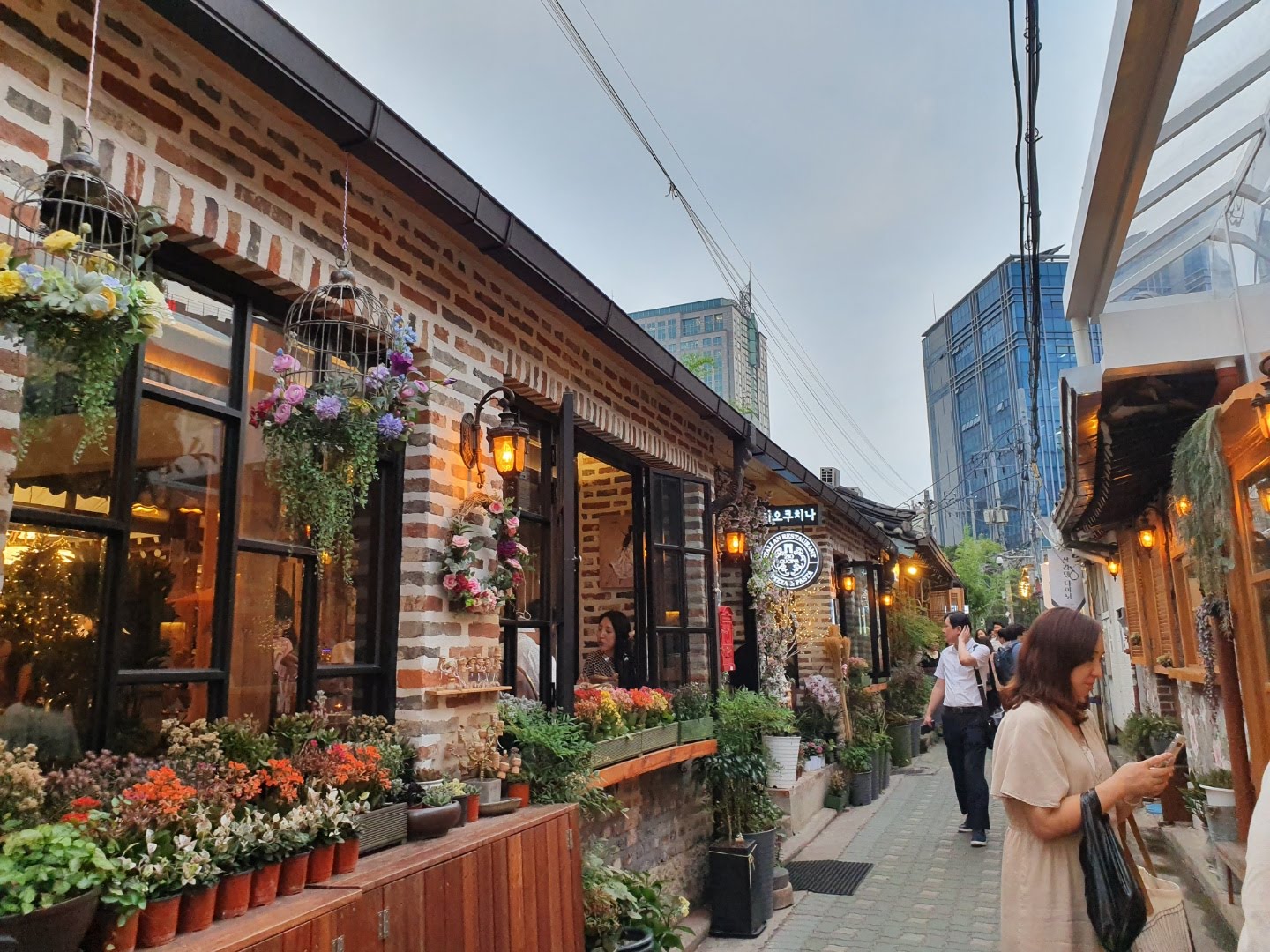
Ikseondong Hanok Village (Google Maps spells it Ikseon-dong) is a small block of 1920s hanok in Jongno, in the middle of old Seoul. Nearly every house in it is now a cafe, dessert shop, bar, small restaurant or boutique. There’s no gate and no ticket. You walk in off a city street, choose a house and sit down inside it.
That’s what earns it a place in a short trip. Most traditional buildings you’ll see in Seoul are palace halls behind a ticket booth, or private hanok homes you look at quietly from the lane. Here the old roof beams are over your table. The catch is size. The lanes are narrow, the block is small, and it fills up, so come early.
📍 Ikseondong Hanok Village: The Basics
| Where | Ikseon-dong, Jongno District, central Seoul |
| Subway | Jongno 3-ga Station (Lines 1, 3, 5), Exit 4 |
| Hours on Google Maps | 10:00 AM to 9:00 PM; Wednesdays from 11:30 AM |
| Entry | Free, no ticket |
| Booking | Not needed to walk around |
| Google rating | 4.3 from 8,540 reviews |
| Phone on the listing | 02-2148-5243 |
| Best time | Morning, as early as you can manage |
Those hours are what Google shows for the village as a whole. The lanes themselves are ordinary streets, and every cafe, shop and bar inside keeps its own schedule. If one particular place is the reason you’re coming, look it up on Naver Map before you leave the hotel.
🏠 What You’re Walking Into
Hanok just means a traditional Korean house: a timber frame, a curved roof of dark clay tiles, and rooms set around a small open courtyard. The ones in Ikseon-dong are urban hanok, built in the 1920s on small city plots and packed shoulder to shoulder.
That layout explains most of what you’ll notice. The lanes between the houses are narrow, in places very narrow, and the whole neighborhood is compact. You’ll pass the same corner twice without meaning to. That’s fine. Wandering until something in a doorway makes you stop is the whole method here.
What you get today is a cafe district that happens to be built out of hundred-year-old houses, with bars and a few boutiques mixed in.
How a 1920s housing block became a cafe street
The block was built by Jeong Se-kwon, a property developer who bought up large plots in central Seoul in the 1920s and filled them with small hanok for Korean families. Much later the area was marked for redevelopment. That plan was dropped in the 2010s, and young owners began turning the old houses into cafes and shops, one at a time.
Step inside one and you can see how it was done. Usually the timber frame and roof stay, with the beams left bare, while the floors, glass, lighting and coffee machines are new. Some owners have roofed the courtyard over with glass so it can be used in any weather.
What to look at
- The roof edge. The round tiles at the end of each row often carry a stamped pattern or character.
- The eaves. Stand under one and look up at the rafters.
- Doors and windows. Wooden lattice frames, some backed with paper, some with glass.
- The courtyard. Even from the doorway you can see how the rooms face into it.
🤔 Ikseon-dong or Bukchon?
People mention these two together because they’re two of Seoul’s best-known hanok neighborhoods, and plenty of first-timers only have time for one. They suit different moods.
- Bukchon spreads over a hillside north of Anguk Station. Its hanok are private homes, so you mostly see them from outside, and residents ask visitors to keep their voices down. The famous view is roofs stepping down the slope with the city behind.
- Ikseon-dong is flat, small and busy, a short walk from Jongno 3-ga. You go inside the houses, with a drink or a plate in front of you.
Want to sit inside a hanok and eat? Ikseon-dong. Want the postcard rooftops? Bukchon. They’re close enough to walk between, and Anguk is one stop from Jongno 3-ga on Line 3, so doing both in one day is easy.
🚇 Getting There
Get off at Jongno 3-ga Station, where subway Lines 1, 3 and 5 meet. Exit 4 is the one most visitors use, and the first hanok lanes are a short walk from it. For that last stretch, search 익선동 한옥마을 in Naver Map or Kakao Map. Those are the apps locals use, and their walking directions are reliable here.
From where you’re probably staying
- Seoul Station: Line 1, three stops (City Hall, Jonggak, Jongno 3-ga). No transfer.
- Myeongdong: Line 4 one stop to Chungmuro, then Line 3 two stops north.
- Hongdae: Line 2 from Hongik University Station to Euljiro 3-ga, then Line 3 one stop north.
- Gwanghwamun: Line 5, one stop.
- Gyeongbokgung: Line 3, two stops via Anguk.
- Gimpo Airport: Line 5 goes straight to Jongno 3-ga. No transfer.
- Insadong: Walk. It’s just to the west.
⏰ When to Go
| Day | Hours on Google Maps |
|---|---|
| Monday, Tuesday | 10:00 AM to 9:00 PM |
| Wednesday | 11:30 AM to 9:00 PM |
| Thursday to Sunday | 10:00 AM to 9:00 PM |
Mornings are the good part
Ikseon-dong gets crowded, and in lanes this narrow you feel every extra person. Early on you can walk side by side, stop in the middle of an alley and take a photo with nobody in it. Later, in the tightest spots, it’s single file.
Try to be there when the listing opens: 10:00 AM most days, 11:30 AM on Wednesdays. In July and August an early start also keeps you ahead of the worst of the heat.
Evenings are a different place
The lanes have bars as well as cafes, so Ikseon-dong stays busy after the coffee crowd heads home. The listing runs to 9:00 PM, and bars and restaurants keep their own closing times. Evening is for dinner and a drink in an old house. Morning is for photos.
☕ How to Pick a Cafe
The simplest method works best. Walk every lane once, then go back to the doorway you keep thinking about. The block is small enough for that, and that’s how a quick coffee turns into a much longer visit.
Sit in the courtyard
The courtyard, called a madang, is the center of a hanok, and in a lot of the cafes here it’s the main seating area. That’s the seat you came for. In Korean cafes it’s normal to find a table first and order at the counter after, so check whether a courtyard spot is free before you join the queue.
If there are stairs, take them
A few places have an upper floor or a roof terrace. Go up if you find one. From there you see what the lanes hide: rows of curved tile roofs packed together, with the taller buildings of downtown Seoul right behind them. It’s the best photo in the neighborhood, and it costs one drink.
Floor seats mean shoes off
Some rooms have low tables and floor cushions, which means shoes off at the step. Slip-ons make this painless. Socks with a hole in the toe make it memorable.
One drink per person
Many Korean cafes expect everyone at the table to order something, and a small house has few tables to spare. For two people, two drinks and one dessert to share is a normal order. One latte with two straws may earn you a polite word from the counter.
Check the dessert case first
Plenty of these houses are dessert places first and coffee places second. Before you order, look at what’s on the tables around you and in the glass case by the counter. That tells you what the house is known for faster than any menu board.
If the cafe you wanted has a line out the door, walk one lane over. In a block this packed with cafes, another courtyard is never far.
📸 Getting the Photo
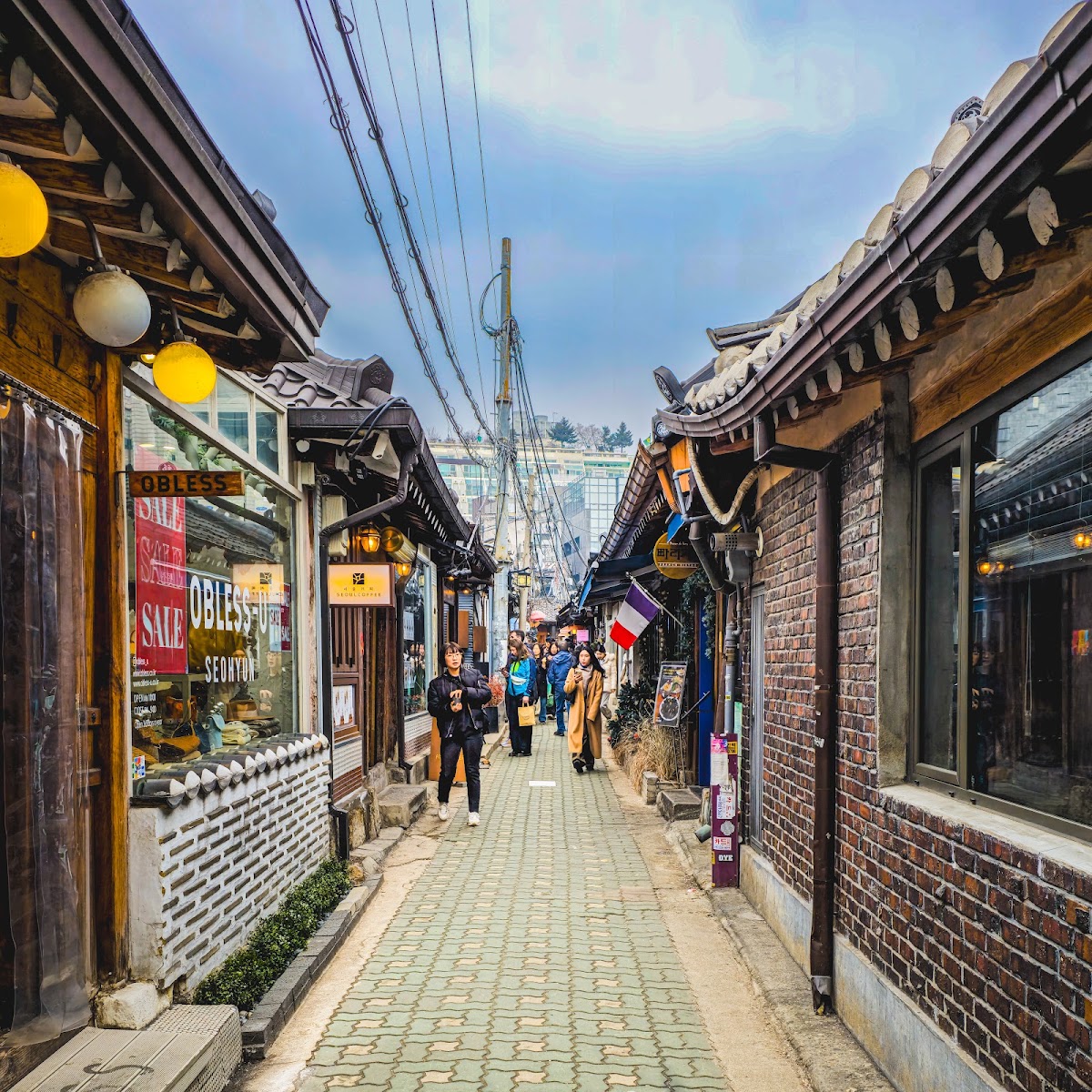
The picture everyone wants is a lane of tiled roofs with nobody in it. That one only works in the morning. The rest work at any hour.
- Shoot down a lane. Stand at one end of a straight stretch and let the eaves on both sides frame the picture.
- Look up. The underside of the eaves, where the rafters show, is the most hanok-looking part of any house.
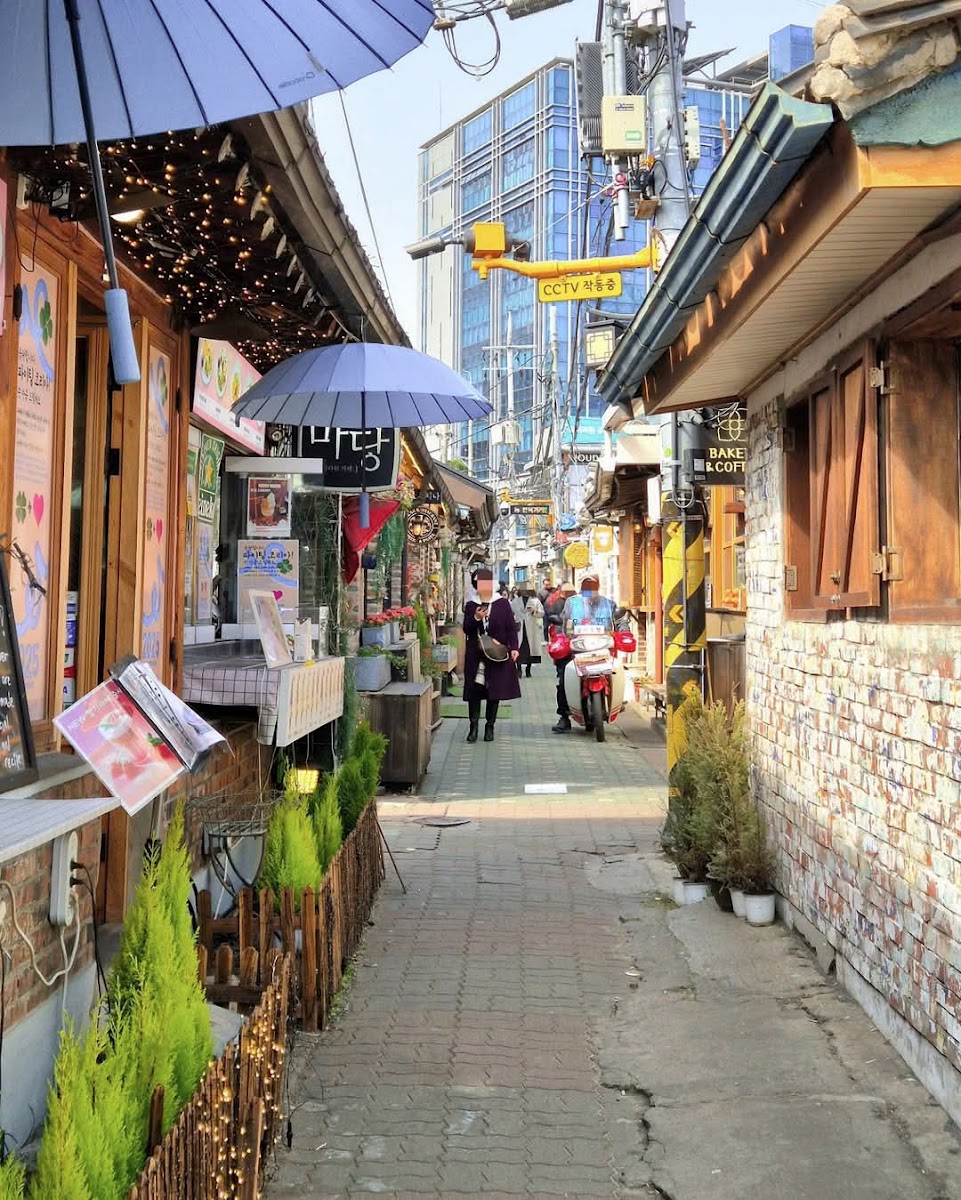
- Old against new. Where a lane opens toward a main road, you can often get tile roofs in front and modern buildings behind.
- Roofs from above. You need an upper-floor cafe for this one.
- Step aside when you stop. Most doorways are shop entrances, and someone usually needs to get past. Inside a shop, ask before you take photos.
🗺️ A Morning Here, Step by Step
- Get there around 10:00 AM (11:30 AM on a Wednesday). Come up Exit 4 at Jongno 3-ga.
- Walk every lane once before you sit down anywhere. This is your window for photos.
- Go back to the house you liked best. Courtyard seat, one drink each, a dessert to share.
- Leave as the lanes fill. Changdeokgung, Jongmyo and Insadong are all walkable from here.
One catch: each cafe keeps its own hours, and some may open later than the 10:00 AM on the listing. If your heart is set on one place, check its hours the night before and plan your walk around the lanes to end at its door.
Check your next stop too. Seoul’s palaces and Jongmyo each close one day a week, and the days differ, so look it up before you walk over.
🙋 Is It for You?
Is it commercial? Entirely. The buildings are old, the businesses are new, and that mix is why people come.
- You’ll like it if you enjoy cafes, want to sit inside a hanok, and have a free morning in central Seoul.
- You’ll like it if you want dinner and a drink in a house that’s been standing for about a century.
- Skip it if crowds ruin your day and the afternoon is your only free slot.
- Skip it if what you want is hanok that are still family homes.
For that last one, Bukchon is the closer answer in Seoul. If you’re heading south later in the trip, Yangdong Folk Village in Gyeongju is a whole village of hanok that people still live in, a KTX ride and a bus from Seoul.
🧭 What to Pair It With
Ikseon-dong sits in the middle of old Seoul, so it’s easy to plan a day around. Changdeokgung palace, the Jongmyo shrine and the craft and tea shops of Insadong are all a walk away. Bukchon is a longer walk north, or one stop on Line 3 to Anguk.
Plenty of people end a day in central Seoul up on Namsan. Timing matters more up there than it does here, so read N Seoul Tower: The Hour That Decides Your Visit before you decide when to go.
❓ Short Answers
Is Ikseon-dong free to visit?
Yes. It’s a neighborhood, so there’s no ticket. You pay for what you order or buy.
What are the opening hours?
Google Maps lists 10:00 AM to 9:00 PM every day, with an 11:30 AM start on Wednesdays. Each cafe, bar and shop sets its own hours.
Which subway station and exit?
Jongno 3-ga Station on Lines 1, 3 and 5. Use Exit 4.
Do I need to book?
You don’t need to book to walk around. If one specific restaurant is the reason for your visit, check its Naver Map page first.
Ikseon-dong or Bukchon?
Ikseon-dong to sit inside a hanok with food in front of you. Bukchon for hillside rooftop views. They’re close enough to do both.
How long should I spend there?
A morning. The lanes are compact; the cafe stop is what makes it longer.
Is it worth going at night?
For dinner and a drink, yes. For photos of empty lanes, come in the morning.
✅ Before You Go
- A compact block of 1920s urban hanok in Jongno, now nearly all cafes, dessert places, bars, small restaurants and boutiques. Free to walk in.
- Jongno 3-ga Station (Lines 1, 3, 5), Exit 4. No transfer from Seoul Station on Line 1 or Gimpo Airport on Line 5.
- Google Maps hours: 10:00 AM to 9:00 PM, Wednesdays from 11:30 AM. Each business sets its own.
- It gets crowded. Arrive early, walk the lanes first, sit down second.
- Courtyard seat, upstairs if there is one, shoes off on floor seating, one drink each.
- Rated 4.3 on Google Maps from 8,540 reviews.
- Easy to combine with Changdeokgung, Jongmyo, Insadong and Bukchon.