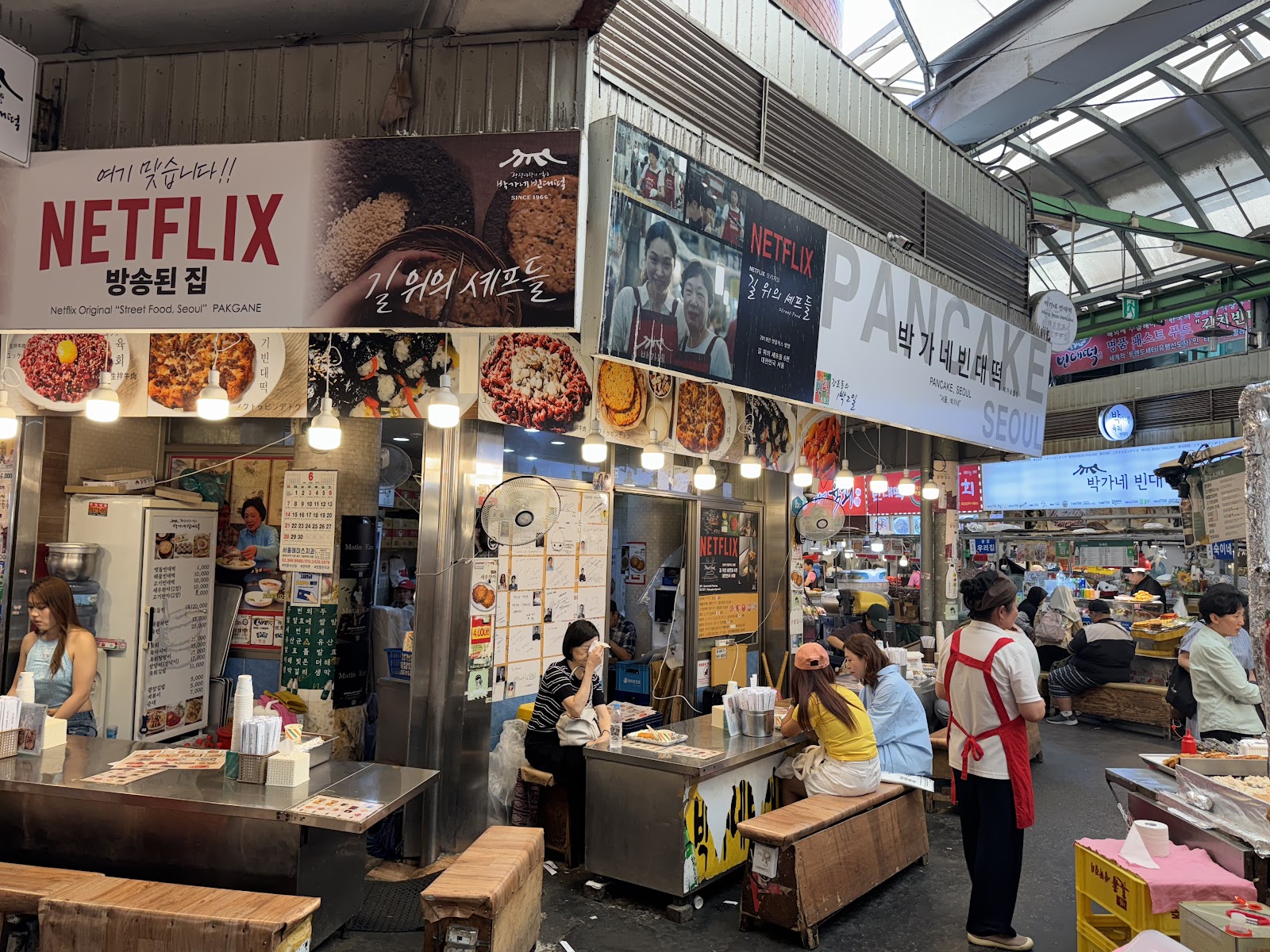
Gwangjang Market is Korea’s first permanent market. It has about 5,000 stores in Jongno, the old center of Seoul. The most popular part is the food street. You sit on a bench at a stall counter and eat pancakes, gimbap and tteokbokki made in front of you. The food street is open 09:00 to 23:00, every day of the year.
The rest of the market keeps different hours, and that’s what catches people out. The silk, fabric, bedding and craft shops open 09:00 to 18:00 and close on Sundays. If you come on a Sunday night you’ll eat well, but you’ll see only half the place. If you only have one visit, go on an afternoon from Monday to Saturday and stay for dinner.
The short version:
- Food street: 09:00–23:00, open all year
- Silk, fabric, bedding and craft shops: 09:00–18:00, closed Sundays
- Secondhand clothing section: 10:00–19:00
- Nearest subway: Jongno 5-ga Station, Line 1
- Help in English by phone: 1330 Travel Hotline, +82-2-1330
🕘 Gwangjang Market Hours: One Market, Two Clocks
Google Maps shows the market open 09:00 to 22:30, seven days a week. That’s about right for the food street, but it doesn’t show the Sunday closing. The Korea Tourism Organization (KTO) has a more detailed listing in Korean. When this was written (October 2026), it gave these hours:
| Section | Hours | Closed |
|---|---|---|
| Food street | 09:00–23:00 | Open all year |
| Silk, fabric, bedding, crafts, produce | 09:00–18:00 | Sundays |
| Secondhand clothing (구제) | 10:00–19:00 | Sundays |
Where the two sources disagree, go with the KTO. The difference that matters for your plans is Sunday. The last half hour at night (22:30 on Google, 23:00 from the KTO) matters less. Each stall is its own business and closes when it wants. If you’re coming late, try to be sitting down by 22:00.
One word in that table is worth knowing. 구제 (gu-je) literally means relief, so machine translation sometimes calls these shops “charity stores.” In a Korean market it means secondhand clothes. This is the vintage clothing section. Visitors mention a retro section on level 2, above the main market.
Is a public holiday coming up, or do you have a question the table doesn’t answer? Call the 1330 Travel Hotline on +82-2-1330. It takes calls in Korean, English, Japanese and Chinese.
🚇 Getting There and Which Gate to Use
The nearest subway stop is Jongno 5-ga Station on Line 1. It’s four stops from Seoul Station, with no transfer. At the station, type 광장시장 into Naver Map or Kakao Map and follow it to the nearest gate.
You’ll see two different addresses online. Google Maps lists the market at 88 Cheonggyecheon-ro. The KTO uses 88 Changgyeonggung-ro, Jongno-gu. In a taxi, the simplest thing is to show the driver 광장시장 (Gwangjang Sijang).
The three gates that open onto the food street
Gwangjang has gates on several sides, and each is named after a direction. The KTO lists three that lead straight into the food street:
- East Gate (동문)
- North Gate 2 (북2문)
- South Gate 1 (남1문). This one also has the visitor rest area with the accessible toilet.
If you know three syllables, the signs are easy: 동 is east, 북 is north, 남 is south. Go in through any of these three gates and you’re right in the food aisles.
If your group gets split up, you’ll want a gate to meet at. South Gate 1 is a good choice because it has the rest area.
If you’re driving
The KTO sends drivers to the Jongmyo public parking lot at Jongno 4-ga. It has disabled spaces. The lot isn’t inside the market, so plan for a walk.
🥢 What to Eat on the Food Street
Most of the central stalls sell the same few dishes, and pancakes are on all of them. So choose a stall by its seats.
There are two kinds of seat. The stalls in the middle have benches around a counter. You squeeze in next to whoever is already there, point at what you want and eat. The sit-down restaurants have tables and chairs, which is easier with small kids or a bigger group.
What to order
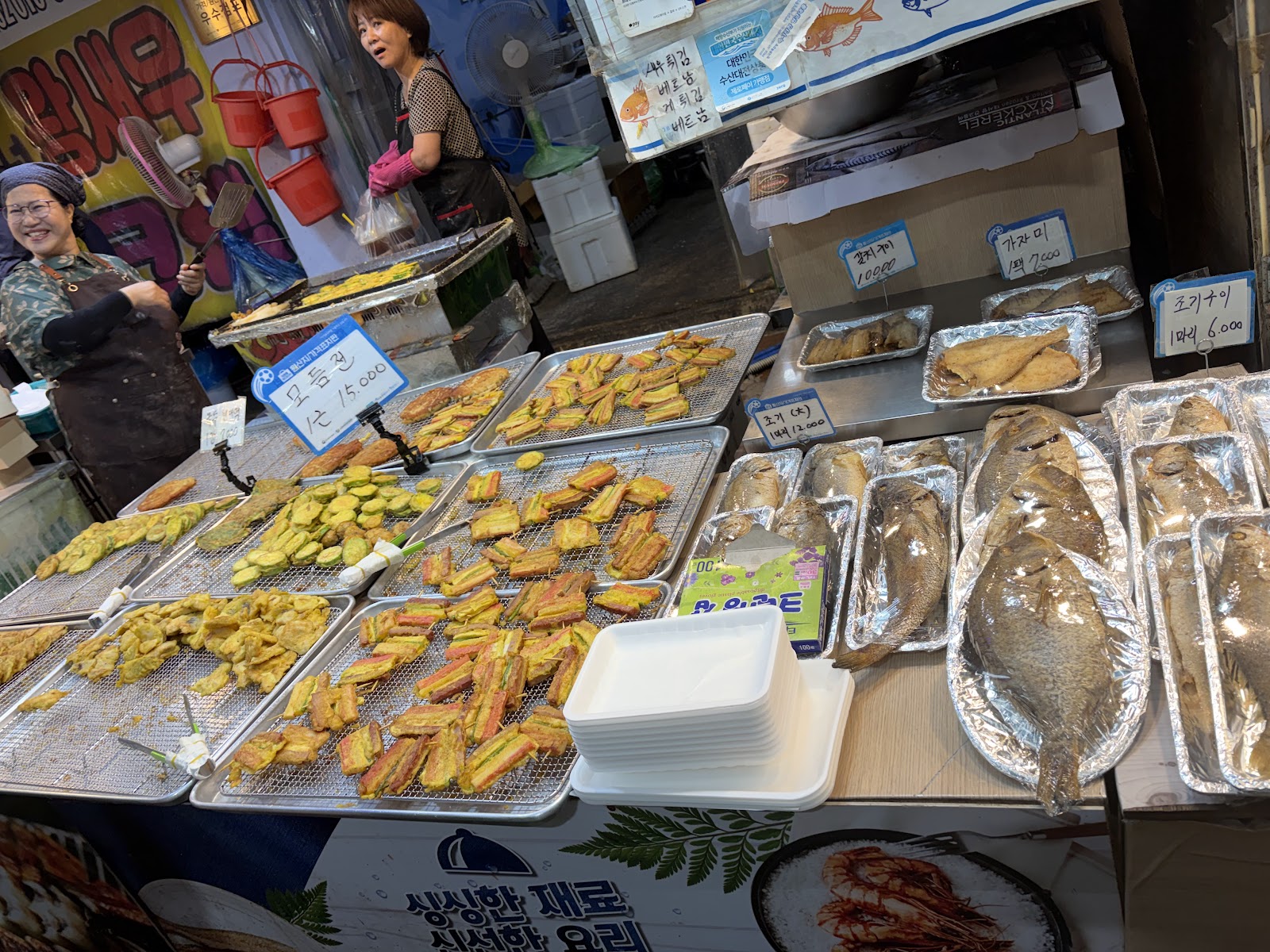
- Seafood pancake (haemul pajeon). Batter with spring onion and seafood, fried flat on the griddle. Any stall frying these is a safe choice.
- Bindaetteok. Ground mung beans fried into a thick round pancake with crisp edges. It’s heavier than pajeon and often has pork in it (more on that below).
- Gimbap. Rice and fillings rolled in seaweed. It’s the easiest thing here to eat while you walk.
- Tteokbokki. Chewy rice cakes in a sweet, spicy red sauce. One plate for the table is enough to share.
- Dalgona. The sugar candy game from Squid Game. You try to pick a stamped shape out of a thin disc of honeycomb toffee without cracking it. Kids love it.
On rainy days, Koreans like pancakes with makgeolli, a milky rice wine. People say it’s because frying batter sounds like rain. Ask if the stall sells it.
To give you an idea of cost: one group of four shared a pancake, gimbap and tteokbokki for a quick lunch and paid about US$20 in total. Prices change, so check them before you order. That way there’s no surprise when you pay. Bring some small notes as well, because cash is quicker at a busy counter.
Coffee and something sweet
A few newer coffee shops and bakeries have opened among the old stalls. They’re useful when someone in your group has had enough fried food.
If you don’t eat pork
This is the hard part of Gwangjang. A lot of the food on the counters has pork or lard in it, or is fried in pork fat. Muslim travelers who reviewed the market found it difficult to eat here, and vegetarians will have the same problem.
Ask before you order. These two phrases cover most of it:
- 돼지고기 들어가요? (dwaeji-gogi deureogayo?) Is there pork in this?
- 돼지기름 써요? (dwaeji-gireum sseoyo?) Do you cook it in pork fat?
Vegetarians can shorten the first phrase to 고기 들어가요? (Is there meat in this?). In Korean, seafood and fish stock don’t always count as 고기 (meat), so ask about those separately.
If every stall says yes, go to the fresh produce stalls. The market sells fresh produce as well as cooked food.
In peak summer
Hot weather kills your appetite quickly. One group came during a 37°C heat warning and stopped after one round of dishes. In July and August, come in the morning or after dark, and expect to eat less than you planned.
🧵 The Rest of the Market: Silk, Bedding, Mother-of-Pearl
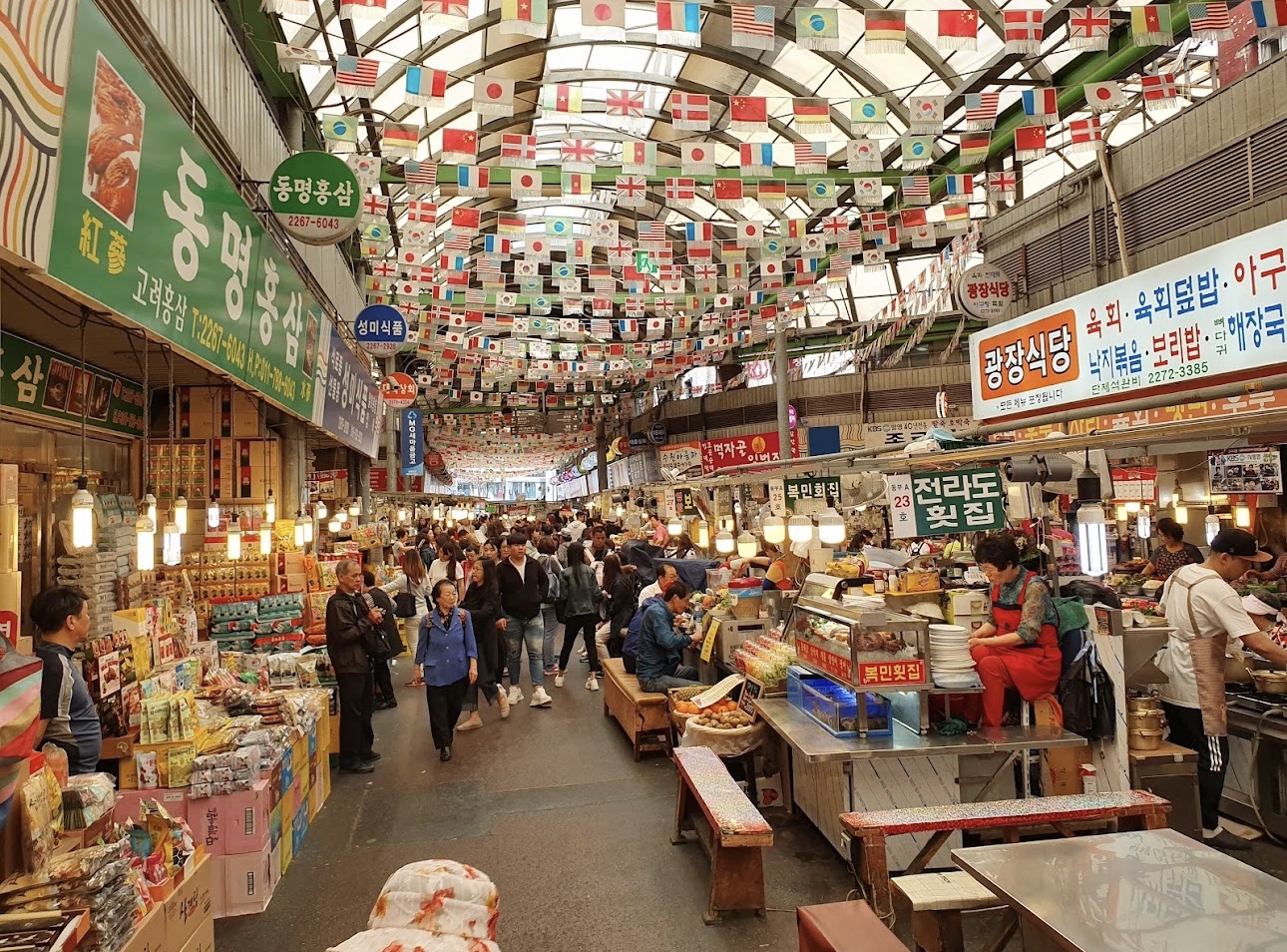
The name Gwangjang means roughly “gather from far and wide, and keep it all together.” That’s how the market began: a small trading post for goods brought in from nearby regions. It grew into a large wholesale market, and it’s still one today.
Away from the food stalls, the shops sell other things:
- Silk and dress fabric
- Fashion clothing
- Bedding and upholstery
- Fresh produce, seafood and dried fish
- Groceries and imported goods
- Handicrafts, traditional goods and mother-of-pearl lacquerware
For a souvenir that feels special, look at the lacquerware. It’s called 나전칠기 (najeon chilgi): dark lacquer inlaid with thin pieces of mother-of-pearl. It’s a traditional Korean craft. If you can’t find a shop that sells it, show the word on your phone.
The vendors are friendly and gifts are reasonably priced. Do your shopping before 18:00. After that the shops close and only the food street stays open.
The secondhand clothing floor
The secondhand section has its own hours, 10:00 to 19:00. That extra hour is useful. See the fabric shops before 18:00, then go up to the vintage section, then come back down to eat.
🗓️ A Plan That Covers Both Halves
The one thing to remember: arrive before 18:00 on any day except Sunday, and stay for dinner.
These times are based on the official opening hours.
Monday to Saturday
- 15:30 Arrive at Jongno 5-ga. Start with the silk, fabric and lacquerware shops while they’re still open.
- 17:30 Go up to the secondhand clothing section, which is open until 19:00.
- 18:45 Go to the food street. Have a pancake first, then gimbap and tteokbokki if you’re still hungry.
- 21:30 Leave, or stay longer. The food street is open until 23:00.
Sunday
Only the food is open. Come for lunch or dinner and plan the rest of your day somewhere else.
Combining it with the rest of Jongno
The hanok alleys of Ikseon-dong are one stop west on Line 1, at Jongno 3-ga. They’re best early, before the crowds come. Spend the morning there and come here for lunch. Our Ikseon-dong guide has the timing.
Have you booked an evening at the palace? Then reverse the plan above. Do the fabric shops and have an early snack here in the afternoon, then go to Gyeongbokgung after dark. Our Starlight Tour guide explains why you need to get the ticket first.
📋 Practical Details
| Korean name | 광장시장 (Gwangjang Sijang) |
| Address (KTO) | 88 Changgyeonggung-ro, Jongno-gu, Seoul |
| Address (Google Maps) | 88 Cheonggyecheon-ro, Jongno District, Seoul |
| Food street | 09:00–23:00, open all year |
| Main market | 09:00–18:00, closed Sundays |
| Secondhand clothing | 10:00–19:00, closed Sundays |
| Size | About 5,000 stores |
| Market information | +82-2-2267-0291 / +82-2-2272-0967 |
| Travel hotline | 1330: +82-2-1330 (Korean, English, Japanese, Chinese) |
| Parking | Jongmyo public parking lot, Jongno 4-ga (disabled spaces) |
| Toilets | On site; accessible toilet in the South Gate 1 rest area |
| Nearest subway | Jongno 5-ga Station, Line 1 (four stops from Seoul Station) |
| Google rating | 4.2 from 44,350 reviews |
♿ Step-Free Access, Toilets and Families
This information comes from the KTO’s barrier-free travel listing, which is only in Korean. It’s written for wheelchair users, but it also answers some questions parents have.
- Step-free entry. There are no steps at the main entrance or on the way to it.
- Accessible toilet. In the visitor rest area at South Gate 1 (남1문), called 광장시장 나들이 쉼터.
- Other toilets. The KTO lists toilets on site, and visitors say they’re clean.
- Disabled parking. At the Jongmyo public parking lot, Jongno 4-ga.
- Guide dogs. Allowed.
The listing doesn’t say which gate is the main entrance. If you need step-free access, call 1330 before you go to check the route. Either way, remember South Gate 1: it leads into the food street and has the accessible toilet.
Kids will find plenty to see, eat and buy here, and they’ll love dalgona. The listing says nothing about stroller rental, a nursing room or baby-changing tables. If you need any of these, ask the 1330 hotline before you set out.
❓ Short Answers
Is Gwangjang Market open on Sundays?
The food street is open, 09:00 to 23:00. The KTO lists Sunday as a closing day for everything else, including the silk, fabric, bedding and craft shops.
What time does the food street close?
23:00, according to the KTO. Google Maps says 22:30, and each stall closes when it wants, so try to sit down by 22:00.
What should I eat first?
A seafood pancake or bindaetteok at one of the central stalls. Add gimbap and tteokbokki if you’re still hungry.
Is the food halal or vegetarian-friendly?
Mostly no. Many dishes have pork or lard in them, or are fried in pork fat. Ask at each stall before you order.
Can I visit in a wheelchair?
Yes. There are no steps at the main entrance or on the way to it, and there’s an accessible toilet in the rest area at South Gate 1.
Do I need to book?
No. You just walk up to the stalls and sit wherever there’s space on the bench.
What’s the nearest subway station?
Jongno 5-ga on Line 1, four stops from Seoul Station.
✅ Before You Go
- Food street: 09:00–23:00, every day of the year.
- Silk, fabric, bedding and craft shops: 09:00–18:00, closed Sundays. Secondhand clothing: 10:00–19:00.
- East Gate, North Gate 2 and South Gate 1 lead into the food street.
- A lot of the food has pork or lard in it. Ask if you don’t eat them.
- No steps at the main entrance, an accessible toilet at South Gate 1, and guide dogs are allowed.
- Help in English: 1330 Travel Hotline, +82-2-1330.