Yangdong Folk Village in Gyeongju costs 4,000 won for an adult (roughly three US dollars), parking is free, and it is open every day of the year. It is Korea’s largest surviving traditional village, a UNESCO World Heritage site, and around 160 old houses stand in the valley below Seolchangsan Mountain. Fifty-four of them are more than 200 years old and have never been rebuilt.
The part that changes how you behave once you arrive: people live here. Not caretakers in costume. Families, many of them elderly, in the same tiled-roof houses their ancestors built. Most front gates are shut because somebody’s laundry is hanging behind them. Go in expecting a museum and you will leave annoyed. Go in expecting a working village with 500 years of architecture still standing in it, and it is one of the better mornings you can have in Gyeongju.
🏡 What is actually here
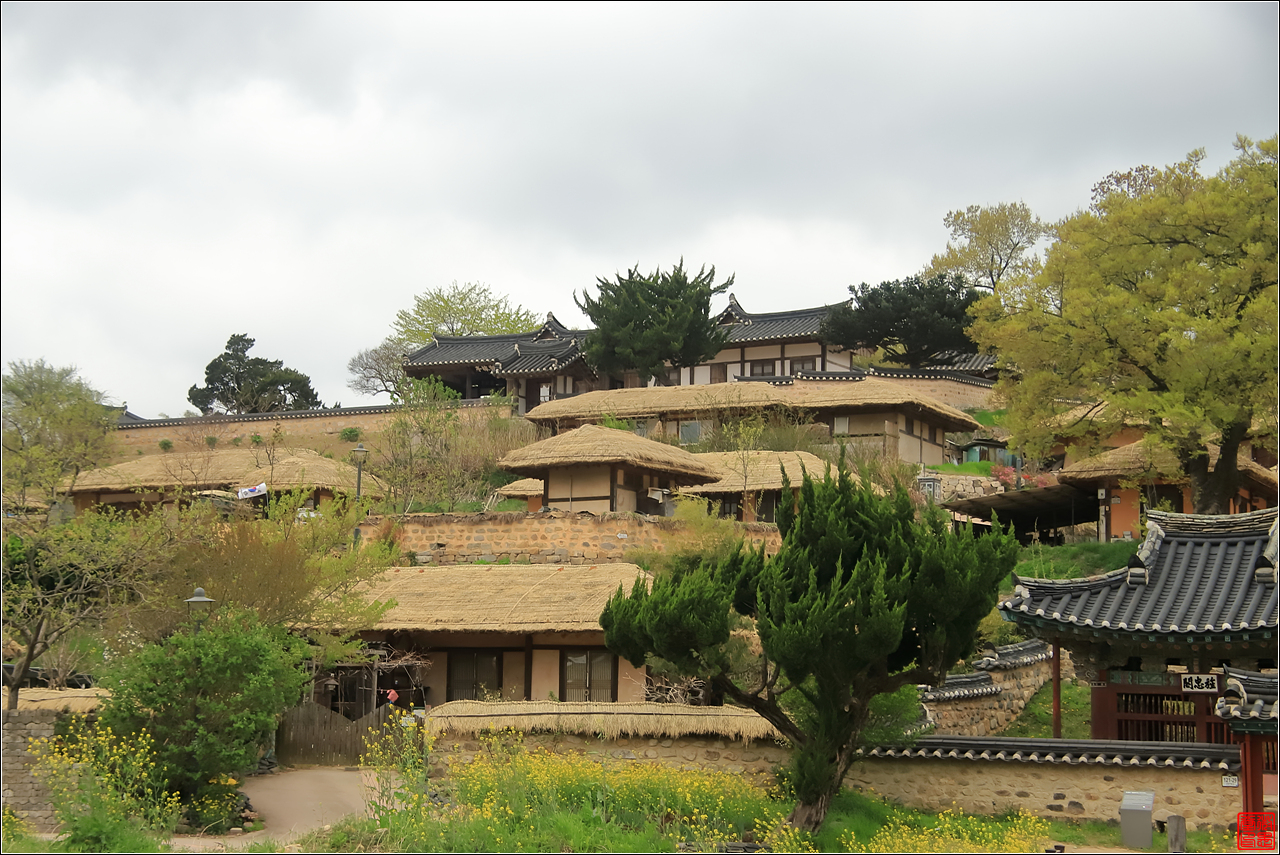
Tiled-roof houses on the slopes, thatched cottages below them. That split is not decorative. The yangban families built high so they could look down the valley; the households who worked for them built low. Walk uphill and you are walking up the old class structure. Nobody puts a sign on it, and once you see it you cannot unsee it.
The whole village is designated cultural heritage, not just a handful of showpiece buildings, which is why the lanes are gravel and dirt rather than paved. King Charles III, then Prince of Wales, walked through in 1993. The rating sits at 4.1 across more than 3,300 reviews, and the three-star reviews are almost all the same complaint: I wanted to go inside more houses. Read the paragraph above again.
🎟️ Yangdong Folk Village Gyeongju: hours, tickets and who gets in free
Google lists the village as 09:00 to 17:00. The Korea Tourism Organization’s official listing says otherwise, and the official one is the one to plan around. As of September 2026 it reads:
| Season | Open | Last ticket sold |
|---|---|---|
| April – September | 09:00 – 19:00 | 18:00 |
| October – March | 09:00 – 18:00 | 17:00 |
| Closing days | None. Open all year round. | |
One caveat the official listing states plainly: hours can be changed to protect the privacy of the residents. So on a day when the village has a funeral or an ancestral rite, times may shift. If you are building a tight schedule around it, the village office number is 054-762-2630 (+82-54-762-2630 from abroad).
| Ticket | Individual | Group |
|---|---|---|
| Adult | 4,000 won | 3,400 won |
| Teenager | 2,000 won | 1,700 won |
| Child | 1,500 won | 1,200 won |
Free admission, with ID: anyone aged 65 and over, and preschoolers aged 6 and under. The age is what counts, so carry something that shows your date of birth. This one almost never appears in English-language write-ups, and a couple travelling with a grandparent has been quietly overpaying for years.
Parking is free, and there is a car park at the entrance. One reviewer arrived on a weekday and found it close to empty, with no queue at all at the ticket window. Another turned up at 08:40 and got in before the stated opening time, because the ticket office was already staffed. That is short of a promise, though it tells you which direction the risk runs.
🚗 Getting there, and why a car makes life easier
There is no train station at the village and no subway anywhere near it. It sits out in the countryside north of central Gyeongju, and every review that mentions transport says the same thing: awkward without a car, worth it anyway.
- Rental car or taxi from central Gyeongju is the simple answer. Free parking at the gate removes the usual reason to avoid driving in a heritage area.
- Local bus does run, but rural route numbers and timetables in Korea change more often than any guide can keep up with. Check it in Naver Map or Kakao Map on the morning you go, and check the return departure at the same time. Google Maps does not give reliable public-transport directions inside Korea.
- Coming from Seoul or Busan by KTX, you arrive at Singyeongju Station and continue by road from there. Timetables are on letskorail.com.
One thing to know before you type an address into a navigation app. The official address is 134 Yangdongmaeul-gil, Gyeongju-si. Google’s pin lists 91 Yangdongmaeuran-gil, Gangdong-myeon. Both get you there, but if you are giving a taxi driver an address, the Korean name is the reliable input: 양동마을 (Yangdong Maeul).
Plenty of people do Gyeongju as a long day out of Busan and are back on the coast by evening. If that is your plan, Busan After Dark: Where the City Actually Looks Good covers what is still worth doing when you get back at nine.
👣 The four houses to prioritise if you only have an hour
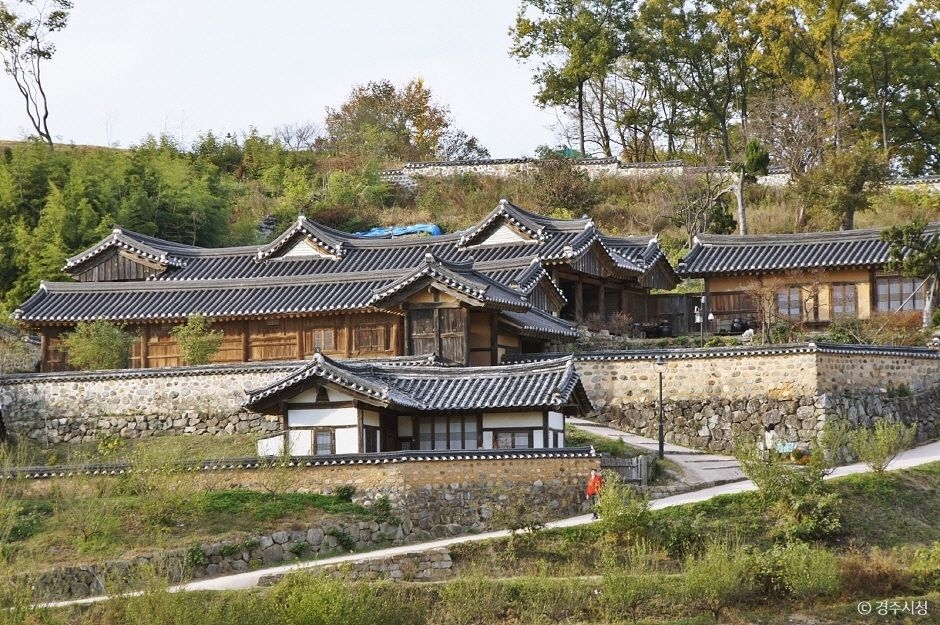
The village itself publishes a recommended route, and it is a good one. Four stops, in this order:
- Seobaekdang — the head house of the Son family line, and the anchor of the upper village.
- Mucheomdang — the counterpart on the Yi side. Two clans, two head houses, one valley. That tension is the village’s whole history.
- Hyangdan House — the most unusual floor plan in the village, and the one that most rewards standing still for five minutes.
- Gwangajeong Pavilion — the view. Save it for last, sit on the wooden floor, look down the valley at the four ridges of Seolchangsan.
Where a house is open, you walk the courtyard and the raised wooden floor. Where a gate is closed, it is closed. Entering a building without permission is prohibited, and it is prohibited because someone’s bedroom is in there.
🥾 Six marked routes, and how long each one takes
The village signposts six walking loops. Pick by how much time and leg you have.
| Route | Area | Walking time |
|---|---|---|
| 1 | Hachon | 20 minutes |
| 2 | Mulbonggol | 1 hour |
| 3 | Hill behind Sujoldang | 30 minutes |
| 4 | Naegok | 1 hour |
| 5 | Dugok | 30 minutes |
| 6 | Hyangdan House | 1 hour |
Those times assume you keep moving. Add half again if you stop to read panels or take photos, and add more in July and August, when the climb flattens most people. Route 1 plus the four-house recommended line is a solid 90 minutes and covers the best of it. Two routes back to back is a half day.
Every route goes uphill at some point. There is no flat version of this village. Trainers, not sandals.
⏰ Arrive at nine. Seriously.
The single best piece of advice in the review pile comes from a visitor who walked in just before opening and counted maybe half a dozen other people in the entire village. Yangdong is spread across a valley, so a hundred visitors disappear into it, but early morning gives you something better than empty lanes. It gives you the light on the tiled roofs and air you can climb in.
The late-afternoon problem is food. One group arrived towards the end of the day and found the cafes and small restaurants already shut. The village keeps village hours, not tourist hours. Eat before you come, or eat here at lunchtime, and treat anything after 16:00 as a bonus.
An early start also sets up the rest of the day well. Yangdong in the morning, central Gyeongju in the afternoon, and then Donggung and Wolji Pond after dark, which is the one Gyeongju sight that genuinely improves at night.
🗣️ Guided tours, audio guides and languages
Guided interpretation is offered in English, Japanese and Chinese, and it requires a reservation in advance. Turning up and asking on the day is not the way this works. The phone number for that is 054-762-2630.
If you have not booked, there is an audio guide for rent at the entrance. You need to leave valid ID to take one, so have your passport or a driving licence with you rather than in the hotel safe. A guided walk is worth the admin if you care about the two clans and who built what; without one, a lot of very old buildings look like very old buildings.
♿ Wheelchairs, prams and toilets
This information is published by the Korea Tourism Organization in Korean and almost never travels into English, so here it is plainly.
- Wheelchair rental: four chairs, kept at the village office. Four is a small number on a Saturday, so arriving early matters here more than anywhere.
- Accessible parking: dedicated blue bays in the car park.
- Accessible toilet: yes, at the entrance facilities. The toilets and the rest area are clustered by the ticket gate, which is also where families end up regrouping.
An honest note on top of the official list. The lanes are gravel and slope, and several reviewers wished the buildings were more accessible than they are. A wheelchair or a pram will handle the lower village and the entrance area; the upper houses involve real gradient. Plan the flat part properly and treat the climb as optional, rather than discovering it halfway up with a pram.
🍚 Eating, shopping and sleeping here
There is a convenience store, and there are toilets at the entrance. That is the reliable floor. Small eateries and cafes inside the village operate on their own schedule and close early, so do not build lunch around a specific one.
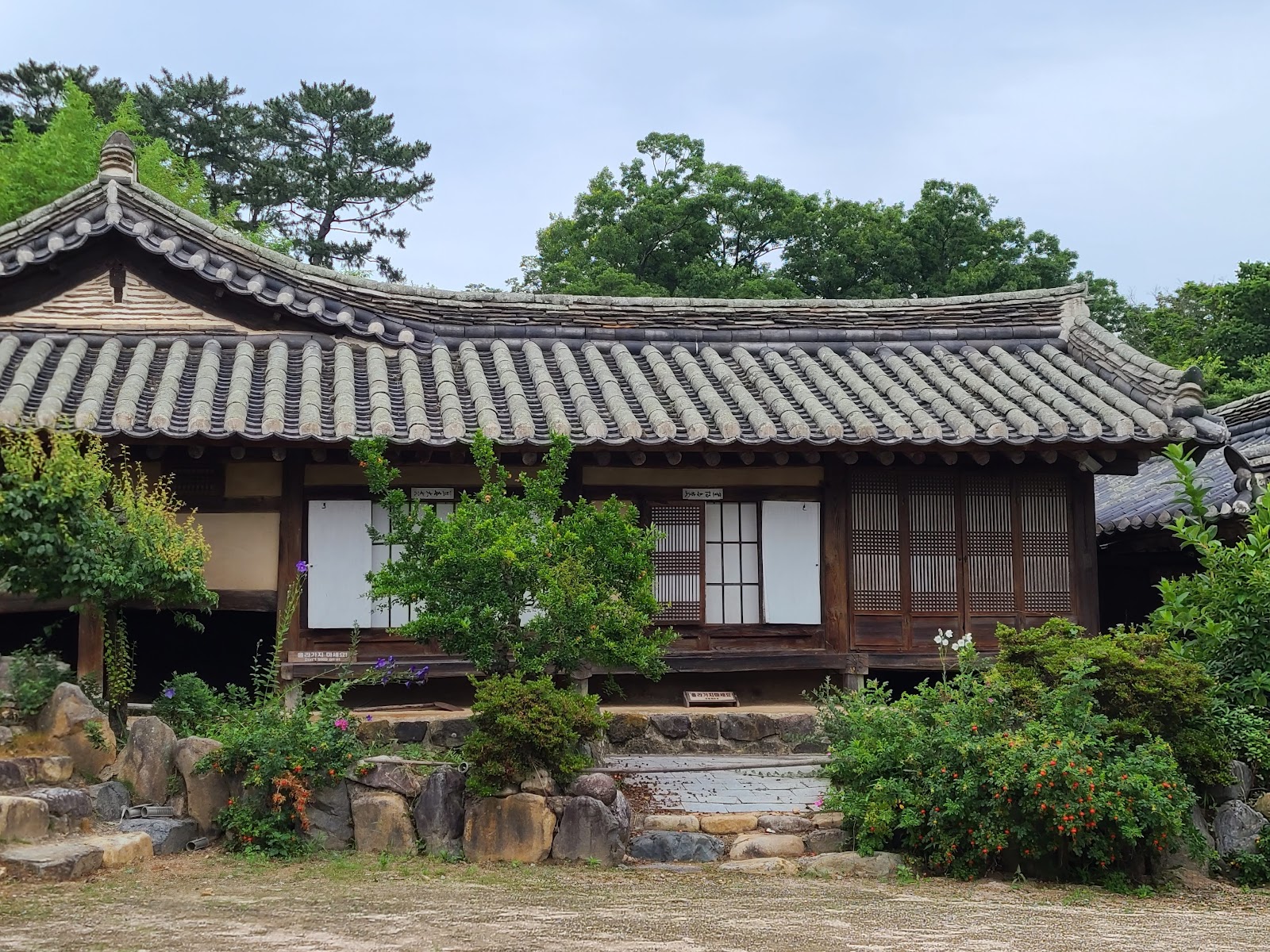
The better idea, if the village interests you at all: traditional accommodation is available here. Staying overnight in a hanok inside Yangdong means you get the two hours before opening and the hours after closing, when the day visitors have gone and the village goes back to being a village. Arrange it in advance; there is no walk-in desk.
🤫 The etiquette that actually matters
- Keep your voice down in the lanes. One reviewer’s group walked through quietly out of respect for the residents, and that is the correct default.
- Do not photograph through open gates or windows into living rooms. Roofs, walls, courtyards of the open houses: fine.
- Do not enter any building that is not marked open. It is a published rule, not a suggestion.
- Some houses look untidy. Elderly people live in them and store their tools and firewood where it is convenient. Walk past.
- Drones, loud groups and picnic setups belong somewhere else.
🌦️ Which season, honestly
Summer opening runs to 19:00, which sounds generous until you climb the Mulbonggol route at two in the afternoon in August. Shade is patchy. Reviewers who visited on hot days describe cutting the walk short and retreating to the entrance.
October to March closes at 18:00 with the last ticket at 17:00, so the useful window is shorter, but the walking is far better and the low sun sits right on the thatch. Late October into November, with the valley turning, is the version of Yangdong that most Korean photographers come for. Winter is cold and quiet and completely fine, as long as you accept that fewer houses will be open.
❓ Short answers
How much is Yangdong Folk Village?
4,000 won for an adult, 2,000 for a teenager, 1,500 for a child. Groups pay 3,400 / 1,700 / 1,200. Free for anyone 65 and over and for children aged 6 and under, with ID.
What are the opening hours?
09:00 to 19:00 from April to September, 09:00 to 18:00 from October to March, with the last ticket sold one hour before closing.
Is it closed on Mondays?
No. It is open every day of the year. Hours can be adjusted on days when the residents need privacy.
How long should I spend there?
Ninety minutes covers the recommended four-house route plus the short Hachon loop. Half a day if you want two of the longer routes.
Is parking free?
Yes, free, with accessible bays. On weekdays it is rarely full.
Can I go inside the houses?
Only the ones open to visitors. Entering any building without permission is prohibited, because families live in most of them.
Is there an English guide?
Guided interpretation in English, Japanese and Chinese is available by advance reservation on 054-762-2630. Audio guides can be rented on the day against ID.
Can I reach it by public transport?
A local bus runs, but check the number and the return time in Naver Map or Kakao Map on the day. A car or taxi from central Gyeongju is the low-stress option, and parking costs nothing. City information is on gyeongju.go.kr.
📌 The short version
- 4,000 won adult, free at 65+ and at 6 and under with ID. Parking free.
- Open daily, all year. 09:00–19:00 April to September, 09:00–18:00 October to March, last ticket one hour before close. Google’s 17:00 closing is out of date.
- Arrive at 09:00. Cooler, emptier, better light, and the village food places close early.
- Do the recommended line: Seobaekdang, Mucheomdang, Hyangdan House, Gwangajeong Pavilion.
- Six marked routes from 20 minutes to an hour. All of them climb.
- Four wheelchairs for rent at the office, accessible toilet and blue bays at the entrance.
- Guided tours in English, Japanese or Chinese need booking ahead on 054-762-2630.
- People live here. Quiet voices, closed gates stay closed.