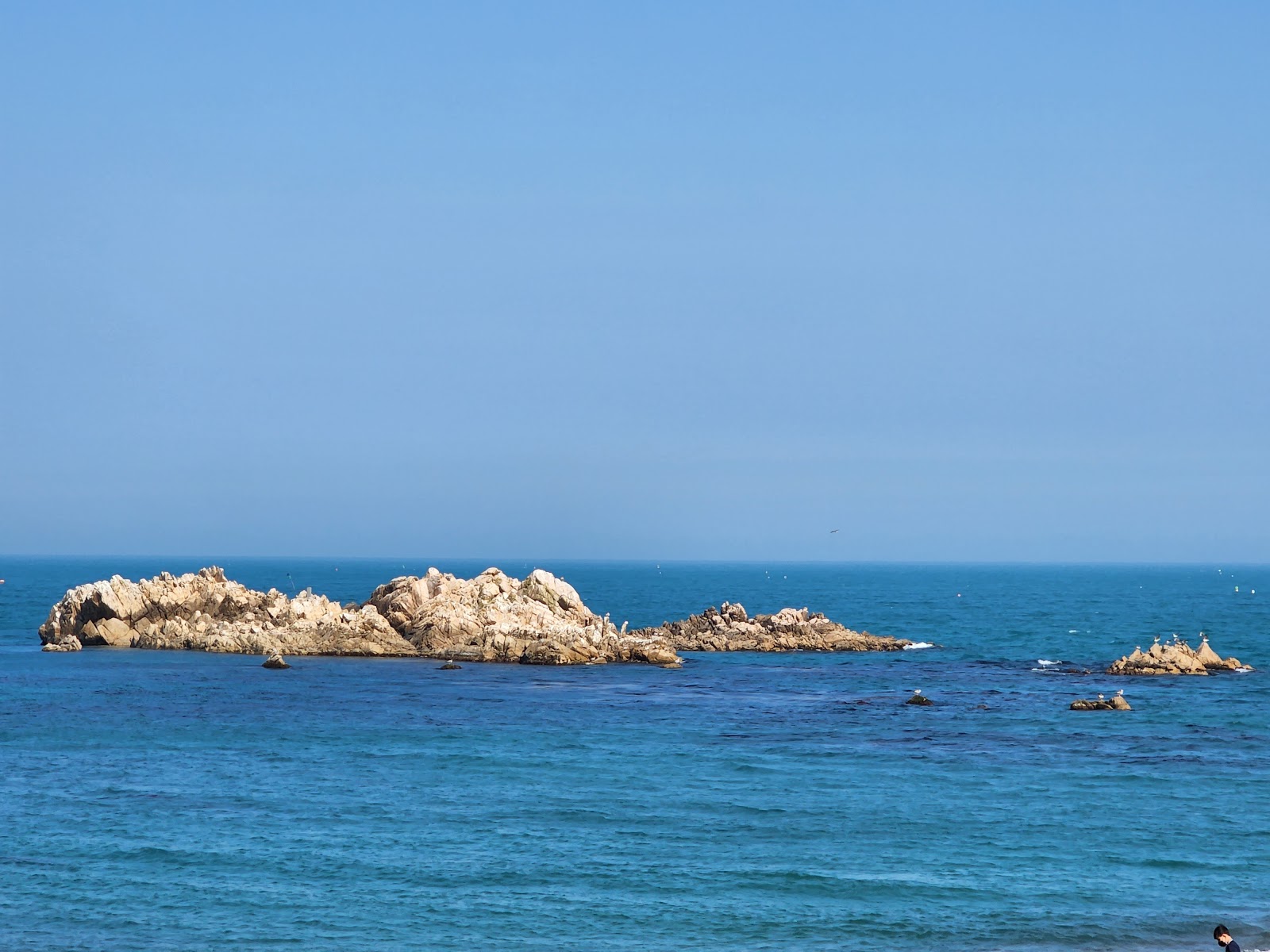
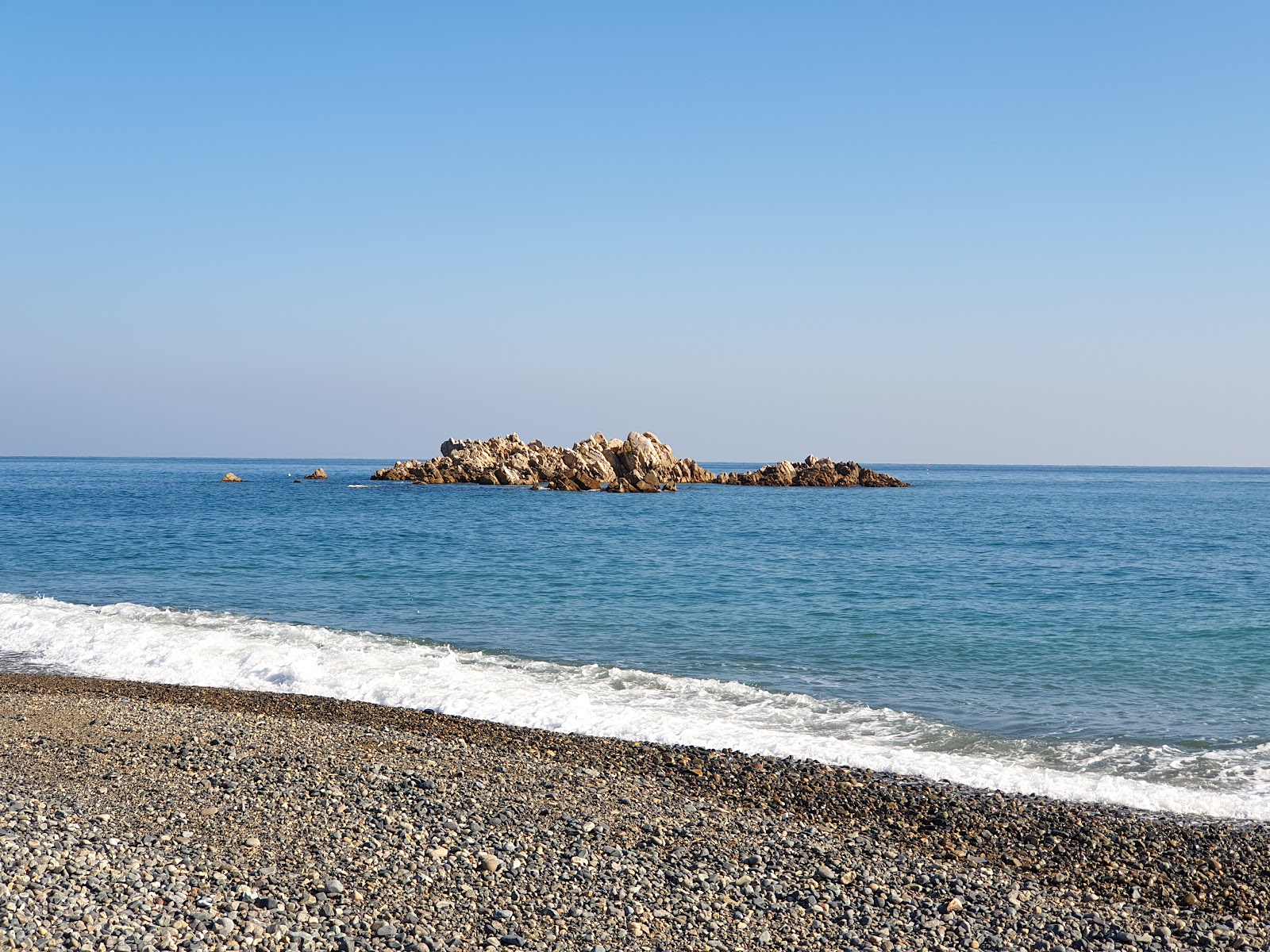
The King Munmu underwater tomb in Gyeongju is a small rocky islet about 200 meters off Bonggil Beach, on the coast east of the city. Munmu, the Silla king who unified the Three Kingdoms, asked to be buried in the East Sea so that he could become a dragon and keep invaders away. You watch his grave from the sand.
Entry is free and the official listing names no closing day. Getting there takes some effort, though, because Bonggil sits on the far side of the hills from central Gyeongju. Worth it? If the story grabs you, yes. Gyeongju is a city of grassy royal burial mounds you can stroll between. This king asked for the sea, and his grave is still out there in the waves.
🐉 King Munmu Underwater Tomb, Gyeongju: What’s Out There
The king who planned a second shift
Munmu was the 30th ruler of Silla and reigned from 661 to 681. Korean history remembers him as the king who unified the Three Kingdoms: Silla, Baekje and Goguryeo.
He was also precise about his burial. Put him in the East Sea, he ordered, and he would turn into a dragon and keep foreign invaders off Silla. Plenty of kings planned monuments. Munmu planned a posting.
The rock, measured
The islet is about 200 meters from shore and about 200 meters around. A cross-shaped waterway cuts it into four, and the channels meet in a pool at the center.
The pool’s floor is a single granite stone, 3.6 by 2.9 meters and 0.9 meters thick. Picture the floor of a small bedroom (roughly 12 by 9.5 feet) cut as one slab, about as thick as a kitchen counter is tall. Tradition holds that the king’s cremated remains lie under it.
The part nobody has settled
Historians haven’t agreed on what that stone covers. One view says Munmu’s ashes were scattered. The other says they went into an urn that was set beneath the rock. The official listing leaves the question open.
From the beach, at 200 meters and eye level, the outer rocks hide the channel and the pool. What reaches you is a dark shape on the water. Knowing what’s inside it is what makes the trip, which is why this part comes first.
🤔 Is It Worth Your Time?
Google rates it 4.3 from 1,337 reviews, and the reviews come in two moods. The warm ones dwell on how calm it is and how little it asks: a few quiet minutes, and the history lands. The cooler ones like the view, find the beach ordinary for this stretch of coast, and file the place under good if you’re already nearby.
Both sides have a point. The rock and its story are the visit. Arrive knowing the story and the quiet does the rest. Arrive expecting a swimming beach or a seafood strip and you’ll leave wondering what you missed.
Go if
- You like places where knowing the story changes what you’re looking at.
- You can get there early and want a sunrise over the East Sea.
- You’re driving the coast anyway, or you’ve already covered central Gyeongju.
Skip it if
- You have one day in Gyeongju and haven’t seen the city center yet.
- You want a beach for swimming.
- Lunch by the water was the whole plan.
Bringing kids
Lead with the dragon. Children get the story of a king who wanted to come back as a sea dragon and guard his kingdom straight away, and after that the rock is suddenly worth staring at. Restrooms and parking are both on site. The sand is the playground here. One visitor found the water cold even in summer.
🎟️ Admission, Hours and Parking: The Official Listing
The Korea Tourism Organization publishes this site’s practical details in Korean. Here they are in English. The official listing gives no opening hours, so Google’s are shown alongside.
| Item | Details |
|---|---|
| Admission | Free, for everyone |
| Closing days | None. Open all year round |
| Hours | None given officially. Google lists 06:00 to 05:59 the next morning, every day, which works out to never closed |
| Parking | Available |
| Restrooms | Available |
| Phone (inquiries) | +82-54-779-8166 (054-779-8166 from a Korean number) |
| Address | 1366-9 Donghaean-ro, Gyeongju-si, Gyeongsangbuk-do |
Foreign visitors pay what everyone pays, which is nothing. With no ticket there are no age discounts to ask about and no passport to show, and Mondays and public holidays are as good as any other day.
Two addresses, one beach
Google puts it at 26 Bonggil-ri, Munmudaewang-myeon. The official listing uses 1366-9 Donghaean-ro. One is the older lot-number style and the other is the road-name style, and both bring you to Bonggil. Look at that township name again, too. Munmudaewang-myeon is named after the king.
What the listing leaves out
The listing has no accessibility or family section for this site, and no parking rates or space count. If you need to know about a step-free way down to the sand, or whether a minibus fits in the parking lot, call the inquiry number above. It goes easier with a Korean speaker on the line.
🚌 Getting to Bonggil Beach
This is the part that needs planning. It won’t fit into a walking day around town, so give it its own half-day.
Searching for it
Google Maps lists it as Tomb of King Munmu. For directions in Korea, Naver Map and Kakao Map do the job better. In those, search the Korean name, 문무대왕릉 (Munmu Daewangneung), or the beach, 봉길해수욕장 (Bonggil Beach).
You’ll also see the rock called Daewangam. Avoid searching that name on its own, since it tends to bring up a different seaside park down the coast in Ulsan.
By bus
From wherever you’re staying, put the Korean name into Naver Map or Kakao Map and take the route it gives you. Routes and timetables change, and the apps carry the current ones. That’s why you won’t find a bus number in this guide.
When you get off, look up the times back before you walk to the sand. It takes a minute, and it means the last bus doesn’t get to decide how long you stay.
By car
Parking is on the official listing, and reviewers describe plenty of open-air spaces. A car makes sunrise far simpler, because you don’t depend on a first bus. You can be on the sand at first light and back in town for breakfast.
By taxi
Show the driver the place on your map app. Before you let the taxi go, sort out your ride back, whether that’s Kakao T, a bus you’ve already looked up, or asking the same driver to come back for you.
Short version: search the Korean name, and check your way back the moment you arrive.
🌅 When to Go
The beach looks east across the East Sea, so the sun comes up out of the water beyond the rock. If you can manage one early start in Gyeongju, use it here. The rock turns into a silhouette against a lit sky, and if quiet is what you came for, early is your best chance of getting it.
Any other hour works too, and with free entry the only thing you’re choosing is the light. In the afternoon the sun moves around behind you as you face the sea, which lights the rock from the front.
If you’re coming in summer for a swim, think again. A lifeguard talked one visitor out of going in, and another found the sea cold even in summer. Plan the swimming somewhere else and treat Bonggil as a beach for sitting.
🏖️ Bonggil Beach Itself
Pieced together from what visitors report, here’s what you’re walking onto.
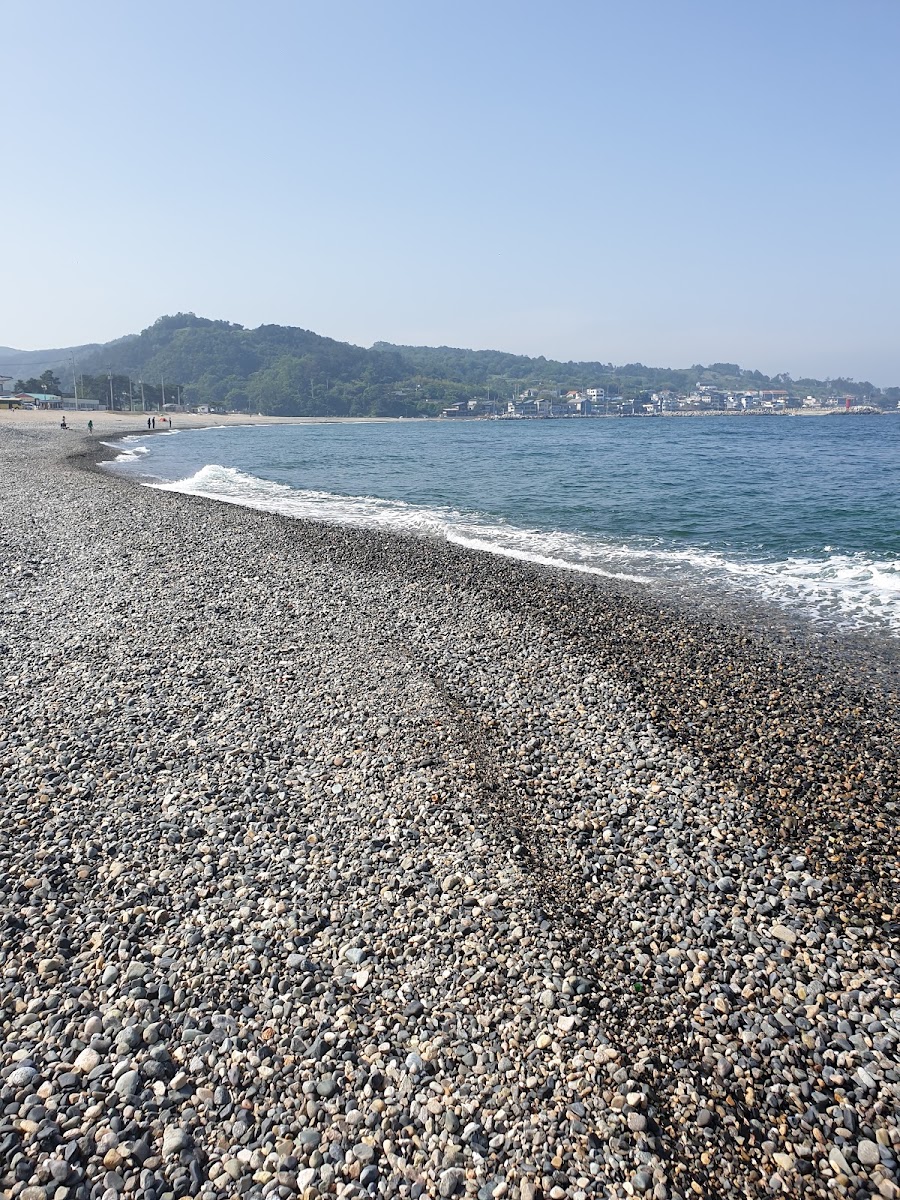
- Sand: a sandy beach, coarse in patches.
- Water: cold even in summer, and at least one lifeguard has discouraged visitors from going in.
- Facilities: public restrooms and plenty of open-air parking.
- Food: a few fish restaurants along the beach, which one reviewer didn’t find very clean. Another says they’re now being cleared away, so don’t count on eating here.
- Mood: calm. People come to sit and watch the waves.
Add it up and it’s a sit-down beach. Find a spot facing the rock and stay as long as it holds you.
What to bring
- Water and a snack, since food on the beach is uncertain.
- Closed shoes or sturdy sandals for the coarse patches.
- A phone with a zoom lens, and enough battery for the map app and the ride back.
- Something to sit on if you plan to stay a while.
📷 Getting the Photo
The rock is 200 meters out and sits low on the water, so a phone’s main lens makes it look small. Switch to 2x or 3x if you have it. Or go wide on purpose and let the rock be small in a lot of sea, which is closer to how it feels standing there.
For sunrise, walk along the beach until the rock lines up with the brightest patch of sky, then keep the horizon low in the frame. The silhouette carries the picture.
Pictures that show the cross-shaped channel clearly were taken from above. From the sand, the outer rocks hide it.
🗺️ Fitting It Into Your Gyeongju Days
The easiest way to use Bonggil is as a morning. Go out early, give the beach its time, and head back toward the city by midday with the afternoon still yours.
That gives the day a good shape: the sun coming up over the sea at one end, a palace pond lighting up at the other. Our guide to Donggung and Wolji Pond explains why you want to be there before the sun goes down.
A one-day outline
- Early morning: Bonggil Beach, the tomb at sunrise, a slow walk on the sand.
- Late morning: back toward central Gyeongju.
- Afternoon: the city center and its burial mounds.
- Before sunset: Donggung and Wolji Pond.
With a second day, pick something that shows another side of the region. Yangdong Folk Village is a village of old houses that people still live in, a long way in mood from a king under the sea.
❓ Short Answers
Can you go out to the rock?
No. Visitors watch from Bonggil Beach, about 200 meters away.
Is it the same place as Daewangam?
In Gyeongju, yes: people call the rock Daewangam too. Ulsan has its own Daewangam Park further down the coast, which is a separate place, so search Munmu Daewangneung in Korean to be safe.
How much does it cost?
Nothing. Admission is free for everyone, foreign visitors included.
Is it open on Mondays and public holidays?
Yes. The official listing gives no closing day and says it’s open all year round.
Can I swim at Bonggil Beach?
Don’t count on it. Visitors report cold water even in summer, and one was talked out of going in by a lifeguard.
Is there parking and a toilet?
Yes to both, per the official listing, and reviewers describe plenty of open-air parking. No parking rates are published.
How long should I set aside?
A morning. The looking is quick, and the round trip from the city is what takes the time.
Is there food nearby?
A few fish restaurants stand along the beach, but one reviewer says they’re being cleared away. Bring snacks and plan a proper meal back in town.
📌 Summary
- A small rocky islet about 200 m off Bonggil Beach on Gyeongju’s east coast, said to hold the remains of King Munmu of Silla (reigned 661 to 681).
- He asked to be buried in the East Sea so he could become a dragon and protect Silla from invaders.
- Inside the rock: a cross-shaped waterway, a central pool and a granite slab 3.6 × 2.9 × 0.9 m. Whether his ashes lie under it is still debated.
- Free for everyone, open all year with no closing day. Parking and restrooms on site. Inquiries: +82-54-779-8166.
- Search Munmu Daewangneung in Korean on Naver Map or Kakao Map, and check your way back as soon as you arrive.
- Go early for sunrise over the sea. Skip it if you want a swimming beach or have only one day in Gyeongju.