The Gyeongbuk Forest Environment Research Institute in Gyeongju is a provincial forestry research center, and its grounds are open as a public garden park. You get paths through the trees, a small pond and a lot of quiet. It sits in Baeban-dong, between downtown Gyeongju and Bulguksa.
Is it worth a slot on a short trip? Yes, if you stop on your way back from Bulguksa. It photographs well and it’s calm. There’s very little else to do, and after a tiring morning that’s what you want. Google lists it open 9 AM to 5 PM every day, with a 4.3 rating from 1,109 reviews.
The ride home is the other reason to come this way. There’s a station for Tasilla, Gyeongju’s public bike share, near the park, and from there it’s about 20 minutes by bike to the Gyeongju National Museum. That gets you back into town, as long as there are bikes in the rack.
A note on the name: Gyeongbuk is the everyday short form of Gyeongsangbuk-do (North Gyeongsang Province), the provincial government that runs the institute. Both names lead to the same gate.
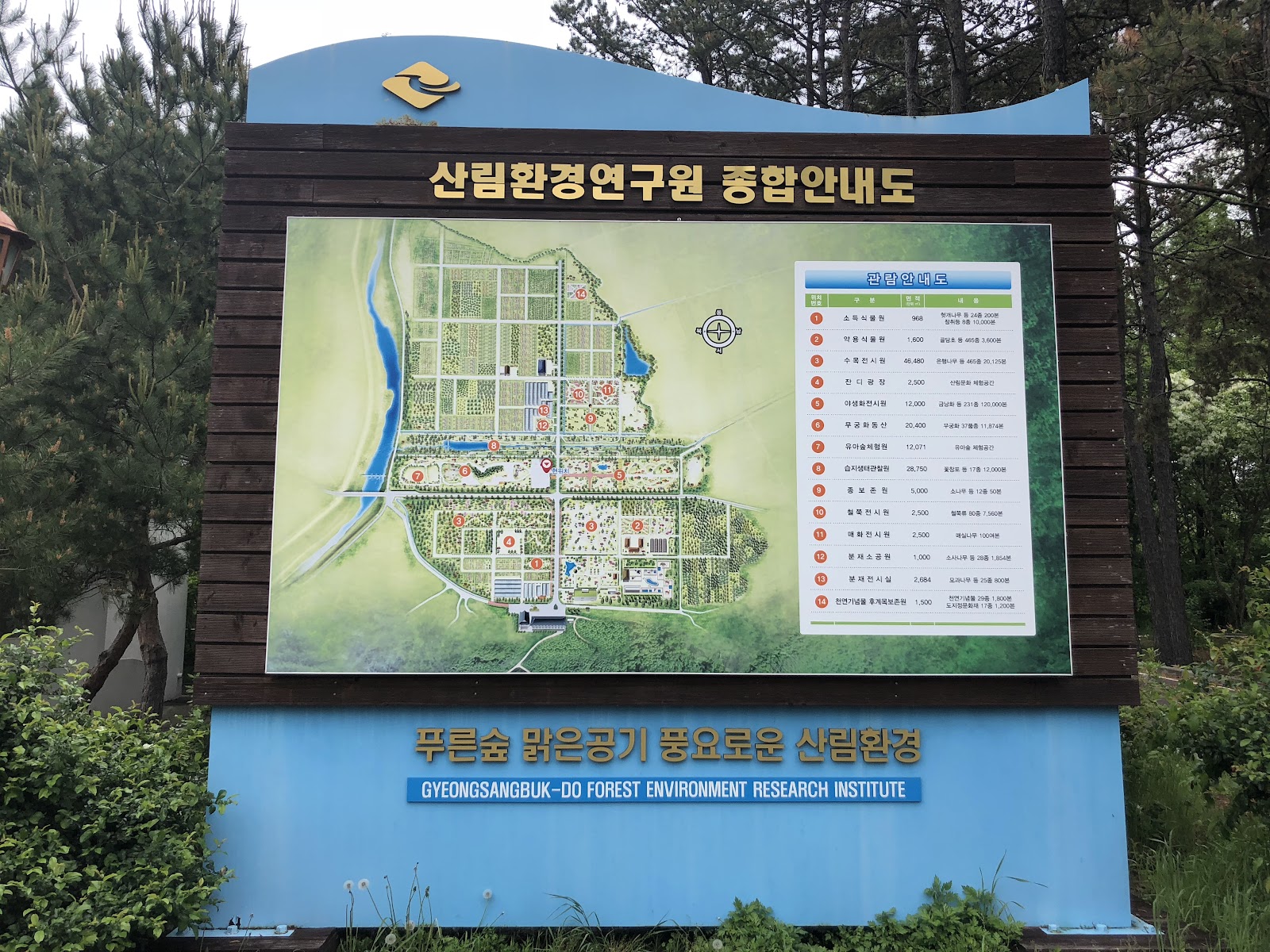
📋 Gyeongbuk Forest Environment Research Institute Gyeongju: the basics
| What | Details |
|---|---|
| Korean name | 경상북도산림환경연구원 (screenshot it for taxis and map apps) |
| Address | 1030-1 Baeban-dong, Gyeongju, Gyeongsangbuk-do |
| Hours | 9:00 AM to 5:00 PM, Monday to Sunday (Google listing) |
| Phone | 054-748-0008 (+82 54-748-0008 from a foreign phone) |
| Google rating | 4.3 from 1,109 reviews |
| Entry fee | Not confirmed. Call ahead if it matters |
| From downtown | About 15 minutes by car |
| Bike back to town | Tasilla station near the park, about 20 minutes to the Gyeongju National Museum |
| Time to give it | About an hour, two if you’re shooting seriously |
The one gap is price. I couldn’t confirm an entry fee. If cost decides it for you, a short call will settle it.
🤔 Who it suits, and who should skip it
The reviews keep mentioning the same few things. People come to take pictures, walk slowly under the trees and sit by the water for a while. It’s a good place to bring someone, like a partner, a parent, or the friend who has put up with your temple schedule all morning.
Go if
- You did Bulguksa in the morning and want somewhere calm before you head back into town.
- You like taking photos, especially portraits, and want trees and water in the frame.
- You’re traveling as a couple or a family and want an hour with nothing scheduled.
- You have a car, or you’re happy on a bike.
Skip it if
- You want history, exhibits or something to read. The trees are the whole show.
- It’s your only day in Gyeongju and you’re getting around by bus. The bigger sites will fill that day by themselves.
- You can’t get there before about 4 PM. Google lists closing at 5, and you won’t enjoy the place if you’re watching the clock.
Come for photos and a slow walk and you’ll leave happy. If you’re expecting a full attraction, it will feel thin.
🌳 What’s inside the gate
Think of it as the public garden of a working institute. The province’s forestry researchers are based here, and the grounds around their buildings are open to visitors.
What people talk about is the forest itself and a small pond. That’s a short list, and it’s enough. You walk slowly, stop often and notice how quiet it gets once you’re in among the trees.
Don’t count on a café or a shop. I found nothing that suggests you can buy food or drinks inside, so eat before you come and bring water. The reviewers who loved it talk about the calm and the photos. Nobody mentions lunch.
🚌 Getting there and back
You’ll need a car, a taxi, a bus or a bike for this one. The address is 1030-1 Baeban-dong. For taxi drivers and Korean map apps, the Korean name in the table above is quickest.
By taxi or car
From downtown Gyeongju it’s about 15 minutes by car. Show the driver the Korean name on your phone and you won’t need to say anything else.
Driving yourself? Use Naver Map or Kakao Map, the apps Koreans use for driving and local buses. Type in the Korean name and either one will find it.
By bus from Bulguksa
The institute is on the stretch between Bulguksa and the city, and whether your bus passes it depends on the route. Some do. Some take another road.
Before you get on, search the Korean name in Naver Map or Kakao Map and let the app pick the bus and the stop. Look up your return trip before you go in, too. At 5 PM you want the next bus time already on your screen.
By Tasilla bike
Tasilla (타실라) is Gyeongju’s public bike share, and there’s a station near the park. The ride from here to the Gyeongju National Museum takes about 20 minutes, which puts you close to the old center with the evening still ahead of you.
The catch is that the rack can run out. Sometimes it has a few bikes. Sometimes it has none. Look in the app before you walk over, and keep a bus or taxi as your backup. You don’t want to find an empty rack at 5 PM with no other plan.
Install the app and sign up the night before, at the hotel, on Wi-Fi. If it won’t take a foreign phone number or card, you’ll find out while there’s still time to plan around it.
🕘 Hours and the 5 PM close
Google lists the same hours all week: 9:00 AM to 5:00 PM, Monday through Sunday. Public holidays aren’t listed separately. If your trip lands on Seollal or Chuseok, the two big lunar holidays, call 054-748-0008 first. A hotel front desk can make the call in Korean for you.
The 5 PM close decides how your visit goes. Arrive by mid-afternoon and you can walk slowly, sit by the pond and still leave without hurrying. Waiting for the wind to drop so the pond goes still takes longer than you’d expect.
If quiet is the main reason you’re coming, a weekday is the safer bet.
Which season
I don’t have flower or leaf-color dates for this garden. These are general patterns for Gyeongju.
- Spring: new leaves and mild days. Easy walking weather.
- Summer: hot and humid, and the rainy season usually runs from late June into July. The trees help with the heat. Bring insect repellent.
- Autumn: Gyeongju’s leaves usually change color from late October into November, and a garden full of trees is a good place to see them.
- Winter: bare branches and cold air, with fewer visitors.
📷 Getting good photos
Photography is what reviewers mention most. You get trees and water, and on a quiet day nobody walks through your shot.
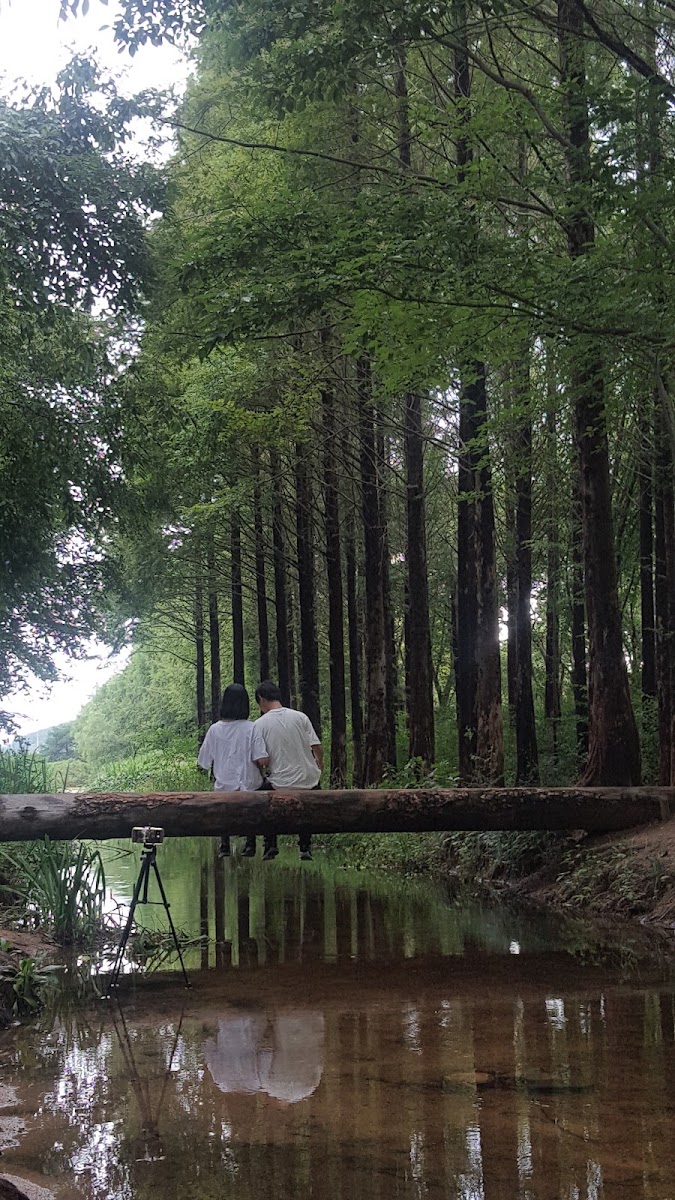
At the pond
Reflections need still water, and still water needs still air. If a breeze is rippling the surface, wait. Gusts come and go, and the water goes flat again in between, usually right after you’ve given up and put the phone away.
Get low, close to the edge, and the reflection fills more of the frame. A phone held just above the water does this surprisingly well.
Under the trees
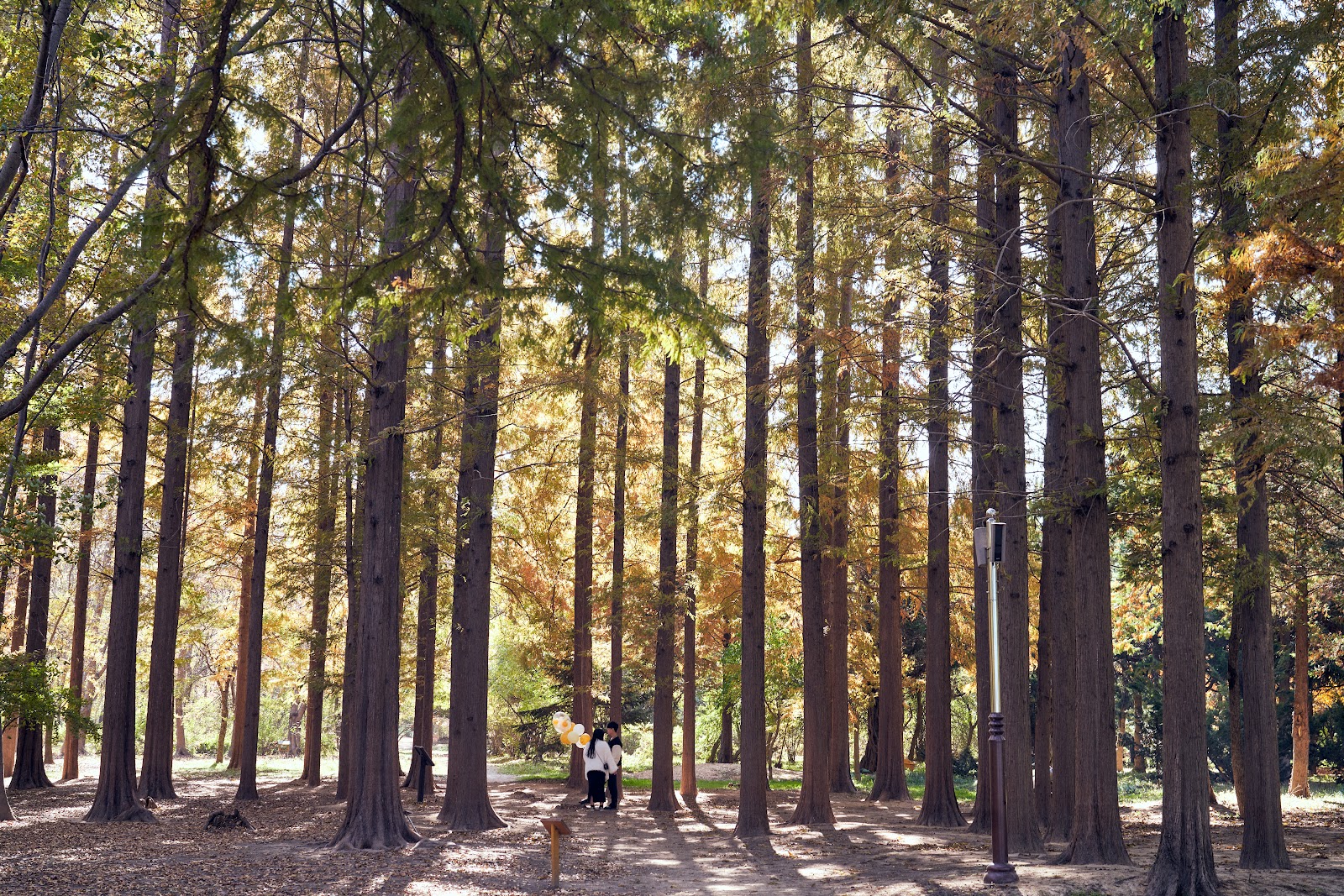
Cloudy days work well here. Cloud evens out the light under the trees, so faces don’t end up half in harsh sun and half in shade. On a bright day, put the sun behind your subject so the leaves light up around them.
Late light
In midwinter the sun is already low in the last hour before closing, and that warm light from the side is the best of the day. In summer the sun is still high at five, so come in the morning if light matters to you.
In the rain
Light drizzle is fine under the trees, and wet leaves look darker and richer in photos. In a real downpour the pond won’t show a reflection, so save that day for something indoors.
Couple and family shots
Taking photos of each other? Pick one spot by the pond and one along a path. That’s two different backgrounds from one short walk.
Planning something bigger, with a tripod, lighting or a hired photographer? Call 054-748-0008 and ask first. It’s a working institute, and it’s better to check than to guess.
🚲 An afternoon that works
Bulguksa in the morning, this garden after lunch, then a public bike back to town before five.
This order works with the 5 PM close and the bike station. You start at Bulguksa and move toward town all day, so you never have to backtrack.
- Morning: Bulguksa.
- Early afternoon: bus or taxi to the institute. Check the bus route in Naver Map or Kakao Map before you get on.
- About an hour inside: the pond, the paths, the photos.
- Just before 5 PM: walk out and check the Tasilla app for bikes.
- Then: ride about 20 minutes to the Gyeongju National Museum.
- Dusk: Donggung Palace and Wolji Pond, a short walk from the museum.
That last stop is why the timing works. Wolji is famous for its night view, and if you leave here at five you’ll be nearby for the evening. In summer you’ll have time for dinner before dark. In midwinter the sun is setting as you arrive, so ride straight there. Our guide covers when to arrive at Donggung and Wolji Pond.
No bikes at the rack? Take a bus or a taxi toward the museum and keep the rest of the plan. All you lose is the ride.
In summer, think about doing it the other way round. Be at the gate when it opens at 9, while the light is still soft, then carry on to Bulguksa. You lose the bike ride, and the morning light makes up for it.
🎒 Before you go
- Water and a snack. I couldn’t confirm anywhere to buy food inside.
- Shoes you’re happy to walk in for an hour or two.
- Insect repellent from late spring to early autumn. Trees plus a pond usually means mosquitoes.
- A screenshot of the Korean name, for taxis and map searches.
- Your route back, saved before you go in.
- The Tasilla app, installed and tested the night before.
- A charged phone or a power bank, if photos are the point.
🗺️ Where it fits in a Gyeongju trip
On a one-day visit, this garden is optional. Gyeongju’s bigger sights each take real time. Yangdong Folk Village, where families still live in the old houses, is worth a whole morning. King Munmu’s tomb is out in the sea off the east coast.
With two or three days, it’s worth the time. Bulguksa makes for a busy morning, and an hour here afterward gives you a break before the evening.
❓ Short answers
Is it worth visiting?
Yes, as a calm stop between Bulguksa and town, especially if you like taking photos. Skip it if you’re after history or exhibits.
What are the opening hours?
9:00 AM to 5:00 PM, Monday to Sunday, according to Google. For public holidays, call 054-748-0008.
Is there an entry fee?
I couldn’t confirm either way. A quick call to 054-748-0008 will settle it.
How do I get there from downtown Gyeongju?
About 15 minutes by car or taxi. Some buses between town and Bulguksa pass nearby, so check the route in Naver Map or Kakao Map.
Can I ride a bike back to town?
Yes, when there are bikes in the rack. There’s a Tasilla public bike station near the park, and the ride to the Gyeongju National Museum takes about 20 minutes. Check the app first.
How long should I plan?
About an hour for a walk and photos. Two if you’re doing a proper photo shoot.
Who will enjoy it most?
Photographers, couples and families who want a quiet hour between bigger sights.
📌 In short
- A provincial forestry research institute in Baeban-dong whose grounds are open as a garden park.
- Trees, a small pond, quiet and good photos. Not much beyond that.
- Open 9 AM to 5 PM daily, according to Google. Call 054-748-0008 about holidays.
- Rated 4.3 from 1,109 Google reviews.
- About 15 minutes from downtown by car, and on the way back from Bulguksa.
- Tasilla bikes nearby: about 20 minutes to the Gyeongju National Museum, if the rack isn’t empty.
- Leave by five and head for Donggung and Wolji Pond at dusk.