Yongso Wellbeing Park is a small reservoir in Gijang-eup, at the far northeastern edge of Busan, with a flat walking path looped around the water and a low bridge crossing one end. The full circuit takes about 30 minutes at a normal pace. It is open 24 hours a day, every day of the week, and it holds a 4.4 rating from 505 reviews, which is high for a place with no café strip, no observation deck and no entrance gate.
Here is the honest version for a visitor with five days in Busan. This is not a headline stop. It is a quiet hour for people who have already done Haeundae and Gamcheon and want to hear water and birds instead of a queue. If you are staying in Gijang, or driving up the east coast, or you simply want one morning where nothing is scheduled, it earns its place. If your trip is four days long and you have not seen Gwangalli yet, skip it without guilt.
🚕 Getting to Yongso Wellbeing Park in Busan
The address is 223-6 Seobu-ri, Gijang-eup, Gijang-gun, Busan. Gijang-eup sits inland from the coast at the top end of the city, well past Haeundae, and the park is tucked behind a residential area of low houses and apartment blocks. There is no subway exit that spits you out beside the water.
Save the Korean name in your phone before you go: 용소웰빙공원. Type that into Naver Map or Kakao Map rather than the English spelling, and show it to a taxi driver instead of pronouncing it. Korean drivers read Hangul instantly and guess at romanisation slowly.
One thing visitors report consistently: a taxi will not always set you down at the park itself. You get out on a road nearby and walk the last stretch through the neighbourhood. That is a two-minute annoyance in good weather and a real one in rain, so check the blue map pin against where the car is actually stopping and be ready to walk a block.
Getting back out is the part people underestimate. Street taxis do not cruise this area looking for fares. Have Kakao T installed and set up before you arrive, with a Korean phone number or a card already registered, because standing beside a reservoir in Gijang waiting for a cab to appear by luck is a long afternoon. For current bus and metro routes and fares across the city, Visit Busan is the official source worth checking the morning you go.
If you are driving
Parking is the weak point. Drivers describe it as difficult, and the reason is structural: the park backs onto housing, so the kerb space around it belongs to people who live there. On a clear weekend afternoon you may circle. Arrive before 10am and the problem mostly disappears.
If you are renting a car for the Gijang and east coast run anyway, this park makes more sense as a stop than as a destination. Pull in, walk the loop, drive on. Forty minutes, total.
🌊 What the walk actually feels like
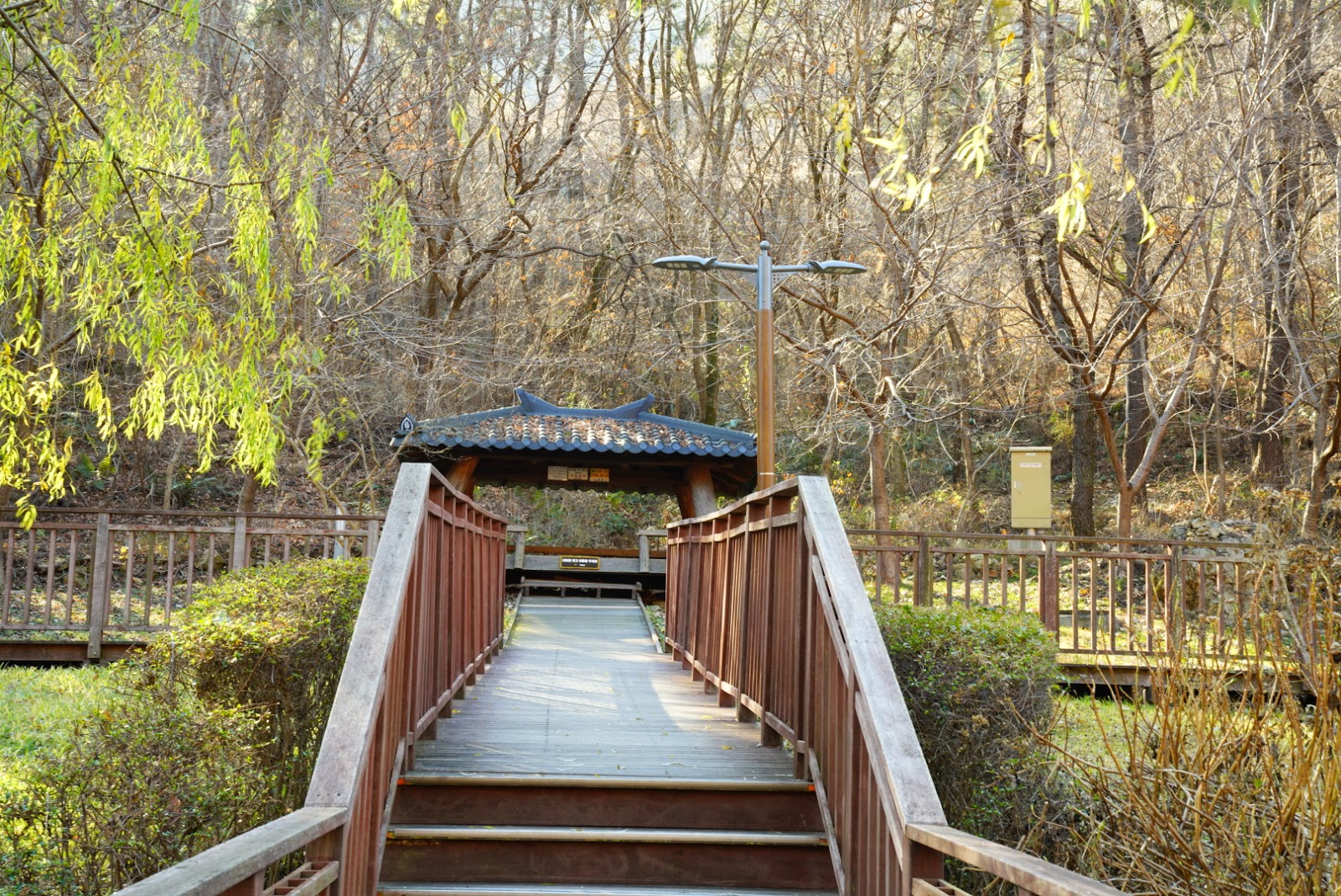
The path runs around the water with the reservoir on one side and trees on the other. It is flat, wide enough for two people to pass a third, and surfaced well enough that you are watching the water rather than your feet. Thirty minutes is the standard lap. Sit twice and it becomes an hour.
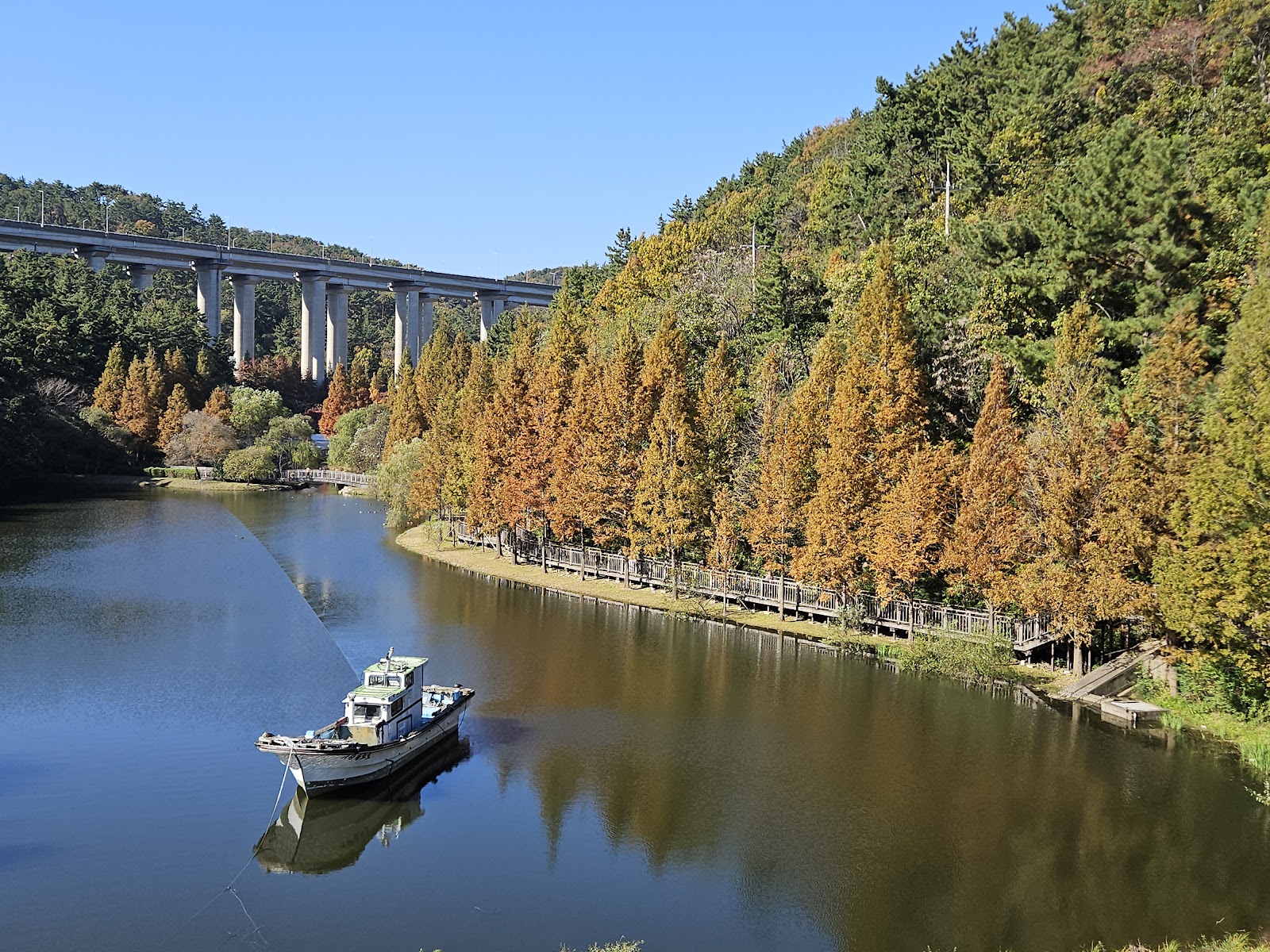
A small bridge crosses at one end, over the stream feeding the reservoir. That bridge is the photograph everyone takes, and it works because the water is usually still enough to double the trees. Early morning is glassiest. By mid-afternoon there is a breeze off the hill behind and the reflection breaks up.
What people mention most in their reviews is not a view at all. It is the sound. Moving water, insects, birds, occasionally a neighbour’s dog. Busan is a loud city with motorbikes on the pavement and a Line 2 train every four minutes. Twenty minutes of nothing but water hits harder than it should.
Walk the loop once without your phone out. Then walk it again taking photos. The second lap is better because you already know where the good angles are, and the whole thing only costs you an hour.
Locals use this park properly. You will pass retired couples doing laps in matching visors, parents pushing strollers, someone stretching against a railing. Nobody is performing. If you have spent three days inside Busan’s photogenic tourist circuit, that ordinariness is the actual attraction.
⛰️ The uphill option: Sanseongsan
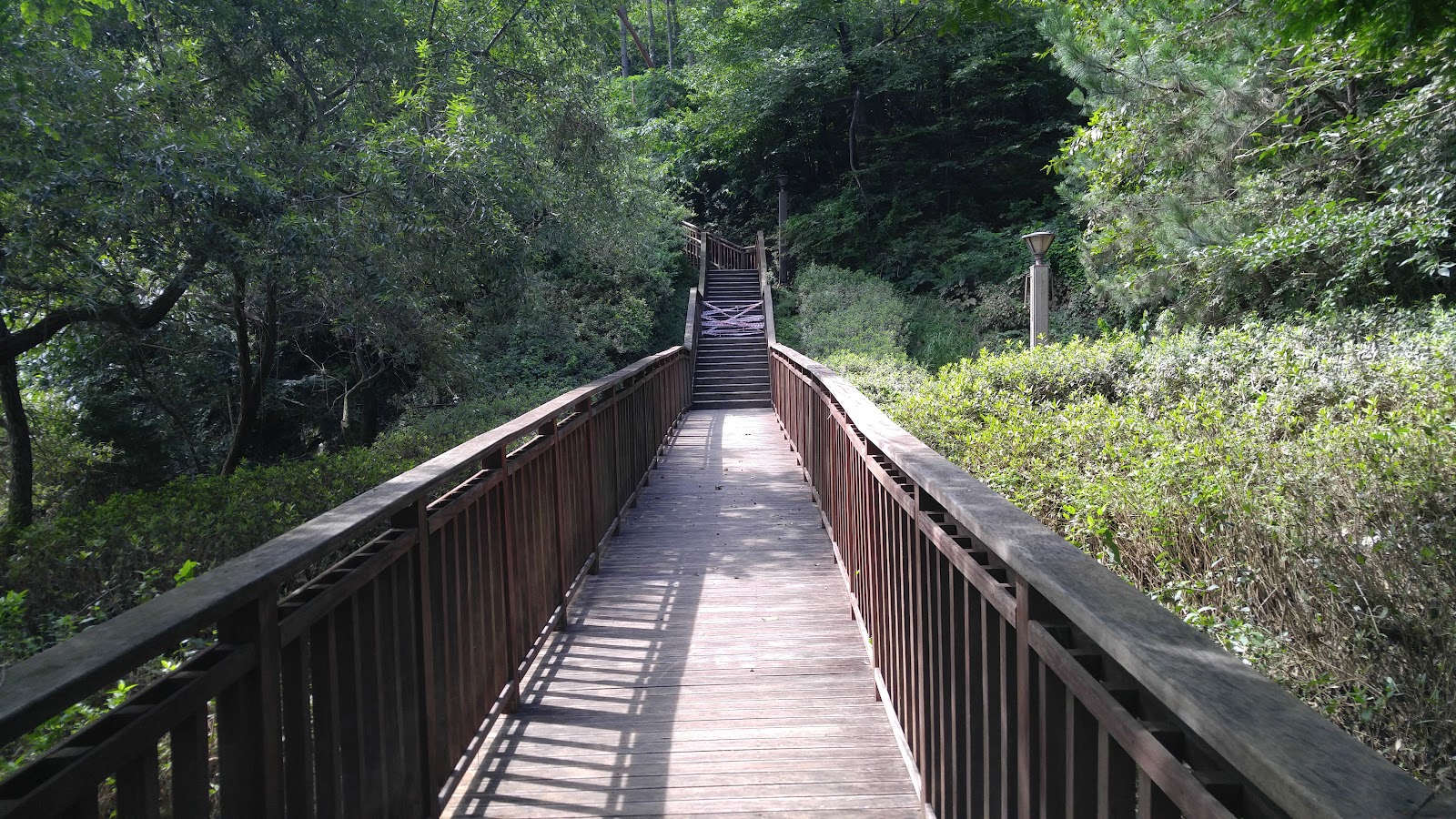
A trail leaves the lake loop and climbs toward the top of Sanseongsan, the mountain behind the park. This turns a gentle 30-minute stroll into a hike, and it is the single reason a serious walker would make the trip out to Gijang-eup specifically.
Treat it as a separate decision from the lake. The loop is flat and suits any shoes. The climb is a mountain trail in Korea, meaning dirt, roots, rock steps and gradient. If you are in sandals or slip-on sneakers, do the lake and go home. If you brought proper shoes, carry more water than you think you need, because there is no shop on the way up.
- Lake loop only: about 30 minutes, flat, any footwear
- Lake plus sitting and photos: 1 hour
- Lake plus the uphill trail: half a day, hiking shoes, water in the bag
Start the climb in the morning. There is no lighting on a mountain trail, and coming down a Korean hillside in the dark with a phone torch is how twisted ankles happen.
🍂 When to come
Autumn is what regulars rave about. Late October into mid November, the trees around the water turn and the reflection does the work for you. That is also when Busan’s weather is at its best, dry and around 18 to 22 degrees in the daytime, so the walk costs you nothing in sweat.
Spring is green and pleasant and much emptier. Summer is honest hard work: Busan in July and August is humid enough that a flat 30-minute walk leaves you needing a shower, and the reservoir means mosquitoes at dusk. Bring repellent or come before 10am.
Winter is the sleeper choice. Cold, clear, completely quiet, and Busan rarely gets the deep freeze that Seoul does. You may have the whole loop to yourself on a January weekday morning.
About that “open 24 hours”
The listing says open 24 hours, seven days a week, and that is true in the sense that there is no gate to close. It does not mean the park is useful at night. This is a residential edge of Gijang with a reservoir in the middle, not a lit waterfront promenade. Come in daylight. If you want Busan after dark, spend that evening on the spots where the city actually looks good at night instead.
🧒 Bringing children
Set expectations low on the playground. It was rebuilt, and the honest read from parents is that the new version gives kids less to do than the old one. A few minutes of interest, not an afternoon.
What does work with children is the water and the bridge. Small kids will spend twenty minutes looking for fish and throwing nothing (please) into the reservoir. The flat path is stroller friendly for the full lap, which is not true of most Busan viewpoints. So it is a good hour for a family and a bad half day.
☕ Food, water and the one café
There is no restaurant scene here. Visitors say it plainly: the surroundings are houses and apartments, and nothing nearby is worth planning a meal around. Eat before you come, or eat after you leave, and do not arrive hungry at 1pm expecting options.
There is a small café run by an older gentleman, and it is the kind of place where the owner is more of the experience than the menu. Treat it as a coffee and a sit down rather than a destination, bring some patience if there is a language gap, and carry cash in case card handling is slow. Bring your own water bottle regardless, particularly if you are going up the hill.
🧭 Building a day around it
Gijang is the direction most Busan itineraries never go, and that is the whole argument for this park. The pattern that works: leave your hotel after breakfast, be at the water by 9 or 10 while the parking and the reflection are both good, walk the loop, then continue along the coast rather than doubling back into the city.
Heading further north up the same coastline, Mimeumimeu at Jinha Beach is on the same axis and pairs naturally with a Gijang morning, sea and shop after lake and trees. Coming back the other way, if your legs are done after the Sanseongsan climb, the free foot bath at Dongnae hot spring is the correct end to that day, with the warning that it shuts at 5pm.
What does not work is squeezing this park in between two ticketed attractions. The travel time out to Gijang-eup and the taxi wait coming back eat more of your day than the 30-minute walk does. Give it a morning or give it nothing.
📋 The practical details
| Korean name | 용소웰빙공원 |
| Address | 223-6 Seobu-ri, Gijang-eup, Gijang-gun, Busan |
| Hours | Open 24 hours, Monday to Sunday |
| Closed | No closing day |
| Phone | 051-709-4536 |
| Rating | 4.4 from 505 reviews |
| Admission | No fee listed |
| Reservation | Not required |
| Loop time | About 30 minutes |
- Shoes: trainers for the loop, hiking shoes if you climb
- Bring: water, mosquito repellent from June to September, a little cash
- Do not count on: restaurants, easy parking, a taxi appearing on its own
- Best light: before 10am for still water, late October to mid November for colour
❓ Short answers
Is Yongso Wellbeing Park worth visiting?
Yes if you want a quiet 30-minute lakeside walk away from the tourist route, or if you plan to hike up Sanseongsan. No if you have fewer than four days in Busan and have not yet seen the coast.
How long do I need there?
One hour covers the loop plus photos and a sit. Add half a day if you take the mountain trail.
Is there an entrance fee?
No fee is listed and there is no ticket office. Nothing needs booking either.
Can I get there by taxi?
Yes, and show the driver 용소웰빙공원 in Hangul. Expect to be dropped nearby rather than at the entrance, and book your return through Kakao T rather than hoping to flag one down.
Is parking available?
Drivers describe parking as difficult because the park is surrounded by housing. Arriving before 10am is the practical fix.
Is it good for kids?
The flat path suits strollers and the bridge over the water holds their attention. The rebuilt playground is thin, so do not promise them a big playground.
What is the best season?
Autumn foliage, roughly late October to mid November. Winter mornings are the quietest.
Can I eat nearby?
Barely. There is a small café in the park area and a residential neighbourhood around it. Plan your meal elsewhere.
✅ In short
- A reservoir in Gijang-eup with a flat 30-minute loop, a small bridge and a stream. 4.4 from 505 reviews.
- Open 24 hours with no closing day and no listed fee, though it is only useful in daylight.
- Search 용소웰빙공원 in Naver or Kakao Map. Taxis often stop a short walk away.
- Parking is genuinely hard after mid-morning. Get there by 10am.
- The Sanseongsan trail off the loop turns this into a half-day hike. Proper shoes and your own water.
- No restaurants worth planning around. One small café, otherwise eat before or after.
- Best in late October and November for colour, best in winter for silence, worst in humid August.
- Pair it with the coast going north rather than doubling back into central Busan.