Two pieces of admin can quietly eat a morning and an evening of a Busan trip. Getting won into your pocket at the start, and getting some of it back at the end. Here is the whole answer in three lines: change a small amount at the airport for the taxi and the transport card, do the real exchange at a booth in Nampo-dong or Seomyeon, and claim your tax refund at a downtown kiosk before you ever reach Gimhae.
The reason for that last line is a queue. Travellers flying out of Gimhae have reported spending half an hour scanning receipts before check-in, then another forty minutes waiting at the refund counter afterwards, with two machines and two windows serving one long line. Seventy minutes, on a day when you also have to check a bag and clear security. Doing it downtown takes about five.
💵 Busan currency exchange and tax refund: the order to do it in
Think of it as four moves across the trip, not one big errand.
- Arrival day. Change enough at Gimhae for a taxi or bus and a transport card top-up. That is all the airport is for.
- Day one, in the city. Change the bulk of your cash at a private booth in Nampo-dong or Seomyeon.
- While shopping. Show your passport at the till and take the immediate refund whenever the shop offers it.
- Last full day. Clear any remaining refund receipts at a downtown kiosk. Then the airport is just an airport.
Everything below is the detail behind those four lines: which booths, what to carry, what the refund actually requires, and the specific ways people lose the money they were owed.
🏪 The Nampo-dong and Gukje Market booths
The cluster of small exchange booths around Nampo-dong is where Busan residents send their visiting relatives. They sit on the ground floor of shopping buildings and in the lanes that feed into Gukje Market, which runs across several blocks and into multi-floor buildings at 55 Gukjesijang 2-gil, Jung-gu. Google lists the market at 4.1 from more than 13,000 reviews, and the phone number on file is 051-245-7389.
The booths are unglamorous. A window, a rate board with a handful of currencies on it, one person behind the glass. Compare two or three boards before you commit, because they are often within a minute’s walk of each other and they do not all post the same number.
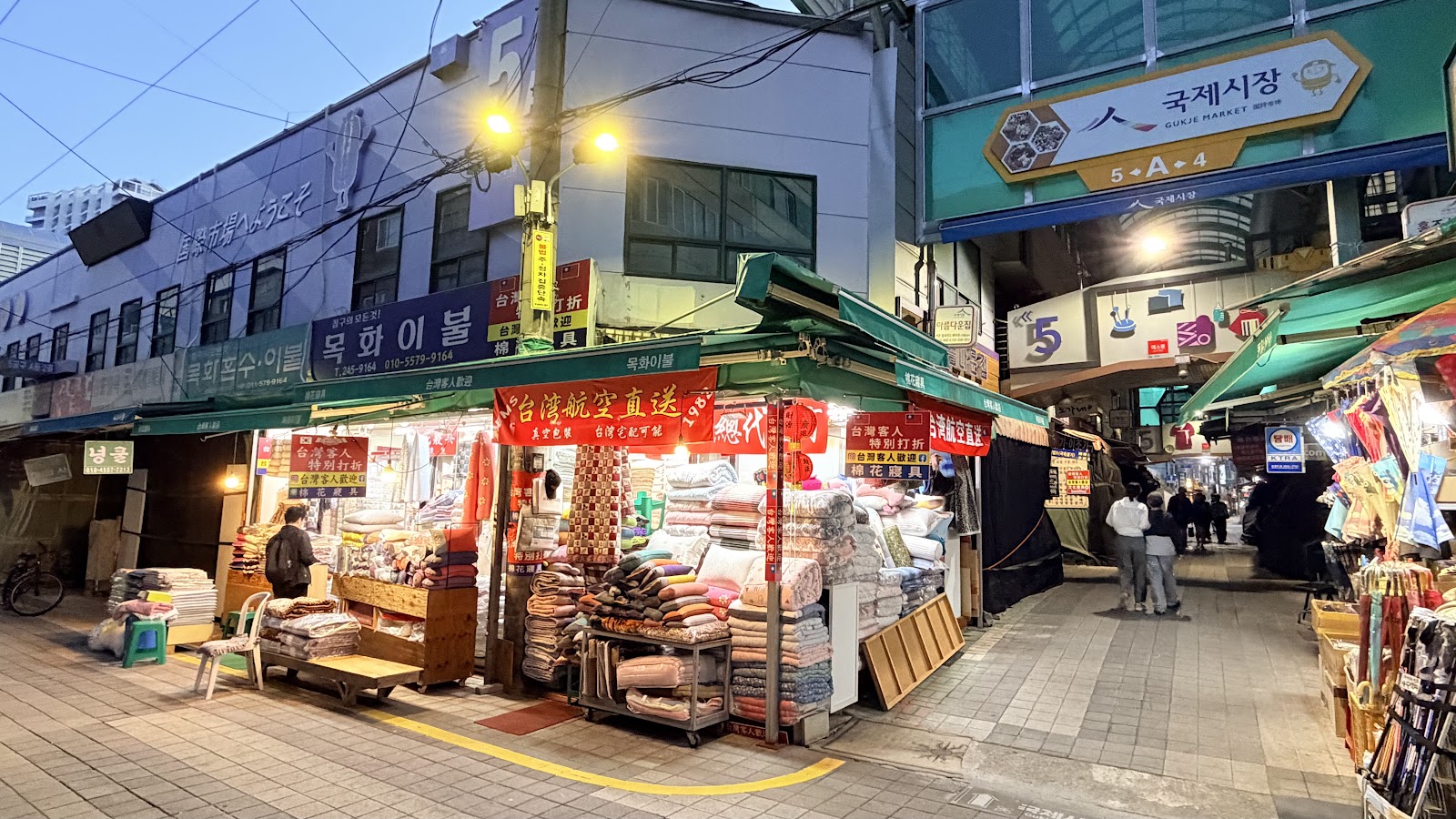
Practical notes from the window itself:
- Bring clean, unfolded notes. Torn or heavily marked bills get refused or discounted.
- Large denominations usually get the better rate. A stack of small notes gets the worse one.
- Passport in hand. Some booths want to see it, some do not, and arguing about it wastes your time and theirs.
- Count the money before you step away from the window. This is normal behaviour here, nobody will be offended.
- Cash in, cash out. These booths are not card cash-advance counters.
Gukje Market itself is the reason a lot of people need the cash in the first place. It is enormous, the food section alone is a project, and plenty of the older stalls still work in notes only. If you are combining the errand with lunch, Gukje Market and Ssiat Hotteok: Eat First, Shop Later covers the eating half of the same trip.
Change money first, then eat, then shop. In the other order you end up back at the booth with a hotteok in one hand, and there is always a line by then.
🚇 Seomyeon, if you are staying on that side
Seomyeon is the other place to do this, and for a lot of visitors it is the more convenient one, because it is where the two subway lines cross and where a large share of mid-range hotels sit. The underground shopping town beneath Jungang-daero in Busanjin District connects the station to the street exits, and there are exchange windows both down there and at street level around the main crossings.
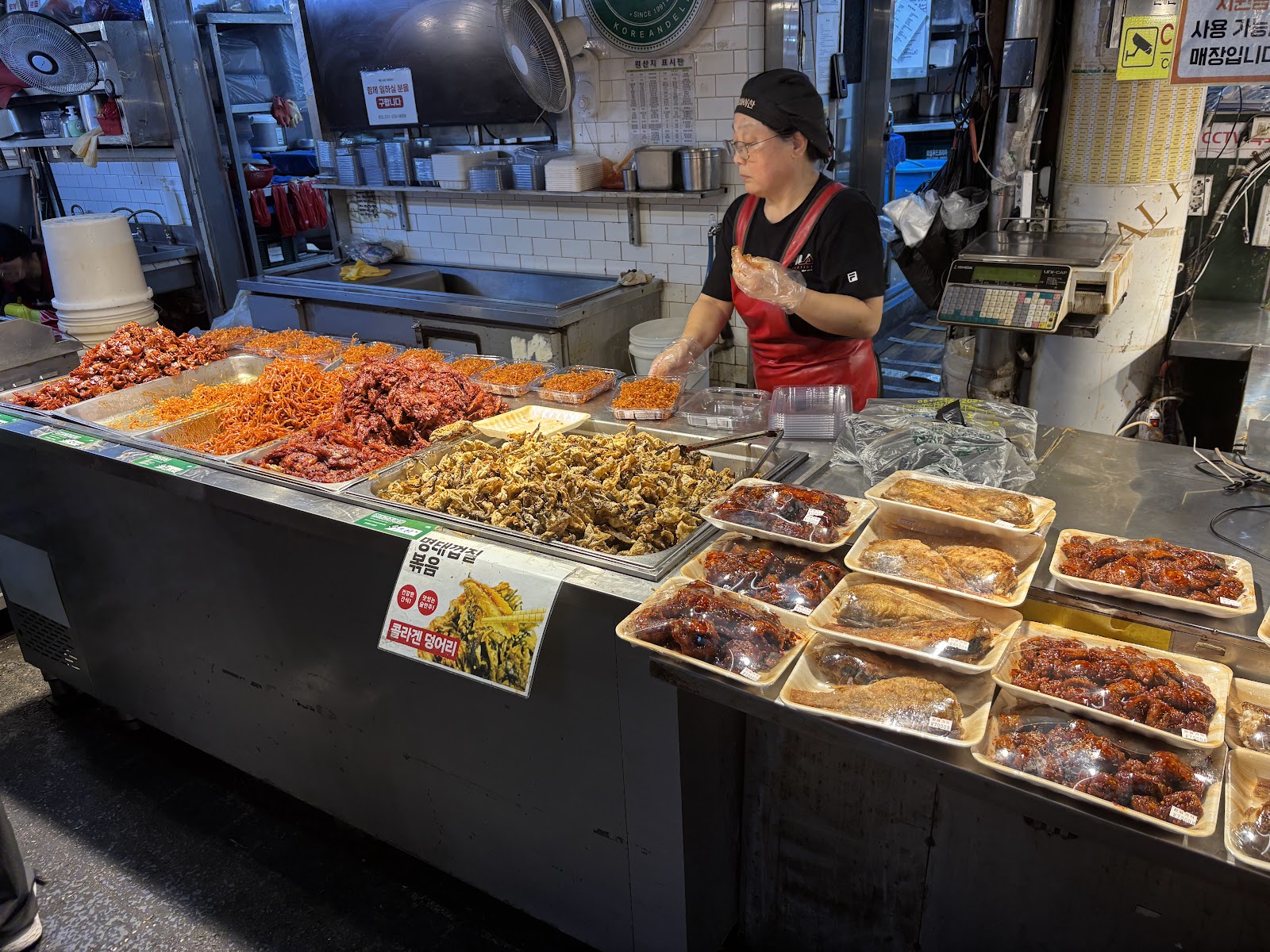
One honest warning about the underground level: it is a maze. Visitors regularly report that the in-station signage and what their phone map says do not agree, and that they surfaced on the wrong side of a six-lane road. If you have a booth pinned, note the exit number, not the shop name. Coming up the correct staircase solves ninety percent of it.
Late evening is the weak spot. Shutters come down earlier than you would expect for a district this busy, and a quiet underground corridor at closing time is not where you want to discover the booth is shut. Do this in daylight or early evening.
🏦 Booth, bank, airport or ATM
| Where | Good for | Watch for |
| Private booth, Nampo-dong or Seomyeon | The main exchange. Fast, no forms, boards posted outside | Cash only, and hours are shop hours |
| Gimhae Airport counter | The first hour after landing. Taxi fare, transport card | Convenience is priced in. Change a little, not a lot |
| Bank branch | Larger sums, a paper receipt, less common currencies | Weekday business hours only, and there is paperwork |
| ATM withdrawal | Topping up mid-trip without carrying a wad of home currency | Look for machines marked for foreign cards. Your bank adds its own fee |
A note on the airport counter, since it comes up every time. Gimhae is at 108 Gonghangjinip-ro, Gangseo-gu, rated 4.1 across roughly 5,700 reviews, and the general call number is 1661-2626. Travellers consistently describe it as clean and quick to move through on the domestic side. Prices inside, on the other hand, get flagged constantly. Treat the arrivals exchange the same way you treat the airport sandwich.
Getting from there to your hotel is its own small problem, and Gimhae Airport to Haeundae Without the Guesswork lays out the options. Timetables and terminal information are on the Korea Airports Corporation site if you want to check anything before you fly.
💳 How much cash do you actually need
Less than most people bring, and more than nothing. Korea runs on cards to a degree that surprises visitors. Convenience stores, cafés, chain restaurants, department stores, taxis, all card. Foreign Visa and Mastercard work in the overwhelming majority of places.
Cash still matters in five specific situations:
- Old market stalls and street food carts, particularly the ones run by one person.
- Topping up a transport card. The machines take notes, not foreign cards.
- Small neighbourhood restaurants that have been open for forty years and see no reason to change.
- Tips are not a thing here, but small unattended payments and coin lockers are.
- Backup, for the evening your card decides to be difficult in a foreign country.
If your trip is mostly restaurants and subway rides, a modest cash float per day plus a card covers it. If you are doing Gukje and Jagalchi properly, carry more. The transport card side of this is unpacked in Buy the Card First: Getting Around Busan.
🧾 The tax refund, explained once, properly
Korea refunds a portion of the tax on goods bought by short-term foreign visitors, at participating shops, on purchases above a minimum value per receipt. You take the goods out of the country unused. That is the whole principle. Everything else is process.
Three things make or break it, and all three happen at the till, not at the airport:
- Your passport, physically present. A photo on your phone is refused more often than it is accepted. The purchase has to be tied to the passport holder.
- The shop has to be in the scheme. Look for tax free signage at the door or the register, or just ask before you pay.
- The receipt has to be the refund slip. A plain card receipt is worth nothing later. Check you were handed the separate tax refund document.
Route one: immediate refund at the register
This is the good one. The shop deducts the refund from your bill on the spot, you pay the lower price, and you are done. It applies below a per-purchase ceiling and up to a total limit across your stay, and the staff will tell you when you hit it. Nothing to claim later, nothing to queue for. Always take this option when it is offered.
Keep the paperwork anyway. Customs can ask to see what you bought when you leave, and having the slip in the same bag as the item makes that conversation twenty seconds long.
Route two: downtown refund kiosks
Self-service refund machines sit in department stores and large shopping complexes, including in the Seomyeon and Nampo areas. You scan your passport, feed in the refund slips, and take cash in won or send the amount back to your card. The screens run in English, Japanese and Chinese.
Do this on your second-to-last day, not the last one. If a slip is rejected because a shop filled it in wrong, you still have a day to go back and fix it. On departure morning you have no such margin.
Route three: the airport, if you must
The Gimhae route is a two-stage thing and both stages have a line. Receipts get scanned before check-in. Then, after you are through, you collect at the refund counter in the departures area. The traveller who timed it at seventy minutes total was not exaggerating for effect. Two machines, two windows, and everyone on the same wave of afternoon departures.
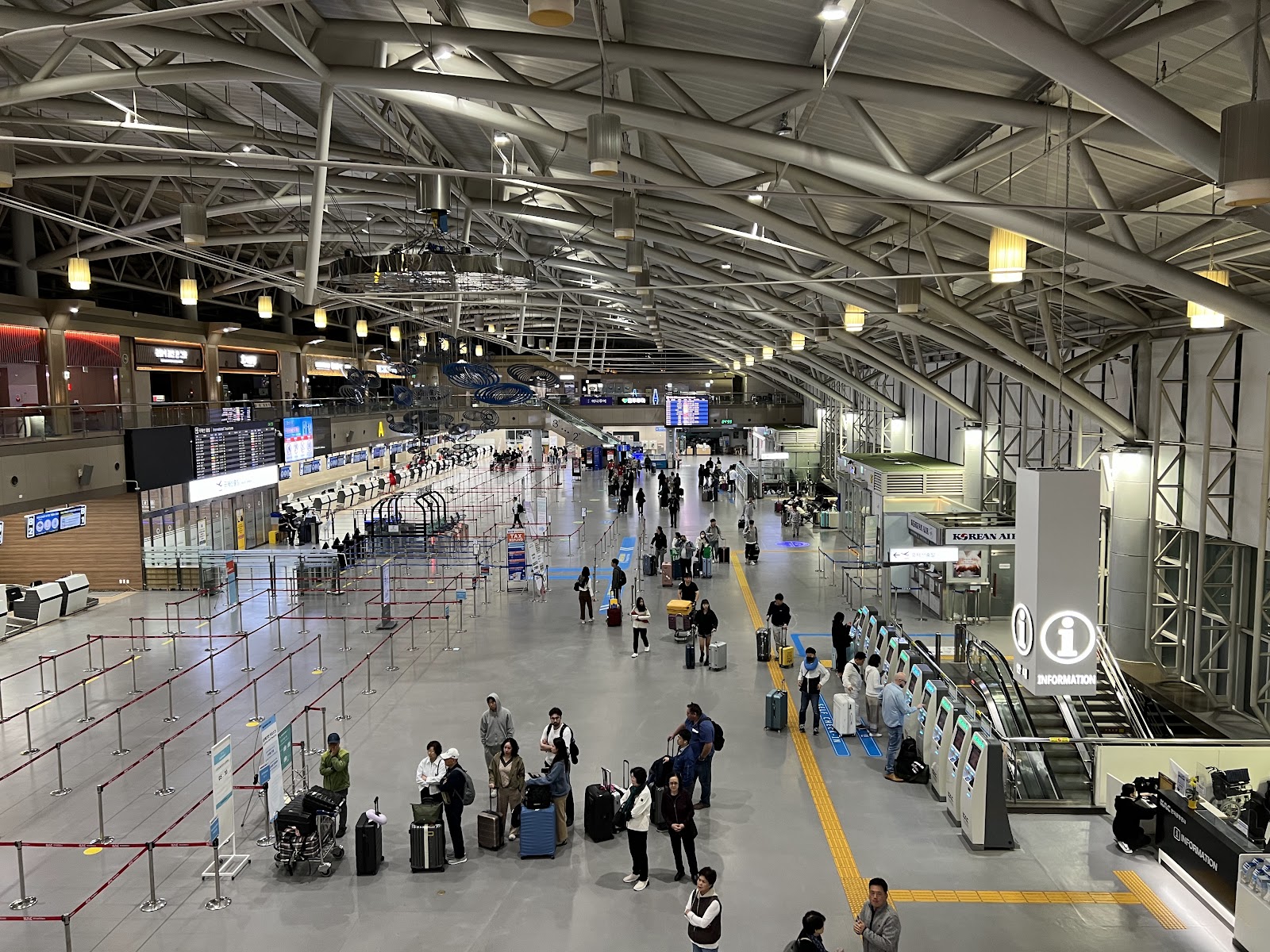
If you are stuck with this route:
- Arrive earlier than your airline’s advice, not equal to it.
- Do not check the bag containing the goods until the refund paperwork is settled. Customs may want to see the items.
- Keep the goods unused and, ideally, unopened.
- Sort your slips into one envelope before you get in line. Fumbling through a wallet at the machine is what makes the queue behind you move so slowly.
Buying at an actual duty free shop works differently again, and the pickup happens somewhere other than where you paid. Busan Duty Free: You Don’t Buy It Where You Get It explains that part.
⚠️ The five ways people lose the money
- No passport at the till. The single most common one. The refund cannot be added afterwards.
- Wearing the shoes out of the store. Used goods fall out of the scheme. Wait until you are home.
- Packing the goods in checked luggage before the check is done. If customs asks and you cannot show the item, the claim ends there.
- Splitting one purchase across two receipts so neither reaches the minimum. Pay in one transaction.
- Leaving it to the airport. See above. Seventy minutes.
🗓️ Where this fits in a two or three day trip
Neither errand deserves a dedicated slot. Both attach to something you were doing anyway.
| When | What |
| Landing day | Small exchange at Gimhae. Enough for transport and dinner |
| Nampo or Jagalchi morning | Main exchange at a Gukje Market area booth before you start eating |
| Any shopping stop | Passport out at the register, take the immediate refund |
| Second-to-last evening | Refund kiosk in a Seomyeon or Nampo department store |
| Departure morning | Nothing. That is the point |
The west-side day in Busan in 2 Days: West Side First, East Side Second already passes through Nampo-dong, so the exchange booth costs you five minutes of a route you were walking regardless.
❓ Short answers
Should I exchange money before flying to Korea?
Bring your home currency in cash and change it in Busan. Rates at Nampo-dong and Seomyeon booths are generally better than what you get before you leave.
Are the Nampo-dong exchange booths safe?
They are licensed, long-established, and busy all day with locals and tourists. Count your money at the window, which everyone does.
Can I get the tax refund without a passport?
No. It has to be the physical passport, at the moment of purchase, for the person whose name is on it.
Does the refund apply to restaurants and hotels?
The scheme covers goods you take out of the country. Meals and most services are outside it.
How early should I arrive at Gimhae if I still have refund slips?
Add at least an hour on top of the normal recommendation. Reported waits of thirty minutes before check-in plus forty afterwards are real, and there are only two machines and two windows.
Cash or card for markets like Gukje?
Cash for the older stalls and street food, card almost everywhere with a proper storefront. Carry both.
Can I use my home mobile payment app?
Foreign mobile wallets are unreliable at Korean terminals. Plan around a physical card and cash.
What do I do with leftover won?
Spend it. Coins cannot be exchanged back, and small notes get the poorest rate. Convenience store snacks on the way to the gate are the traditional solution.
📌 The whole thing in seven lines
- Change a small amount at Gimhae, the rest at a booth in Nampo-dong or Seomyeon.
- Gukje Market area booths sit around 55 Gukjesijang 2-gil, Jung-gu, a few minutes apart. Compare two boards.
- Clean large notes get the best rate. Torn notes get refused.
- In Seomyeon, navigate by exit number. The underground level confuses map apps.
- Passport in hand at every till. No passport, no refund, no exceptions later.
- Take the immediate at-register refund whenever it is offered, and keep the slip anyway.
- Clear remaining slips at a downtown kiosk on your second-to-last day. The Gimhae queue has cost people seventy minutes.
📋 What the official KTO listing adds
The Korea Tourism Organisation keeps its own file on Gukje Market, and it carries a few practical lines that matter for an errand-plus-lunch morning. The big one: the market closes on Sundays. Individual stalls set their own hours within a 09:00–20:00 window, so a late-afternoon arrival on a weekday is fine, but a Sunday trip means shuttered lanes and no booth to change money at. There is no admission charge — this is a working street market, not a ticketed site, so no fee or exemption rules apply.
| Hours | 09:00–20:00, varies by shop |
| Closed | Sundays |
| Opened | 1948 |
| Parking | Public parking lot; accessible bays at Wise Park |
| Toilets | Public toilets available |
| Sold here | Produce, electronics, general goods, cosmetics |
On step-free access, the KTO’s barrier-free survey is more specific than most listings. The main entrance has no lip or threshold, so a wheelchair or a pushchair rolls straight in, and ramps are in place on the approach to the entrances. There is a lift in the market buildings. Accessible toilets are not inside the stall lanes themselves — they are at Changseon-dong Post Office and at the Wise Park building, which is also where the accessible parking bays sit. Worth knowing before you commit to the middle of the maze with a toddler.
One caveat on the history. The market grew from traders selling goods left behind after liberation in 1945, then from Korean War refugees who set up stalls to survive — which is why it was named gukje, “international”. The barrier-free details above are published by the KTO in Korean only, so there is no English page to show staff if you need to ask.