Most people come to Gukje Market for one thing and leave with something else. They come for the hotteok. They leave with a bag of dried squid, a pair of 5,000-won socks, and a mild burn on the roof of the mouth. That order of events is normal.
Here is the short version. Gukje Market is a working market in Jung-gu that has spread across several blocks and into multi-floor buildings, and it holds a 4.1 rating across more than 13,000 Google reviews. Attached to its eastern edge is BIFF Square, where the seed-stuffed hotteok stalls sit. Give the whole thing ninety minutes and eat before you shop.
🧭 What Gukje Market actually looks like
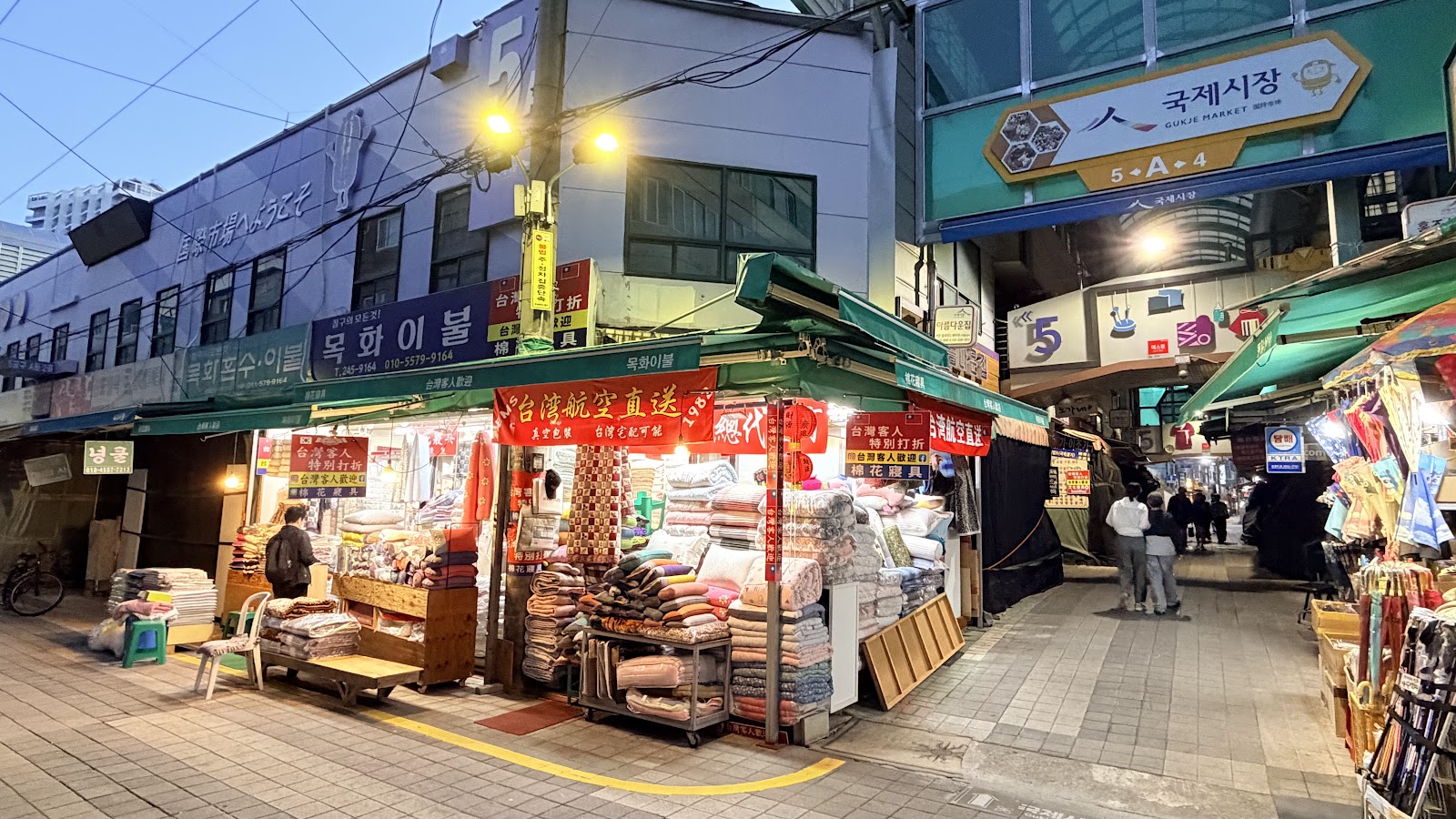
The word “market” undersells the footprint. Reviewers who have been to markets in Seoul still describe this one as massive: several blocks of covered lanes at street level, plus indoor buildings with multiple floors stacked with goods. There is no single entrance and no obvious center.
The official address is 55 Gukjesijang 2-gil, Jung-gu, Busan. Put that in your map app and it will drop a pin on one lane out of dozens. Treat the pin as a starting corner, not a destination.
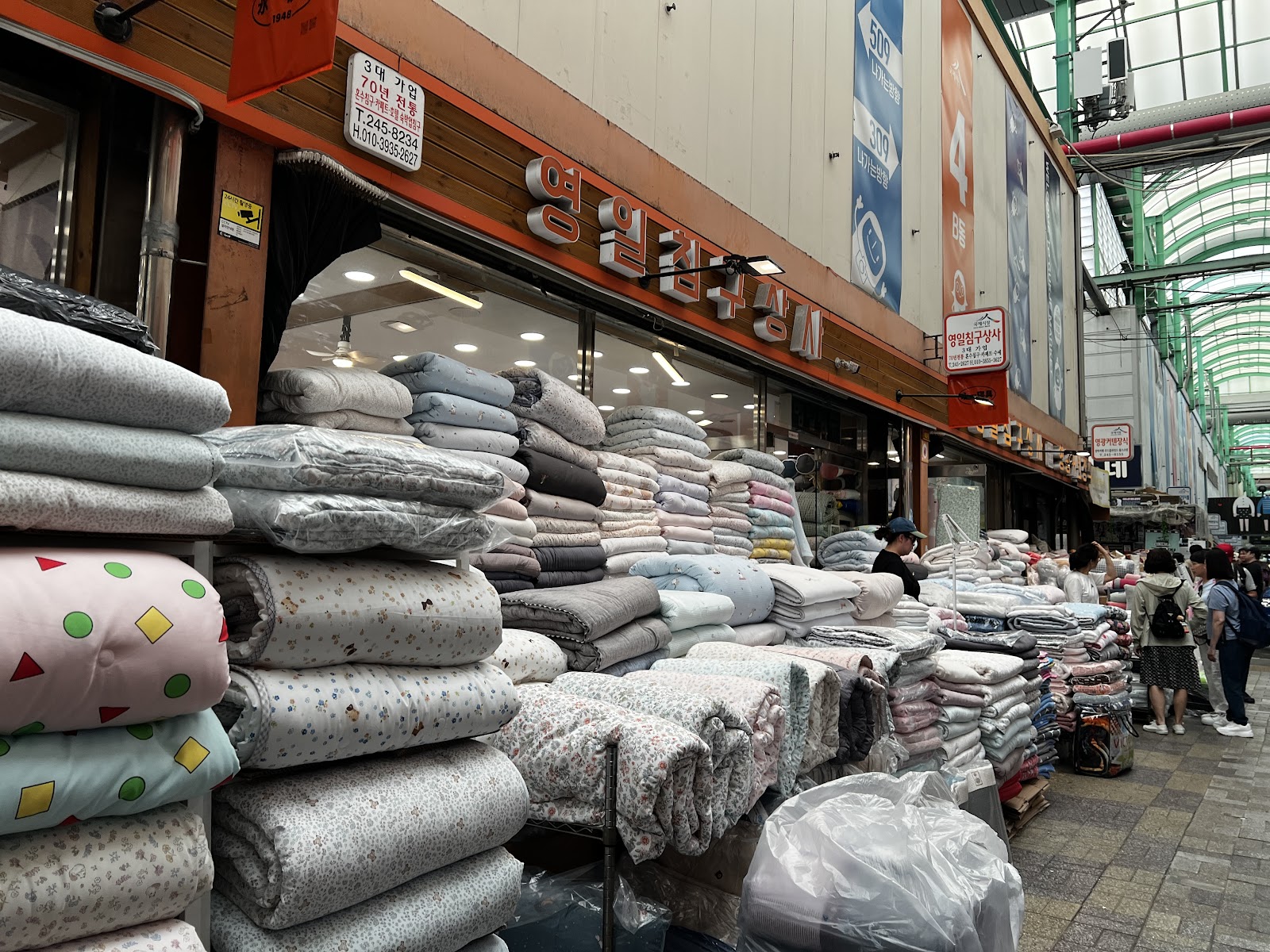
The lanes are loosely themed, and once you notice that, the place stops feeling random. One stretch is hardware and tools. Another is fabric and sewing supplies. Another is clothing. Another is kitchenware. Then produce, then dried goods, then the food alleys. Visitors keep using the same phrase in reviews: whatever you need, it is probably in here somewhere.
If you are the kind of traveler who needs a map before you move, you will have a bad time here. Pick a lane, walk it to the end, turn. The market is bounded by real streets on all sides, so you cannot actually get lost. You can only get temporarily confused.
🚇 Getting there without overthinking it
Subway Line 1 runs along the bottom of this whole district. Jagalchi Station and Nampo Station both put you within a five-minute walk, and the walk between the two stations passes the market anyway. Come out of the station, head inland away from the water, and you will hit the market lanes almost immediately.
A taxi works too, though drivers will drop you on the outer road because the lanes are pedestrian. Say “Gukje Sijang” (국제시장) and that is enough. For the hotteok specifically, say “BIFF Gwangjang” (비프광장) instead, which lands you closer.
Google Maps walking directions are unreliable inside Korea. Download KakaoMap or Naver Map before you land. Both handle these alleys properly and both have English interfaces.
🥞 Ssiat hotteok, and why Busan’s version is different
Hotteok exists all over Korea. A yeast dough round, filled with brown sugar and cinnamon, pressed flat on a griddle and fried in oil. It comes off the pan as a sweet, molten disc.
Busan added a step. The cooked hotteok gets snipped open along one edge with scissors and packed with a scoop of seeds and crushed nuts: sunflower seeds mostly, plus pumpkin seeds, peanuts, sometimes almond. That is ssiat hotteok. Ssiat means seed.
The result has three textures at once, and reviewers describe them in almost identical language every time: crisp fried edge, chewy dough, crunchy seed core. The seeds also cut the sweetness, which is the real reason this version travels better than the plain one. A plain hotteok gets cloying by the third bite. This one does not.
👵 The two stalls, and the “Originator” sign
Here is the part nobody warns you about. At BIFF Square there are two hotteok stands standing side by side, each with its own ajumma, each working the same crowd. Visitors regularly stop and watch the competition before deciding, and that is a fine way to spend two minutes.
One of them displays the word “Originator” on the signboard and will, if you ask, produce the paperwork backing the claim. One reviewer did exactly that and got shown the written documentation on the spot. Whether the claim settles the argument is another matter. The line moves at both stalls.
Ajeossi Ssiat Hotteok is at 36 BIFF gwangjang-ro, Jung-gu. It sits at 4.2 across 230 reviews, which is a small review count for a place this famous, and that tells you something about how many near-identical stalls share the same name in the same square. If you want this one specifically, navigate to the address rather than the name.
| Item | Detail |
|---|---|
| Address | 36 BIFF gwangjang-ro, Jung-gu, Busan |
| Hours | 10:30 – 22:00, every day |
| Rating | 4.2 (230 reviews) |
| Price band | Inexpensive |
| Phone | 010-2558-4064 |
| Reservation | Not possible. It is a street stall. |
Multiple reviewers report paying 2,000 won for the seed hotteok, with a 3,000-won option also on the board. That is the cheapest genuinely memorable thing you will eat in Busan. One traveler on a seven-day Seoul-and-Busan trip called it the best hotteok of the entire trip, which is a big claim for a snack that costs less than a bottle of water at the airport.
🔥 How to eat one without hurting yourself
It comes to you in a folded paper cup, seed side up, straight off the oil. The inside is molten sugar syrup. Sugar syrup holds heat far longer than the dough around it, so the outside will feel merely warm while the middle is still dangerous.
Wait a full minute. Then bite from the seed opening at the top, not the sealed bottom edge, so the syrup runs downward into the cup instead of onto your shirt. Everyone learns this exactly once.
One is enough. A reviewer who ordered two to go found that a single one filled him up, and he is right. This thing is dough, oil, sugar and nuts. Order one, split it if you are two people, and keep room for the rest of the market.
🍜 What else to eat while you are in there
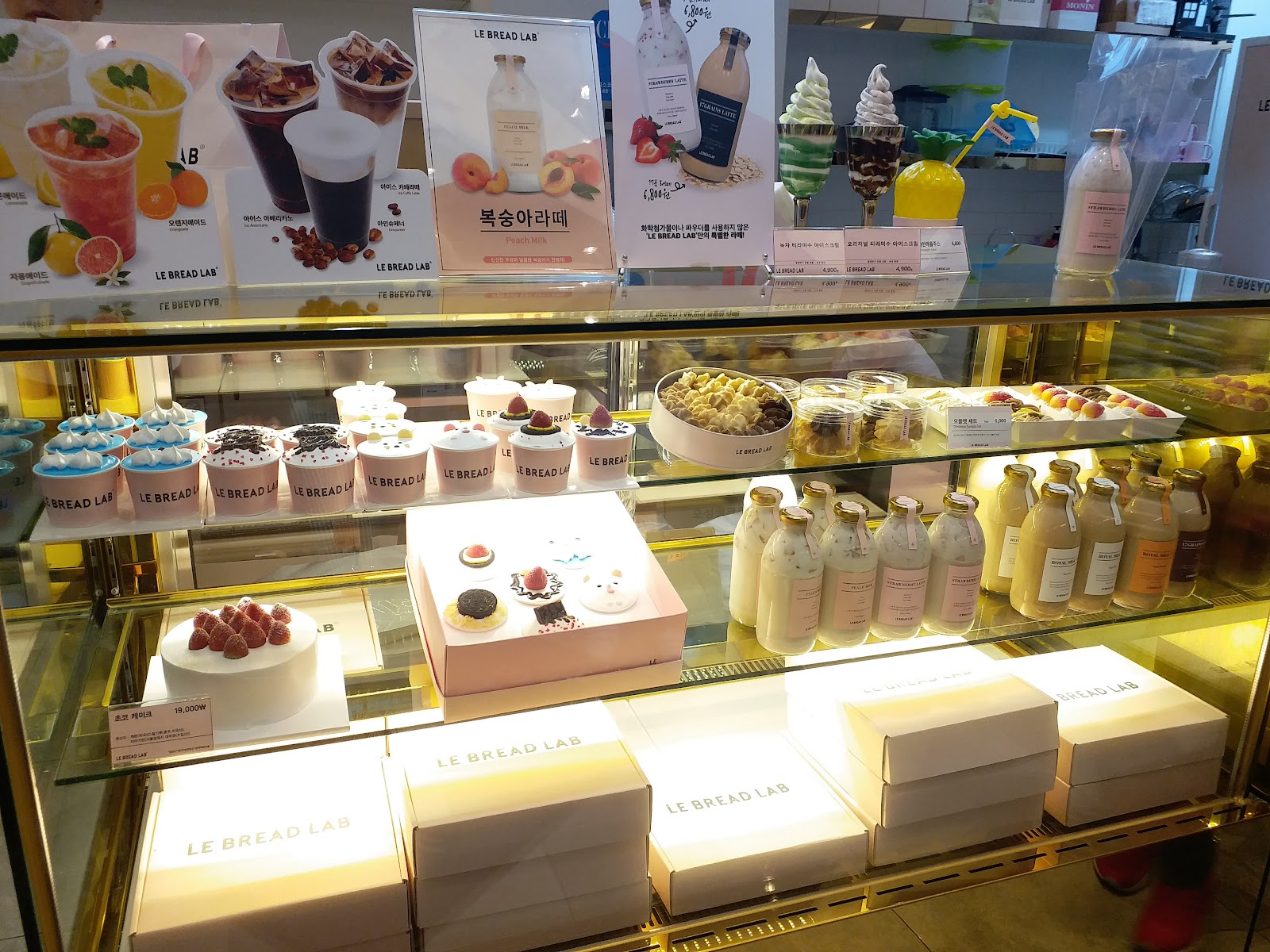
The food section of Gukje Market is a destination in its own right, and reviewers who come for shopping keep ending up there. Much of it is counter seating: you sit at the bar, point, eat, pay, leave. No menus in English at many stalls, but nearly everything is visible in front of you.
The dish visitors single out most is milmyeon, the cold wheat noodle bowl that Busan invented during the war when buckwheat for naengmyeon ran out and wheat flour came in through rations. It is a Busan-specific thing and this district is a reasonable place to have it. If you want to understand what you are ordering before you order it, read this first.
Beyond that, the standing lineup is what you would expect from a Korean market and all of it is cheap: tteokbokki, sundae, gimbap, fried things on sticks, hodu-gwaja. Prices are not posted at every stall. Point and ask before committing if that bothers you.
If you want a proper sit-down meal instead of grazing, Busan’s own soup is a ten-minute walk away in any direction. Dwaeji gukbap arrives deliberately underseasoned and there is a reason for that.
🛍️ Honest advice about the shopping
The produce is the real find. Reviewers repeatedly call out the fruit as both excellent and genuinely cheap, and if you have a hotel fridge, this is where you stock it. Korean pears, strawberries in season, peaches, grapes. Vendors sell by the box but will usually break it for a tourist.
The souvenirs are a different story. Visitors describe them as largely bulk-standard: the same keyrings, the same magnets, the same printed tote bags you saw in Seoul. Buy them if you need volume for coworkers. Do not come here expecting craft goods.
Where the market genuinely shines is the practical stuff. Kitchen knives, steel bowls, sewing supplies, work clothes, tools, dried seafood, sesame oil, gochugaru by the kilo. This is where Busan restaurants buy things. Walking those lanes tells you more about the city than a souvenir shelf does.
Most vendors take cards. Small food stalls sometimes prefer cash, and hotteok stalls in particular move faster if you hand over a 2,000-won note. Carry a little cash and the problem disappears.
⏰ When to go
Mid-morning to mid-afternoon is when the market is fully awake. Every lane is open, the produce is fresh out of the crates, and the shopkeepers are in a talking mood.
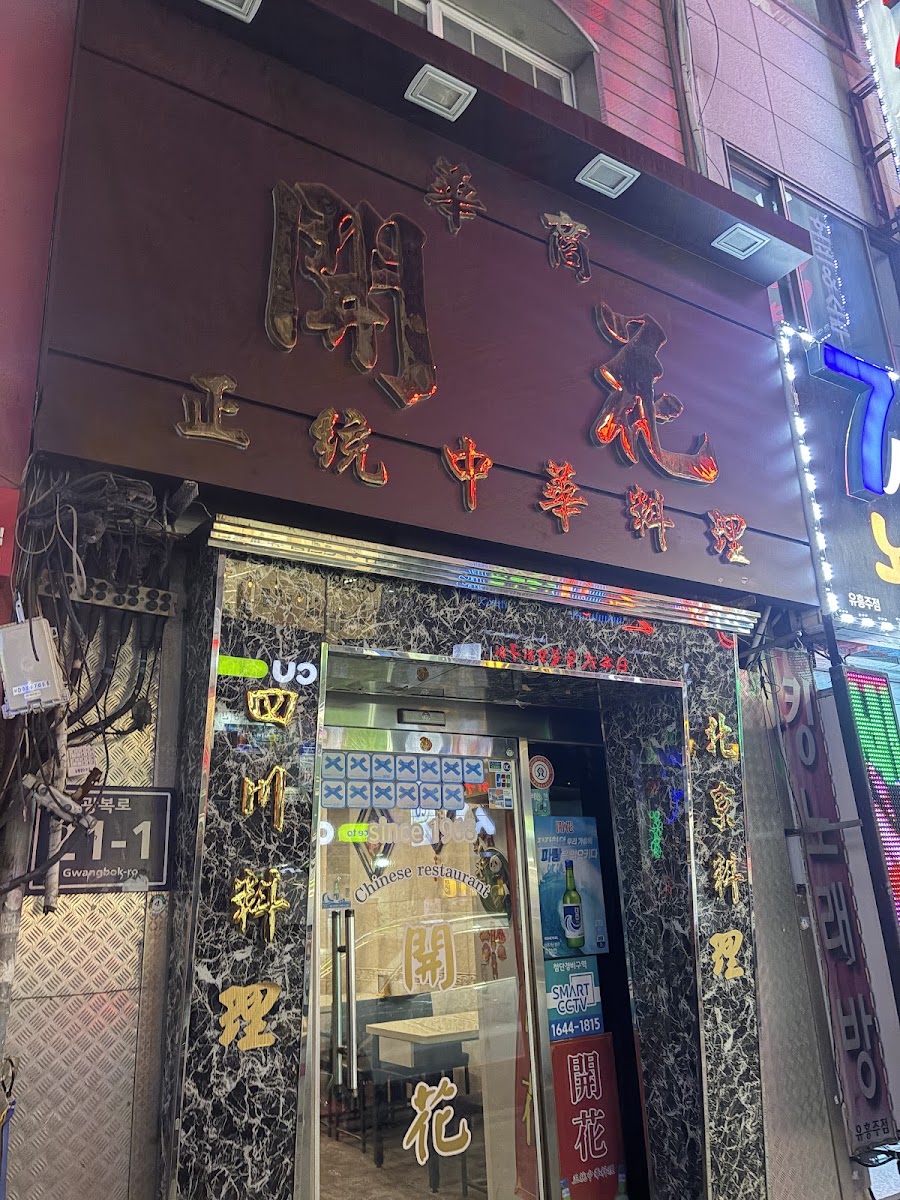
Evening changes the character. Visitors who arrive after dark find a good share of the dry-goods shops already shuttered, while the food stalls, grocery stands and snack shops keep going. The hotteok stall runs until 22:00 daily, so a late visit still gets you the main event. It just gets you less market.
Weekends bring crowds and a real queue at the hotteok stalls. On a Sunday afternoon expect to wait. On a Tuesday at 11am you will walk straight up.
🗺️ Building a half day around it
This corner of Jung-gu packs several things into walking distance, which is unusual for Busan. A workable half day:
- 10:30 Arrive Jagalchi Station. Walk the fish market first, while it is still busy.
- 11:30 Cross into Gukje Market. Lanes, produce, hardware.
- 12:30 Lunch at the food section. Milmyeon if the weather is warm.
- 13:30 BIFF Square. Ssiat hotteok. Wait the minute before biting.
- 14:00 Provisional Capital Memorial Hall, or the bus toward Gamcheon.
The seafood market next door runs on a system worth knowing before you walk in. You buy the fish downstairs and carry it up to be cooked, and getting that backwards is the standard tourist mistake.
If your afternoon is heading up the hill afterward, Gamcheon rewards an early start and punishes bad shoes. Doing Gamcheon after a heavy market lunch in August is a decision you will regret around the fourth staircase.
💬 Short answers
How much is ssiat hotteok?
Reviewers consistently report 2,000 won for the seed version, with a 3,000-won option also listed. The stall is in the inexpensive price band.
Which of the two stalls is the original?
One carries an “Originator” sign and shows written documentation on request. Both draw customers. Reviewers have been happy at both.
Do I need to book anything?
No. Nothing here takes reservations. Walk up, point, pay.
Is English spoken?
Limited, and not needed. Hold up fingers for quantity. Prices are usually written on the stall. A translation app covers the rest.
Is it worth it if I have already done Myeongdong or Gwangjang in Seoul?
Yes, for two reasons: the seed hotteok is a Busan thing, and Gukje is more of a genuine working market than a tourist food alley. The hardware and fabric lanes give it away.
How long should I allow?
Ninety minutes to see it properly and eat. Thirty if you are only there for the hotteok and a quick lap.
Is it accessible with a stroller or wheelchair?
Street level is flat but narrow and crowded, and the indoor buildings have stairs in places. Weekday mornings are far easier than weekend afternoons.
📌 The whole thing in seven lines
- Gukje Market: 55 Gukjesijang 2-gil, Jung-gu, Busan. 4.1 from over 13,000 reviews. Phone 051-245-7389.
- Ssiat hotteok at 36 BIFF gwangjang-ro, open 10:30 to 22:00 daily, 4.2 from 230 reviews.
- Around 2,000 won for the seed one. Get the sunflower seed version.
- Wait one minute before biting, and bite from the open seed edge.
- One is filling. Order one and share it.
- Go mid-morning for the full market, evening for food stalls only.
- Buy fruit and kitchen gear. Skip the souvenir keyrings.