Short answer first, because you are probably reading this on a plane. From Gimhae International Airport to Haeundae, the airport limousine bus is the option most travellers should take: you walk out of arrivals, you find the bay, you put your suitcase in the hold, you sit down once and you get off near your hotel. No stairs, no transfer, no dragging a 23kg bag through a turnstile.
The light rail is the cheapest way and the one Busan is quietly proud of, but it means a transfer at Sasang and a long ride east. A taxi is the fastest and the most expensive, and it becomes the obvious choice at night, in rain, or when there are three of you splitting the meter. Seomyeon, being in the middle of the city, is easier than Haeundae by every method.
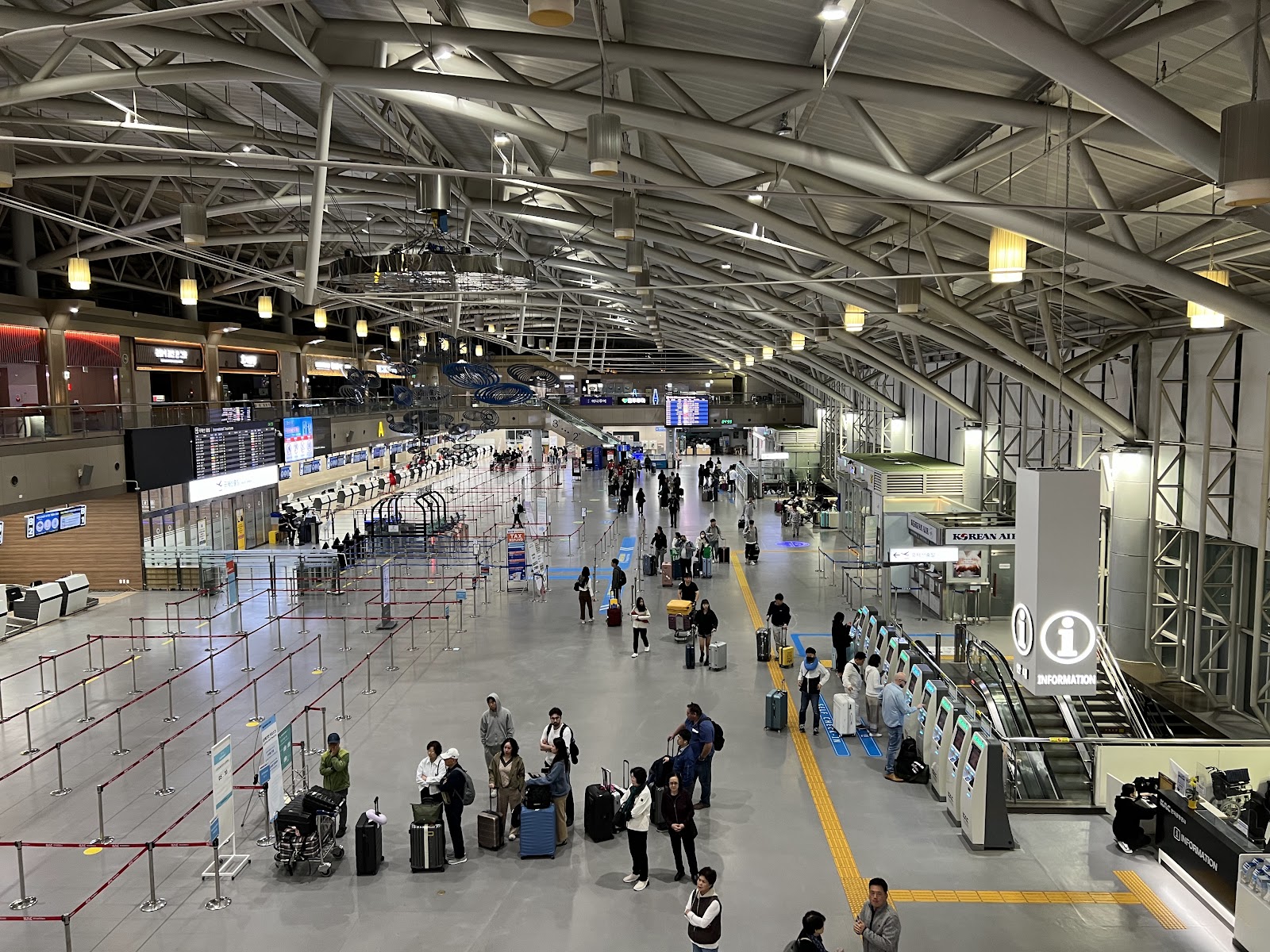
Gimhae sits at 108 Gonghangjinip-ro in Gangseo-gu, on the western edge of Busan. It has been the city’s airport since 1976 and it rates 4.1 from over 5,670 reviews, which is generous for an airport and mostly earned by how fast you get out of it.
🛬 The first ten minutes on the ground
Gimhae has two terminals, international and domestic, and they sit next to each other with a covered walkway between them. If you flew in from abroad and someone told you to meet at the domestic terminal, it is a walk of a few minutes, not a shuttle ride. Signage is in English and Japanese and it is easy to follow.
Do two things before you leave the arrivals hall. Get cash from an ATM, because a few older taxi drivers still prefer it and street food later will not take your foreign card. And buy a transit card. There is a convenience store in the terminal and the card is the single thing that makes the rest of the week frictionless.
If you want the full argument for why the card matters more than any app, read Buy the Card First: Getting Around Busan before you queue for anything.
Download Naver Map or Kakao Map at the gate, while you still have airport wifi. Google Maps does not do public transport directions in Korea and it will hand you walking routes that take two hours.
🚌 Busan airport to Haeundae: the three ways, side by side
| Option | Transfers | Luggage | When it wins |
|---|---|---|---|
| Limousine bus | None | Hold underneath | Two people, big bags, daytime arrival |
| Light rail + subway | One at Sasang | You carry it | Light bags, tight budget, rush hour |
| Taxi | None | Boot | Late night, rain, three or more people |
| City bus 307 | None | Beside you, standing | Backpack only, and you are patient |
That last row is the one nobody warns you about. City bus 307 does run east toward Haeundae and it costs a fraction of the limousine, but it is a normal city bus with normal city bus luggage space, meaning none. It stops constantly. Fine with a daypack. Miserable with a suitcase and a toddler.
The limousine bus, in practice
Walk out of arrivals, cross to the traffic island, and look for the numbered bays. Each bay has a sign in Korean and English listing the destination area. You want the one marked for Haeundae. A staff member usually stands there in a vest and will point when you say the word.
You pay when boarding, card or cash, and the driver loads the bags. The bus runs along the expressway, so most of the ride is a view of container yards and then the Gwangan Bridge if you are lucky with the route. It stops at several hotels along the Haeundae strip before the last stop, so listen for the announcement rather than counting stops.
The catch: buses are timetabled, not constant. If you land in a gap you wait, and there is nowhere comfortable to wait outside. Check the departure board at the bay when you arrive. If the next one is far off, that is the moment to reconsider the taxi.
🚈 The light rail, and the Sasang transfer nobody mentions
Gimhae is one of the few Korean airports with rail service written into the building. Follow the signs from the terminal along the elevated walkway and you reach Busan-Gimhae Light Rail, Gimhae International Airport station. It is driverless, the front window is unobstructed, and the ride out over the Nakdong River flats is genuinely a nice twenty minutes. Reviewers who rate the airport five stars mention this train more than the airport itself.
Here is the shape of the trip. Light rail east to Sasang. At Sasang you change to subway Line 2. Line 2 then runs all the way to Seomyeon and, much later, to Haeundae. One transfer, two systems, one card tap at each end.
The Sasang change is a walk with a couple of level changes, not a step across a platform. There are lifts, but they are not always where you want them and they are shared with everyone else’s suitcases. If you have two large bags between two people, this is the part that will make you regret the saving.
To Haeundae, Line 2 is a long ride across the entire width of Busan, sitting through dozens of stations. To Seomyeon it is much shorter and lands you in the middle of everything. That difference is the whole decision.
- Take the light rail if: you have a backpack or a carry-on, you are travelling alone, or it is 6pm and the expressway is solid.
- Skip it if: you have checked luggage, small children, or you have been awake for eighteen hours.
Fares and first and last train times are posted at the station and on the Busan Metro site. Check the last train before you plan a late arrival around it, because the light rail and the subway do not stop at the same hour.
🚕 When the taxi is the right answer
The taxi rank is signposted outside arrivals and moves quickly. Regular taxis are silver, white or blue. The black ones are deluxe, they cost noticeably more, and the drivers are usually more comfortable in English. Nobody is going to bother you with an unofficial offer inside the airport grounds, and if someone does, walk to the rank.
Airport to Haeundae is a long crossing of the city and part of it is tolled expressway, so the toll goes on top of the meter. That is normal and not a scam. Airport to Seomyeon is much shorter and the price gap between taxi and public transport narrows to the point where three people should just take the car.
Two practical things. Have the hotel name in Korean on your phone screen, because a Roman-alphabet hotel name is not always recognised. And install Kakao T if you plan to take taxis all week, since a hailed car in Haeundae at 11pm on a Saturday is a fantasy.
Traffic to the east side is worst between 5pm and 7:30pm on weekdays. During that window the light rail beats the taxi to Seomyeon and often to Haeundae as well, luggage permitting.
🏙️ If you are staying in Seomyeon instead
Seomyeon is the easy one. It is the centre of the subway map, it sits on Lines 1 and 2, and the light rail plus one transfer at Sasang gets you there without crossing the whole city. There is also a limousine bus that runs through the downtown side, so check the bay signs for Seomyeon before you commit to the train.
Choosing between the two neighbourhoods is a bigger question than the ride from the airport, and it changes what your whole trip looks like. Where to Stay in Busan: Four Bases, One First Visit lays out what each base costs you in travel time.
If you are arriving mid-morning and want the day to count, drop the bags first and start west. That is the logic behind Busan in 2 Days: West Side First, East Side Second, and it works especially well from a Seomyeon base.
🌙 Late arrivals, early departures
Gimhae has a curfew, so there are no 2am landings. Still, a delayed evening flight can put you outside the terminal after the last light rail. In that case there is one option and it is the taxi rank, which is staffed and orderly. Budget for it in advance and the delay stops being stressful.
Going the other way, an early departure means the first light rail may not run early enough for a check-in two hours before a 7am flight. Look up the first train the night before, and if the numbers do not work, book a taxi through the app the evening before rather than standing on a Haeundae street at 4:30am hoping.
✈️ Leaving Busan: the part that actually goes wrong
Getting into the city is the easy half. Getting out of Gimhae is where travellers lose time, and the reviews are unanimous about where.
Tax refunds. If you shopped and you want the money back, the process is two queues, not one. You scan receipts before check-in, then you queue again after check-in at the refund counter. Travellers report over half an hour at the first stage and another forty minutes at the second, because the counter runs on two machines and two windows against a line that does not shrink. If your refund is small, work out whether it is worth ninety minutes of your morning.
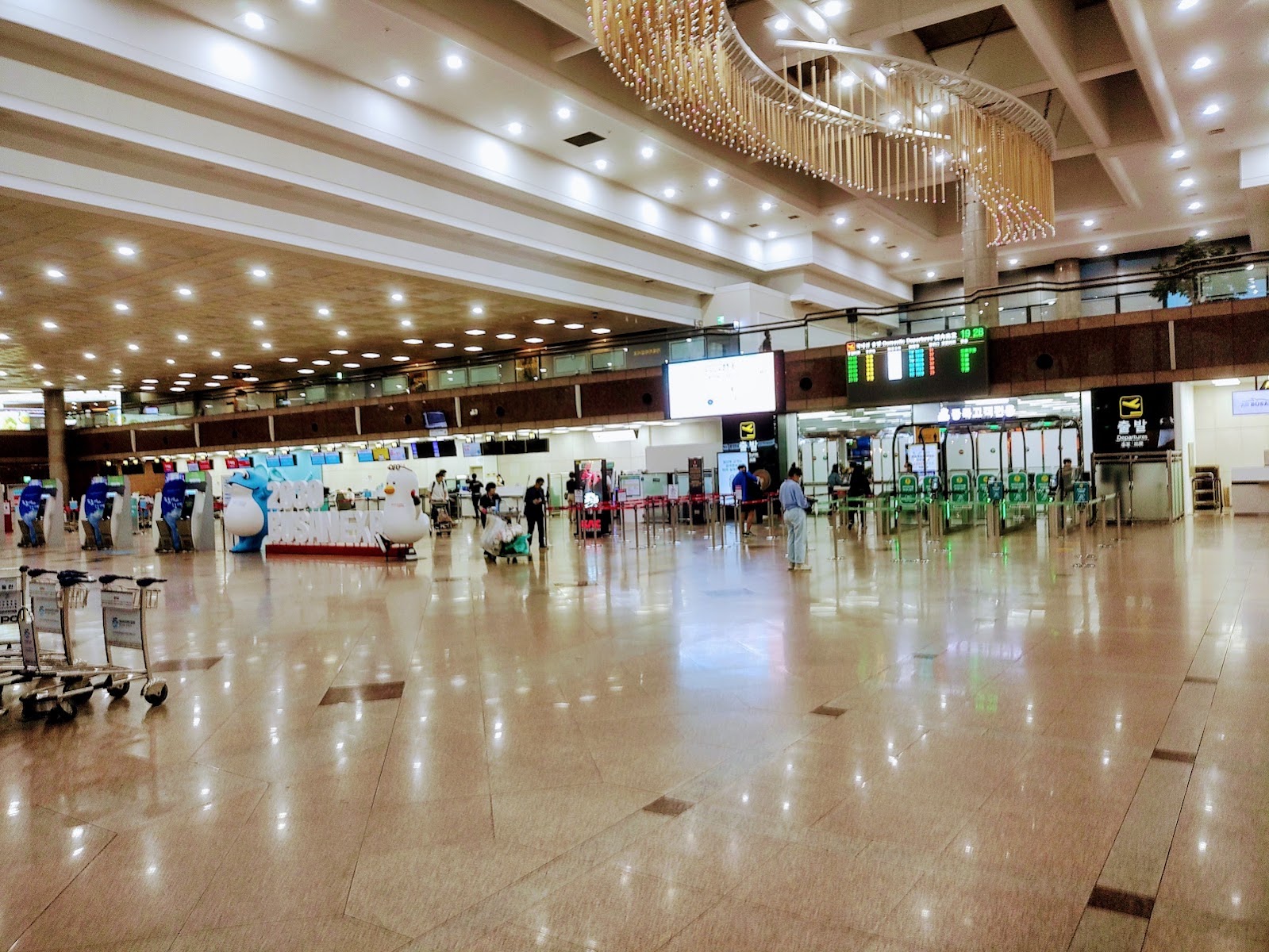
Passport control and security on the international side are manual and steady rather than quick. Domestic is the opposite and people compare it to Haneda: laptops and power banks stay in the bag and you are through in minutes. Do not assume your domestic experience predicts your international one.
Eat before you go airside. Once you are past security the choice is thin and the pricing is what you would expect from a duty-free hall. One reviewer paid 40 USD for a snack bag and is still telling people about it. The airport switchboard is 1661-2626, and current terminal information is on airport.co.kr.
🧭 Where you are probably going next
Once your bags are down, the Haeundae end of the city opens up fast. The beach itself has a rhythm worth knowing before you walk onto it, which is the whole point of Haeundae Beach: How to Actually Enjoy Busan’s Busiest Sand.
And if you are coming to Busan from Seoul rather than flying in, the train changes the arithmetic completely. Seoul to Busan by KTX: The Part Nobody Explains covers what the booking sites leave out.
💬 Short answers
What is the easiest way from Busan airport to Haeundae?
The airport limousine bus. One vehicle, no transfer, luggage in the hold, and it stops along the Haeundae hotel strip. Check the timetable at the bay when you walk out, since it runs to a schedule.
Is there a train from Gimhae Airport?
Yes. The Busan-Gimhae Light Rail has a station connected to the terminal by a walkway. Ride it to Sasang, transfer to subway Line 2, and Line 2 reaches both Seomyeon and Haeundae.
Should I take a taxi from the airport?
Take it if there are three or more of you, if you land after the last train, or if it is raining. The Haeundae run includes an expressway toll on top of the meter, which is standard.
Do I need a transit card?
For the light rail and subway, yes, or at least it makes life much simpler. Buy one at a convenience store in the terminal and top it up with cash.
How early should I get to Gimhae for departure?
Standard timing works for domestic, where security is famously quick. For international, add an hour if you are claiming a tax refund. That queue is the reason people miss things here.
Are the two terminals far apart?
No. International and domestic sit side by side and are joined by a covered walkway. Walking between them takes a few minutes.
📌 The short version
- Haeundae with luggage: limousine bus. Check the bay timetable first.
- Haeundae travelling light, or during evening rush: light rail to Sasang, then Line 2.
- Seomyeon: light rail plus one transfer, or a taxi if there are three of you.
- After the last train, or in rain: taxi rank outside arrivals, expressway toll added to the meter.
- Buy the transit card and download Naver Map or Kakao Map before you leave the terminal.
- On the way home, the tax refund queue is the thing to plan around, not check-in.