Most travellers walk into Jagalchi, take a photo of a tank full of live fish, and walk out twenty minutes later slightly confused. That is a waste of a good afternoon. The market is worth an hour and a half of your Busan trip, but only if you understand the one thing that makes it different from every other fish market you have visited: you buy the fish on one floor and eat it on another.
Once that clicks, the whole place makes sense. This guide is about making it click before you arrive, so you spend your time eating instead of standing in an aisle wondering what the etiquette is.
🐟 What Jagalchi actually is
Jagalchi is Korea’s largest seafood market, sitting right on the water in Jung-gu, central Busan. Address: 52 Jagalchihaean-ro, Jung-gu. It carries 27,213 Google reviews and a 4.0 average, which for a working market handling live product is a fair score.
It comes in three parts, and people conflate them constantly:
- The main building. Modern, tiled, roofed, glass-fronted. Ground floor is rows of live tanks. Upper floor is where your fish gets prepared and served.
- The street stalls. Outside along the waterfront and the side lanes. Older, louder, run by women who have worked the same three metres of pavement for decades. Dried fish, salted seafood, grilled things.
- The surrounding lanes. Small restaurants and shops that are not technically Jagalchi but everyone treats as part of it.
Reviewers who came expecting a tourist attraction and found a functioning wholesale operation are the ones who rate it four stars. They are describing it accurately. It smells like a fish market because it is one.
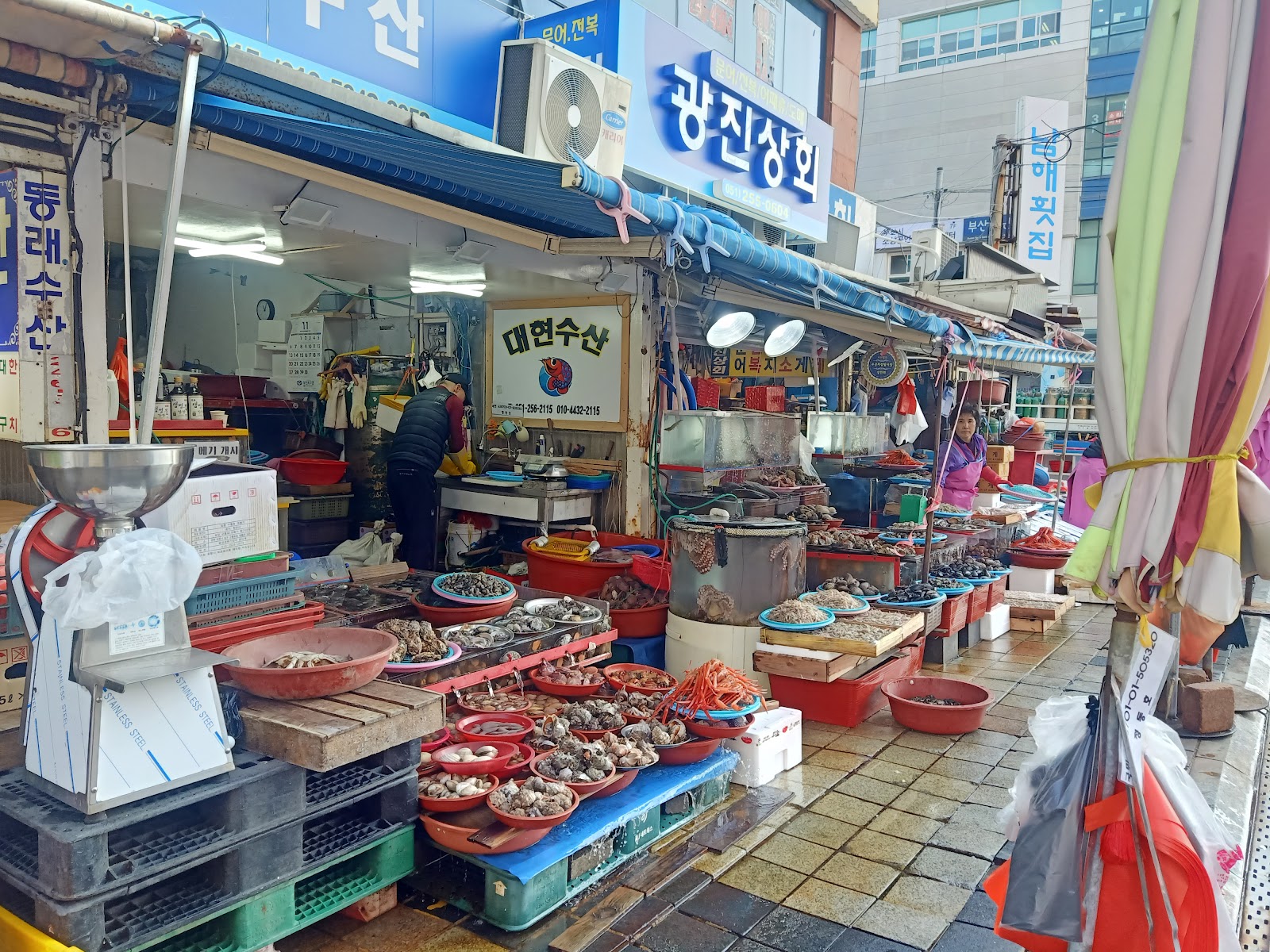
🦑 The system, step by step
Here is the flow that visitors consistently describe as the best part of the visit.
1. Walk the ground floor first without stopping
Do one full lap before you talk to anybody. You will be called at from every side. Smile, keep moving, look at what is actually in the tanks. Prices and stock vary stall to stall, and the first vendor to grab your sleeve is rarely the one with the best fish.
2. Pick your fish and agree the price out loud
Point at the tank. The seller nets the fish and holds it up. Before they do anything else, ask the total. Get the number on a calculator screen or written down. This is the single step that separates a happy Jagalchi visit from a review complaining about the bill.
Ask two things before the knife comes out: how much for this fish, and how much to have it served upstairs. Two numbers. Then eat.
3. Say how you want it done
You do not have to pick one preparation. The move that visitors keep recommending is half and half: half the fish sliced raw as hoe, the other half cooked. Same fish, two textures, and you find out which one you actually prefer. Say “half raw, half cooked” and gesture a chopping motion. It is a routine request here.
4. Go upstairs
Someone will either walk you up or hand you a slip and point at the stairs. The upper floor is a large hall of tables. Your fish arrives plated, with side dishes, and the frame and head usually go into a spicy soup at the end if you want it. The table charge for preparing and serving is separate from what you paid for the fish. That is normal. Just make sure you asked about it in step two.
5. Or skip all of it
If the negotiation sounds exhausting after a long flight, go straight upstairs and order from a restaurant there like a normal customer. One price, one menu, no haggling. Reviewers do this constantly and eat just as well. Nobody at Jagalchi thinks less of you for it.
💸 How money works here
Seafood is sold by size and by season, so a fixed menu price does not exist for live fish. That is why this guide gives you no numbers for it. Anyone who quotes you an exact figure online for “a fish at Jagalchi” is guessing, because the same species costs differently in March and October.
- Confirm the total before the fish leaves the tank. Not after.
- Ask whether the number quoted includes the upstairs preparation.
- Carry some cash. Card works widely in Korea, including at most upstairs restaurants, but small street sellers are the exception.
- If a vendor will not give you a clear number, walk. There are dozens more within thirty metres.
None of this is unique to Korea. It is how every live-seafood market on earth works. The travellers who have a bad time are the ones who assume the price will be explained to them unprompted.
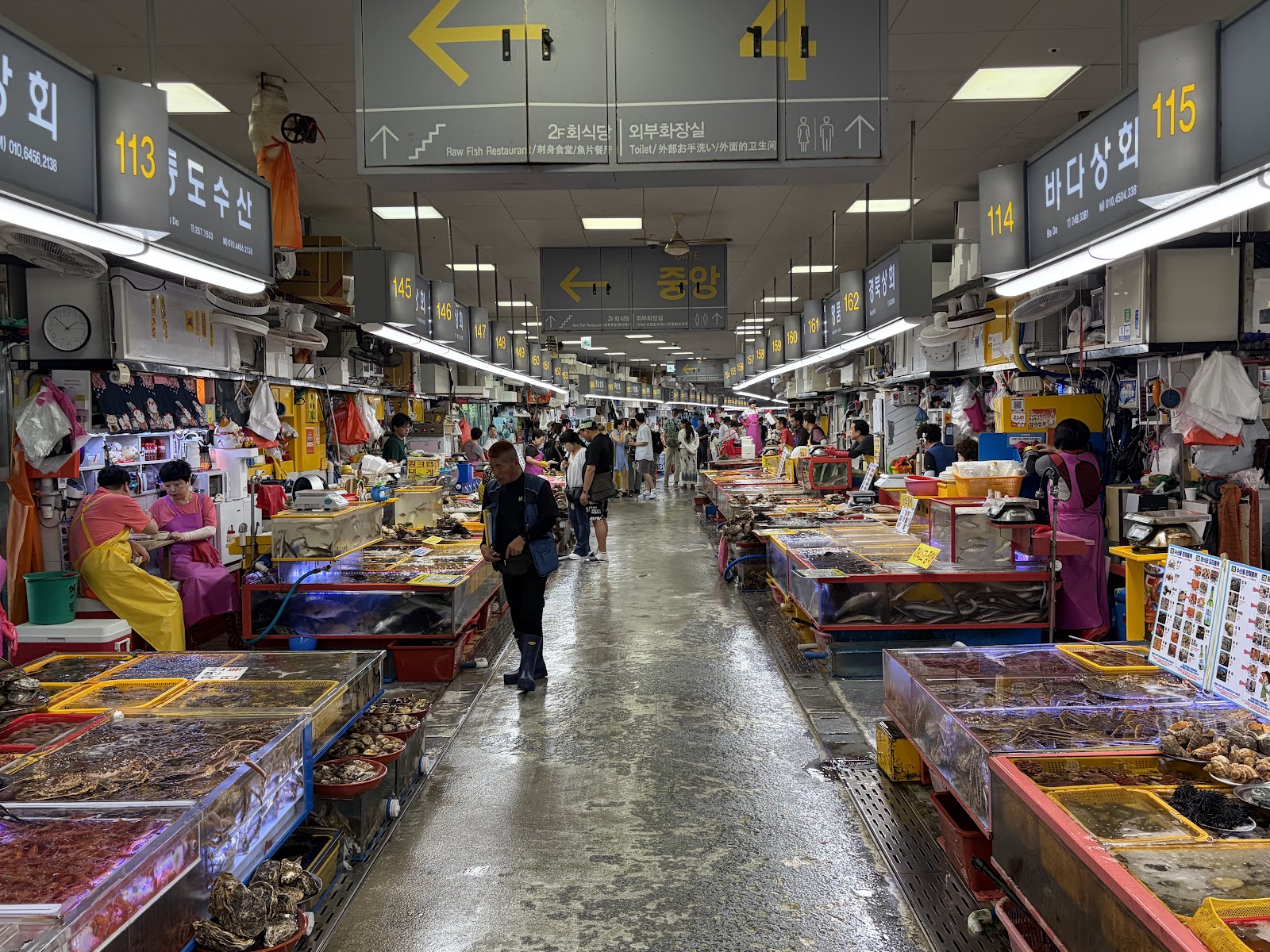
🕘 Hours, and when to actually go
| Item | Detail |
|---|---|
| Opening hours | 9:00 AM – 9:00 PM, every day |
| Address | 52 Jagalchihaean-ro, Jung-gu, Busan |
| Phone | 051-245-2594 |
| Google rating | 4.0 (27,213 reviews) |
| Reservation | Not needed |
| Entry fee | None |
Those are the market’s hours. Individual sellers run their own stalls and keep their own rhythm, so late evening is noticeably thinner than mid-afternoon. If you want the full wall of tanks and the full noise, arrive between 11 AM and 4 PM.
Early morning has a different appeal. Before nine, the wholesale side of the waterfront is already working and the light on the water is good. You will not be eating yet, but photographers get more out of that hour than out of lunchtime.
Weekends bring domestic crowds. Weekday lunch is the calmest window for a first visit, and vendors have more patience for a foreigner working through a language gap when they are not turning tables.
🍽 What to eat if you have never done this
Korean raw fish is served differently from Japanese sashimi. The texture is firmer and chewier, and it is meant to be wrapped in a lettuce or perilla leaf with a smear of red chilli paste or soybean paste, plus garlic and green chilli if you are brave. Wrap, one bite, done.
- Flatfish and sea bream. Mild, clean, the safest introduction to Korean hoe.
- Grilled fish or shellfish. If raw is not for you, everything here can be cooked instead. Nobody will be offended.
- Marinated and salted seafood. The upstairs restaurants and side stalls do these well, and they are strongly flavoured, so order one dish to share rather than one each.
- The soup at the end. Made from the frame of your own fish. Spicy, hot, and the best value on the table because you already paid for the fish.
- Live octopus. It arrives moving. Chew properly, take small pieces, use plenty of sesame oil. If that sentence made you uncomfortable, order something else.
Sharing is how this food is built. Two people, one fish, several small dishes. Ordering a separate main each is how you end up with far more seafood than you can finish.
🚇 Getting there
Take Busan Metro Line 1 to Jagalchi Station. Come out on the side toward the water and walk straight until the smell tells you that you have arrived. It is a short walk, under ten minutes, and the market is large enough that you cannot really miss it.
Nampo Station is the next stop along and puts you at BIFF Square and Gukje Market, which is why almost everyone does these three together. Coming by taxi, show the driver the Korean name: 자갈치시장.
One thing worth knowing before you land: Google Maps navigation is limited in Korea. Download Naver Map or KakaoMap instead. Both have English interfaces and both give real-time transit directions. This applies to your entire trip, not only to Jagalchi.
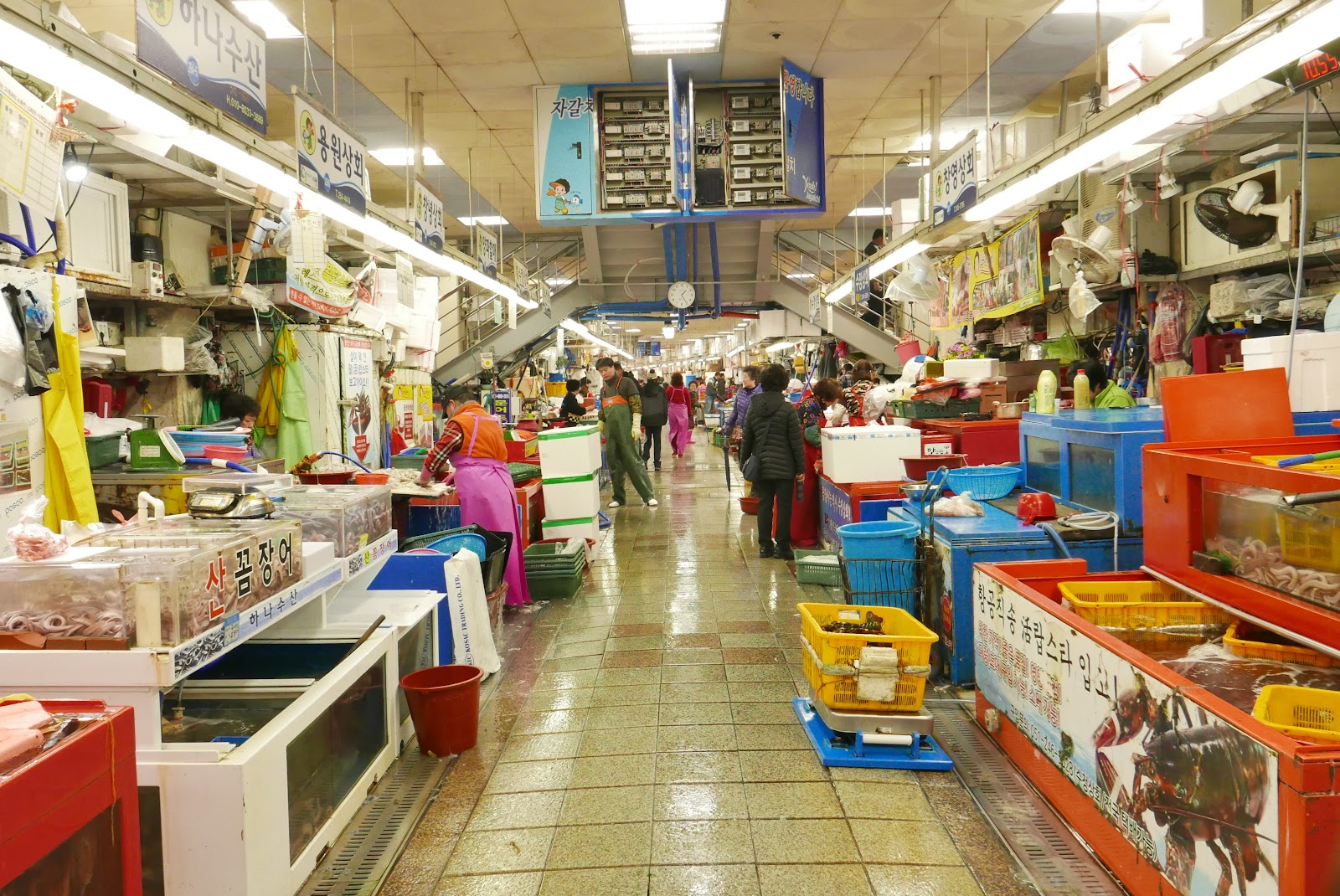
🧭 Building it into a half day
Jagalchi by itself is ninety minutes. Chained with what surrounds it, it becomes a solid afternoon and evening without a single taxi.
- 11:30 Arrive at Jagalchi. One lap of the ground floor, then buy and eat upstairs.
- 13:30 Walk the outdoor stalls along the waterfront. Dried fish, seaweed, things you will not see at home.
- 14:15 Ten minutes on foot to Gukje Market and BIFF Square for street food and browsing.
- 16:00 Metro or a short taxi to Songdo Beach or the Yeongdo coastal walk if you still have energy.
- Evening Come back toward Nampo for the lit-up shopping streets.
⚠️ Things nobody tells you
The floor is wet. All day, everywhere, because tanks overflow and hoses run. Wear shoes with grip. Open sandals are a mistake you make exactly once.
Photograph the seafood, ask before photographing the sellers. A nod and a raised camera is enough. Most say yes. The ones who say no are working and have every right to.
English is functional, not fluent. Numbers, calculators and pointing carry the whole transaction. The upstairs restaurants often have photo menus, which solves most of it. Screenshot the Korean names of two or three fish you want to try and show the screen.
Solo travellers can absolutely do this. A whole fish is a lot for one person, so order a small one, or go upstairs and order a set from the menu. Sitting alone at a table here is unremarkable.
❓ The short answers
How long do I need at Jagalchi Market?
Ninety minutes including a meal. Thirty if you are only walking through and taking photos.
Do I need to book?
No. Walk in any day between 9 AM and 9 PM.
Can I eat there without buying a live fish myself?
Yes. Go to the upper floor and order from a restaurant directly. Fixed prices, printed menu, no negotiation.
Is it expensive?
It depends entirely on what species you choose and what size. That is why agreeing the total before the fish is netted matters more than anything else in this guide.
Is it good for people who dislike raw fish?
Yes. Everything can be grilled, steamed or made into soup. Ask for it cooked and it is cooked.
Is it good with kids?
The tanks are genuinely fun for children. Watch the wet floor and expect the smell to be a talking point for the first ten minutes.
What is nearby?
Gukje Market, BIFF Square and Nampo-dong, all within a walk. Yeongdo and Songdo are a short ride away.
📌 In short
- Open 9:00 AM to 9:00 PM daily. No reservation, no entry fee.
- 52 Jagalchihaean-ro, Jung-gu, Busan. Metro Line 1, Jagalchi Station, walk toward the water.
- Buy live seafood on the ground floor, have it prepared and served on the floor above.
- Ask two numbers before the fish leaves the tank: price of the fish, cost of serving it upstairs.
- Half raw, half cooked is the order that gives you the most from one fish.
- Prefer no haggling? Order straight from an upstairs restaurant.
- Grippy shoes. Wet floors all day.
- Use Naver Map or KakaoMap, not Google Maps navigation.
- Best window for a first visit: a weekday between 11 AM and 4 PM.
- Chain it with Gukje Market and BIFF Square for a full afternoon on foot.