Baekilpyeongnaeng is a Pyeongyang-style cold noodle house in Namcheon-dong, Busan, and the single most useful thing to know about it is the clock. Walk in at lunch and several diners report sitting down immediately. Walk in at dinner and you may be handed a number and a wait that has run to an hour.
The address is Namcheonbada-ro 10beon-gil 29, ground floor, Suyeong-gu. It runs 11:30 to 15:30, closes, then reopens 17:30. Rating sits at 4.2 across 104 reviews. Price band is moderate by Busan standards, which for naengmyeon means a bowl priced like a proper meal rather than a snack.
If you only have three days in Busan and you are wondering whether a bowl of cold noodles deserves one of your lunches, here is the honest version. It deserves one if you have never had Pyeongyang naengmyeon, or if you tried it once in Seoul and thought it tasted of nothing. This kitchen seasons the broth further than the Seoul purist houses do.
🍜 Baekilpyeongnaeng naengmyeon in Busan: what lands on the table
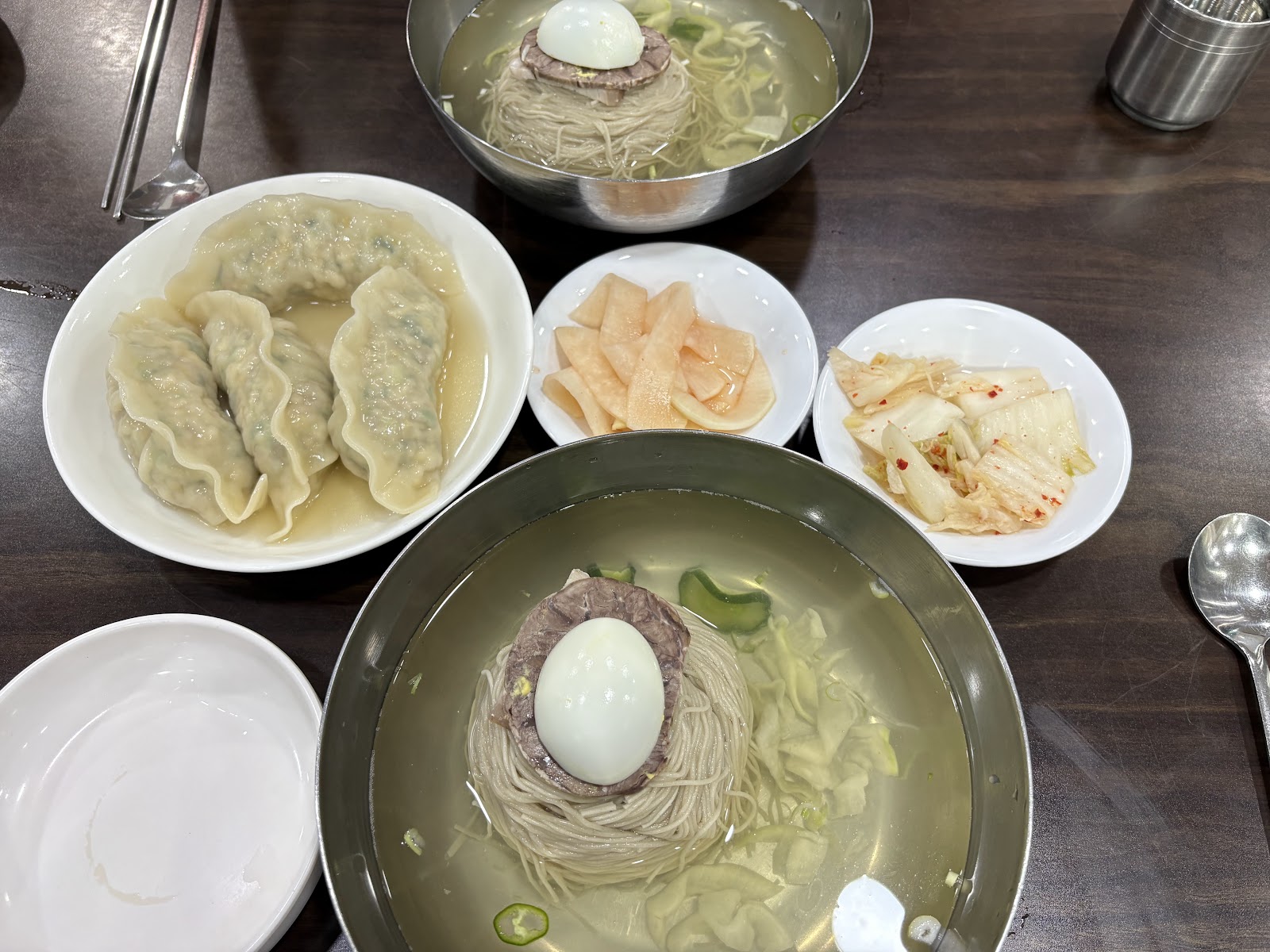
Pyeongyang naengmyeon is buckwheat noodles in cold beef and pheasant-style broth, served without the sweet-sour red sauce most foreigners picture when they hear “Korean cold noodles.” The broth is pale. It looks like dishwater and tastes like the inside of a very serious beef stock. That is the point of it.
Here the broth arrives seasoned enough that a first-timer can drink it straight and understand what is happening. Repeat visitors who chase the austere Seoul style sometimes find that a compromise. Everyone else finds it a way in. That split is exactly where the 4.2 comes from: the five-star reviews are people who got it, the low ones are people who came expecting a religious experience and got dinner.
Drink two spoonfuls of the broth before you touch the noodles. If you dose it with vinegar and mustard first, you will never know what the kitchen actually made.
The noodles themselves are chewy. Diners who know the Seoul houses compare the texture directly to Pildong Myeonok, which is high praise and also a useful calibration if you have eaten there. Chewy means you will need the scissors. They are on the table for a reason and using them is not rude. Buckwheat strands this dense resist a clean bite, and a mouthful you cannot finish chewing is the fastest way to lose the flavour you came for.
The order that works
- Mul naengmyeon (the broth bowl). Order this first, always, if it is your first visit. Everything else is a variation on it.
- The perilla oil noodles. Repeatedly the thing people say to make sure you try. Nutty, warm-smelling, completely different register from the cold broth. Two people should get one of each and trade halfway.
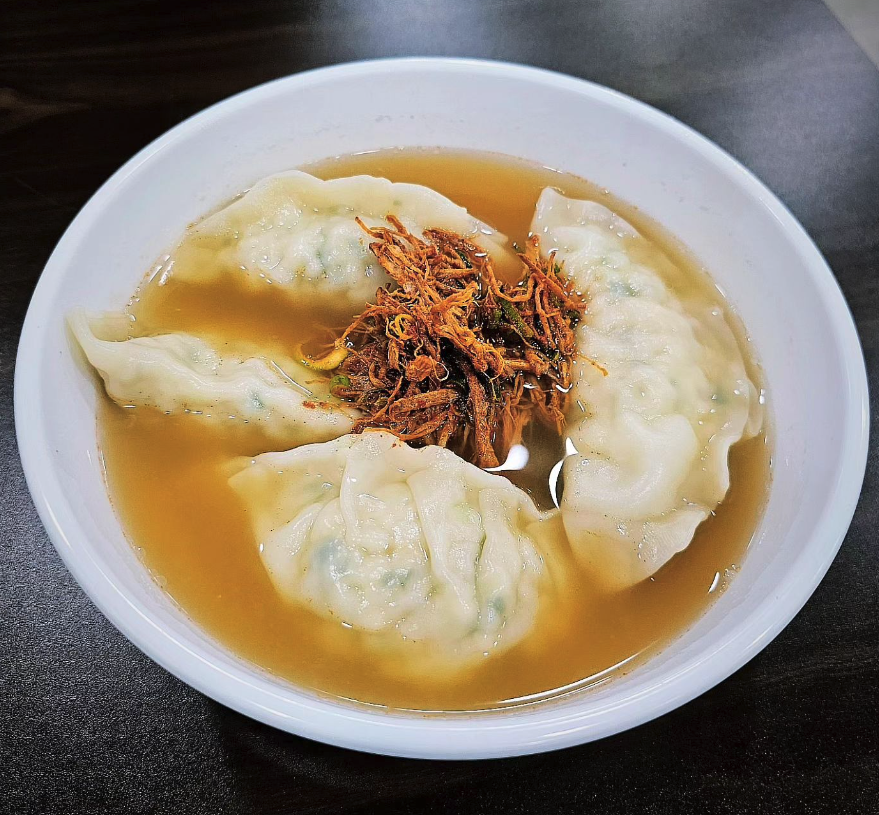
- Mandu. Ordered alongside and reported as genuinely good rather than filler.
- The sliced meat plate. Skippable. Multiple diners say the same thing: spend that money on a second noodle variation instead.
Two people, two noodle bowls, one order of mandu. That is the whole strategy. Adding a third dish is how you end up too full to notice what you came for. Trade the bowls early, before the perilla oil noodles cool and the cold broth warms, since both dishes are at their best in the first few minutes.
⏰ The hours, and the gap in the middle
The 15:30 to 17:30 break catches people out constantly. If your morning ran long at Gwangalli and you arrive at 15:20, you are not getting fed. Treat 15:00 as the real cutoff and give yourself margin.
| Day | Lunch | Dinner |
|---|---|---|
| Monday | 11:30 – 15:30 | 17:30 – 21:00 |
| Tuesday | 11:30 – 15:30 | 17:30 – 21:00 |
| Wednesday | 11:30 – 15:30 | 17:30 – 21:00 |
| Thursday | 11:30 – 15:30 | 17:30 – 22:00 |
| Friday | 11:30 – 15:30 | 17:30 – 21:00 |
| Saturday | 11:30 – 15:30 | 17:30 – 21:00 |
| Sunday | 11:30 – 15:30 | 17:30 – 20:00 |
Sunday dinner ends an hour earlier than the rest of the week. Thursday runs an hour later. Neither of those is intuitive, so if you are planning a late Sunday meal after the beach, plan a different Sunday meal. Last order is likely earlier than closing, as it is at most Korean restaurants, so do not arrive at the final minute.
🎟️ The waiting machine, and why it matters if you have no Korean phone
There is a waiting-list kiosk at the front of the shop. You tap in your party size, it gives you a place in line, and it messages you when your table is ready. Two details make this genuinely worth knowing before you go.
- The machine supports Japanese, so the interface is not Korean-only.
- It accepts an email address instead of a phone number. Visitors without a Korean SIM can still join the queue properly.
That second point solves the problem that ruins so many meals in Korea for short-stay travellers. Most waiting systems demand a local mobile number, which means standing physically in the doorway for forty minutes because you cannot receive the text. Here you register, walk off, and come back. Register the moment you arrive, before you debate the menu on the pavement, because the queue moves while you deliberate.
The room holds more people than the frontage suggests, and the turnover is quick. One diner arriving on a weekday around 13:00 counted roughly ten groups ahead and was seated in about fifteen minutes. Ten groups sounds fatal. It is not, at lunch. At dinner the same ten groups is a different arithmetic entirely, because evening tables linger over mandu and drinks while lunch tables are in and out inside twenty minutes.
Best and worst times to show up
- Best: 11:30 opening, or 13:30 to 14:30 once the office lunch wave clears.
- Workable: weekday 13:00. Expect a short wait, expect to be seated anyway.
- Worst: dinner service, particularly weekends. Waits of around an hour have been reported.
- Do not attempt: arriving 15:00 to 17:30. The kitchen is shut.
Cold noodles are lunch food in Korea anyway. Nobody will look at you strangely for eating naengmyeon at half past eleven in the morning. Plenty of people will be doing exactly that beside you.
🚇 Getting there without wandering
The restaurant sits in Namcheon-dong, Suyeong-gu, on a side lane off Namcheonbada-ro. Namcheon Station on Metro Line 2 is the station for this neighbourhood, and Gwangalli beach is the next stretch of coast over. If your day already includes Gwangan Bridge or the beach, this lunch costs you very little detour.
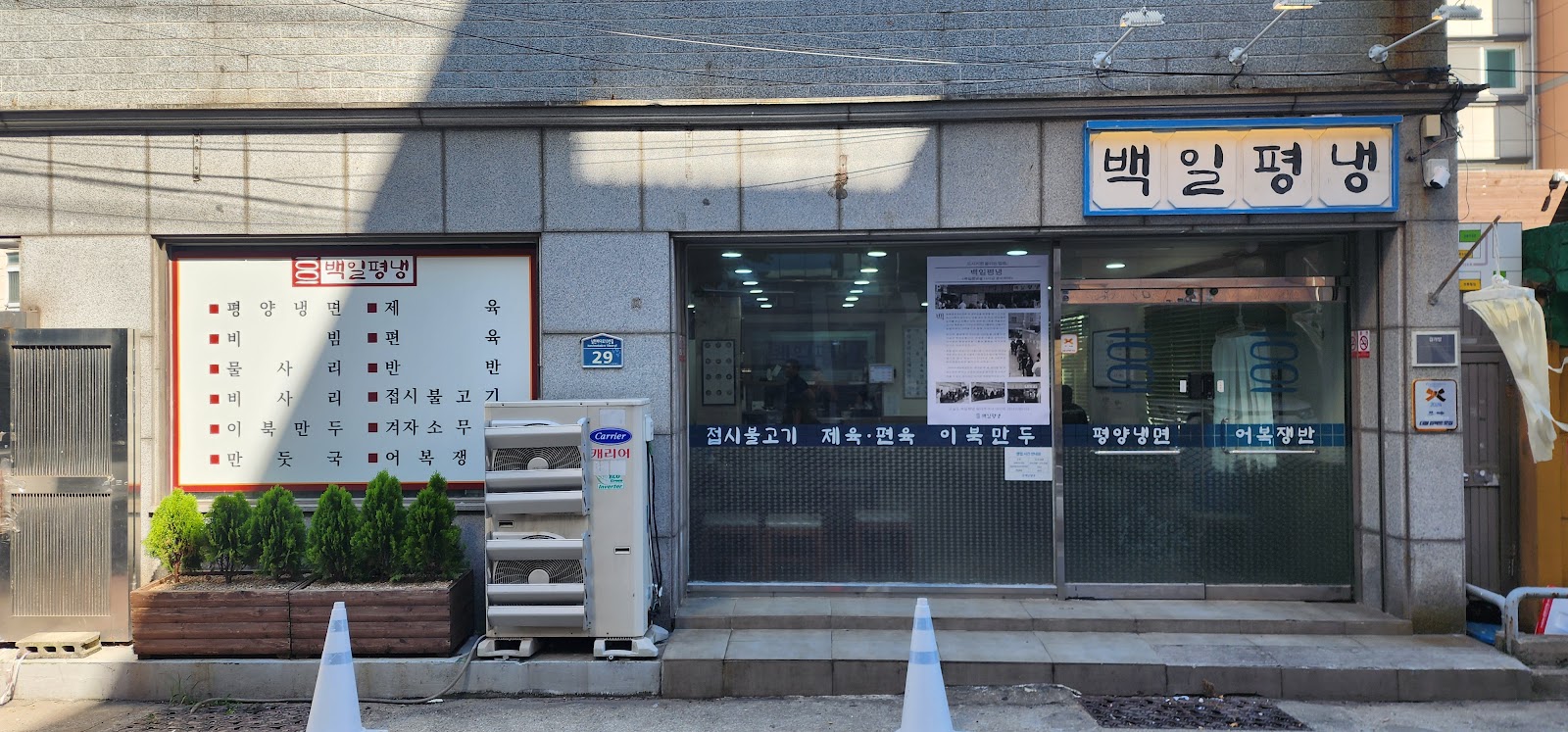
Search the Korean name in your map app rather than the English one. Type 백일평냉 into Naver Map or Kakao Map and it resolves immediately. Google Maps lists the place as 100.1.Pyeongnaeng, which is also what you should look for on the signage, since a foreign alphabet on a Korean shopfront is often the fastest thing to spot from down the street.
- Address: Namcheonbada-ro 10beon-gil 29, 1F, Suyeong-gu, Busan
- Listed phone: 050-71419-5515
- Booking: walk-in queue via the kiosk. Turn up, take a number.
- Ground floor, so no stair-climbing with luggage or a pushchair.
If you have not sorted your transit card yet, do that before the first metro ride rather than at the gate. Buy the Card First: Getting Around Busan covers which card actually works on Busan buses and the metro. Line and fare details straight from the operator are on humetro.busan.kr.
🥢 How to eat it so you enjoy it
Pyeongyang naengmyeon is the one Korean dish that most reliably disappoints foreigners on first contact, and almost always for the same reason. People expect punch. The bowl delivers depth instead, and depth takes about six mouthfuls to register.
- Broth first, plain, before adding anything.
- Then noodles, cut with the scissors if you want to, in long unbroken strands if you do not.
- Vinegar and mustard go in gradually, a little at a time, tasting between additions. Dumping both in at once is how a good bowl gets buried.
- Finish the broth. That is where the money went.
The staff here get consistent praise, especially the man who appears to run the place. If you look lost about the ordering process, someone will help. That is not universal in busy Korean noodle houses and it is worth saying out loud.
🗺️ What to build around it
Namcheon-dong is a residential pocket with an unusually good eating density, and it is walkable from Gwangalli. Lunch here at 11:30, coffee somewhere along the beach, then the bridge lit up after dark makes a clean half-day with no backtracking.
If you want a second Namcheon meal on the same trip, Bibijae in Namcheon is in the same neighbourhood and closes its kitchen earlier than you would guess. And if this bowl converts you, Dammiok in Jungang-dong is the harder, more austere version of the same dish across town.
Worth knowing before you commit a lunch slot: Busan has its own cold noodle, and it is not this one. Milmyeon is the wheat-noodle dish the city invented when buckwheat ran short, it costs less, and it is sweeter and more immediately likeable. Many visitors end up preferring it. Eat both and decide.
❓ Short answers
Do I need a reservation at Baekilpyeongnaeng?
No. It runs on a walk-in waiting list from the kiosk at the entrance. Your only real lever is arrival time.
How long is the wait?
Lunch: often none, and around fifteen minutes even with ten groups ahead. Dinner: up to an hour has been reported.
Can I join the queue without a Korean phone number?
Yes. The kiosk accepts an email address, and it has Japanese language support on the screen. Keep the inbox open on your phone so the alert is not sitting unread while your table is called.
What should I order the first time?
Mul naengmyeon plus the perilla oil noodles, split between two people, with mandu. Skip the sliced meat plate.
Is it good for someone who has never tried Pyeongyang naengmyeon?
That is its strongest case. The broth is seasoned to be readable on a first encounter. Long-time devotees of the plainest Seoul style are the ones who occasionally shrug.
Is it open between lunch and dinner?
No. It shuts at 15:30 and reopens at 17:30, every day of the week.
Can I eat alone here?
Yes. Naengmyeon is a one-bowl, one-person dish in Korea and solo diners are ordinary at lunch. The only downside is that you cannot split two noodle styles. Solo parties also clear the queue faster, since a single seat opens up more often than a pair.
Why is the rating only 4.2?
Because Pyeongyang naengmyeon is a dish people have opinions about. Some arrive expecting a Michelin Guide revelation and rate the gap between expectation and bowl. Read the low reviews and you will see they mostly complain about the genre, not the kitchen.
📌 The short version
- Go at lunch. 11:30 opening or after 13:30. Dinner is where the hour-long queues happen.
- 15:30 to 17:30 the kitchen is closed. Every day. Treat 15:00 as your real deadline.
- Sunday ends at 20:00, Thursday runs to 22:00. The rest of the week closes at 21:00.
- The kiosk takes email, so no Korean SIM is needed to hold your place in line.
- Order: mul naengmyeon, perilla oil noodles, mandu. Skip the meat plate.
- Taste the broth plain first, then add vinegar and mustard slowly.
- Address: Namcheonbada-ro 10beon-gil 29, 1F, Suyeong-gu. Search 백일평냉 in Naver or Kakao Map.
- 4.2 stars, 104 reviews, moderate prices, ground floor, near Namcheon Station on Line 2.