Gyeongju Gyochon Village is a free hanok neighbourhood in central Gyeongju. You can walk in at any hour and on any day of the year. Two things bring people here. One is the House of the Gyeongju Choi Clan, a family that stayed wealthy for more than 12 generations. The other is Gyodong Beopju, the rice liquor brewed in this village and listed by the state as Important Intangible Cultural Asset No. 86-3.
Should you give it some of your limited time? Yes, if you’re already seeing the old Silla core of the city. Gyochon sits next to Gyerim Forest and the tomb of King Naemul, and a reviewer notes you can walk here from central Gyeongju. Plan on an hour and a half, more if you sign up for a workshop. If you’ve already seen a big hanok village like Yangdong, Gyochon is smaller and flatter, and it sells more food.
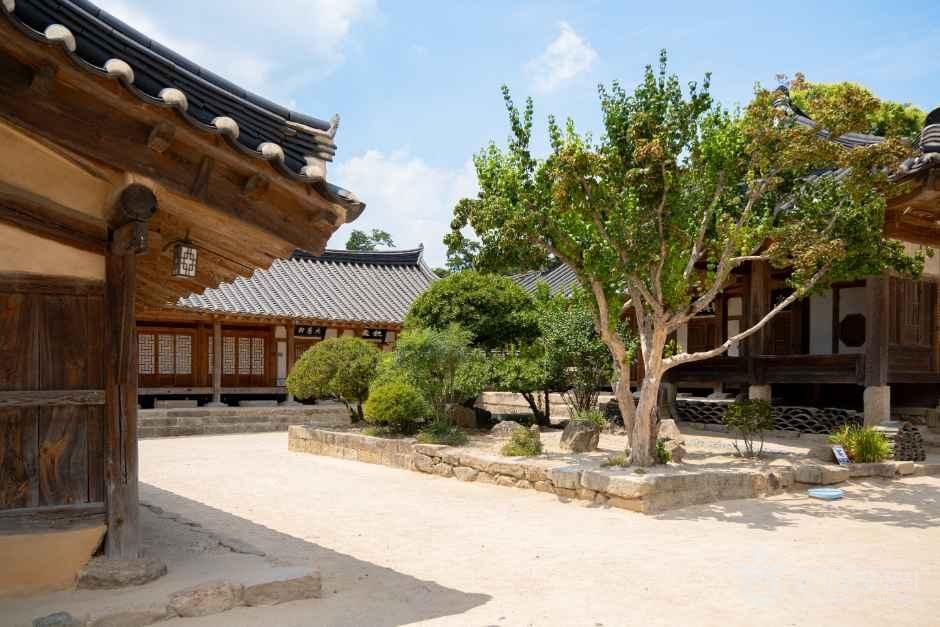
🏘️ What Gyeongju Gyochon Village Actually Is
Gyeongju Gyochon Village takes its name from a school. Gyo means school and chon means village. According to the history posted on site, Silla set up its national academy, the gukhak, here in 682, the second year of King Sinmun’s reign.
The school kept going under other names. In the Goryeo period it was a regional school (hyanghak). Under the Joseon dynasty it became a local Confucian school (hyanggyo). Gyeongju Hyanggyo still stands beside the village, so the school the village was named after is a short walk from wherever you park.
The village is also the site of Yoseokgung, home of the Silla princess Yoseok. Today the place is a mix of restored tile-roofed houses, small workshops, restaurants and drink shops. People here still sell things and still make things. It feels more like a working street than a museum.
On Google Maps it holds a 4.1 rating from about 5,500 reviews. That’s solid, and below the city’s headline sites. The visitors who rate it highly tend to be the ones who joined in on something. The lower ratings tend to come from people who walked through in twenty minutes and wondered what the fuss was about.
🏠 The Choi Family House: Start Here
The House of the Gyeongju Choi Clan is the main building in Gyochon Village. It’s registered as Important Folklore Material No. 27. The Choi family kept its wealth for more than 12 generations and produced a long line of notable people. This house is where they lived.
The house is worth seeing for the story more than the architecture. According to the Korea Tourism Organization, visitors come to learn how the family lived and how it spent money, since those habits are what kept the fortune intact for so long. In a country where “rich family” usually starts a soap opera plot, the Choi family is remembered for restraint.
Reviewers call it a beautifully preserved home and keep calling the family “benefactors”, which tells you how the family is remembered locally. Walk the courtyards slowly. Look at how the storage spaces compare with the living quarters. A big storehouse shows how much the family held, and a generous kitchen yard suggests how many people it fed.
Tip: see the Choi house first. Once you know whose village this is, the beopju shop and the rest of the alleys make more sense.
🍶 Gyodong Beopju: The Rice Wine With a Heritage Number
Gyodong Beopju is a traditional Korean rice liquor named after Gyo-dong, the neighbourhood Gyochon Village sits in. The national government lists it as Important Intangible Cultural Asset No. 86-3. That makes it one of a small number of Korean drinks where the brewing method is the protected heritage, and the bottle simply carries it.
Most visitors know makgeolli, the cloudy farmer’s rice wine. Beopju belongs to the clearer, more refined side of Korean brewing. It’s closer to what a well-off household poured for guests and ceremonies. That fits a village built around a family that hosted a lot of people.
I don’t have current bottle prices or shop hours. Neither the official listing nor Google publishes them, so I won’t guess. Reviewers mention traditional drinks being served in the village, including at a rice cake café where you can sit down after the workshop. If you want a bottle to take home, buy it in the village. Cultural-asset liquors are hard to find anywhere else.
- Taste a small glass before buying a full bottle. Traditional Korean liquors vary a lot in sweetness.
- Carry it in your hand luggage only if your airline and destination allow liquids of that volume. Otherwise wrap it well and pack it in checked luggage.
- If you’re driving, a sip is too much: Korea’s drink-drive limit is strict. Take the bottle back to your hotel.
🍡 Hands-On: Rice Cakes, Pottery, Quilts and Hanbok
Gyochon Village has a cluster of experience centres, and they’re the easiest way to turn a short walk into a proper visit. The Korea Tourism Organization lists five.
| Experience centre | What you do there |
|---|---|
| Crockery Workshop / Kiln | Pottery and ceramics |
| Quilt-Making Center | Traditional quilting and textile work |
| Mi-Gyeong Traditional Culture Center | Traditional culture programmes |
| Wearing Gyeongju Hanbok Rental | Hanbok rental for walking and photos |
| Gyochon Garamtteok | Rice cakes (tteok) |
The rice cake experience gets the warmest reviews. At one tteok café the owners hand you the mallet and let you pound steamed rice into dough yourself. Afterwards you can buy the finished rice cakes and sit down with a traditional drink on the premises. It takes about as long as it sounds, and it’s the part people still talk about after their trip.
Pounding rice is harder than it looks. The rice is sticky and the mallet is heavy. Two or three good swings is usually enough to get a photo, and then you can hand it back.
Reviewers also mention a shop making traditional gochujang (red chilli paste). Small tubs make a better souvenir than a fridge magnet, but check your home country’s rules on bringing in food first.
Session times and prices aren’t published in the data I have. The official contact number further down is the most reliable way to check before you go, especially for pottery, which usually needs a set block of time.
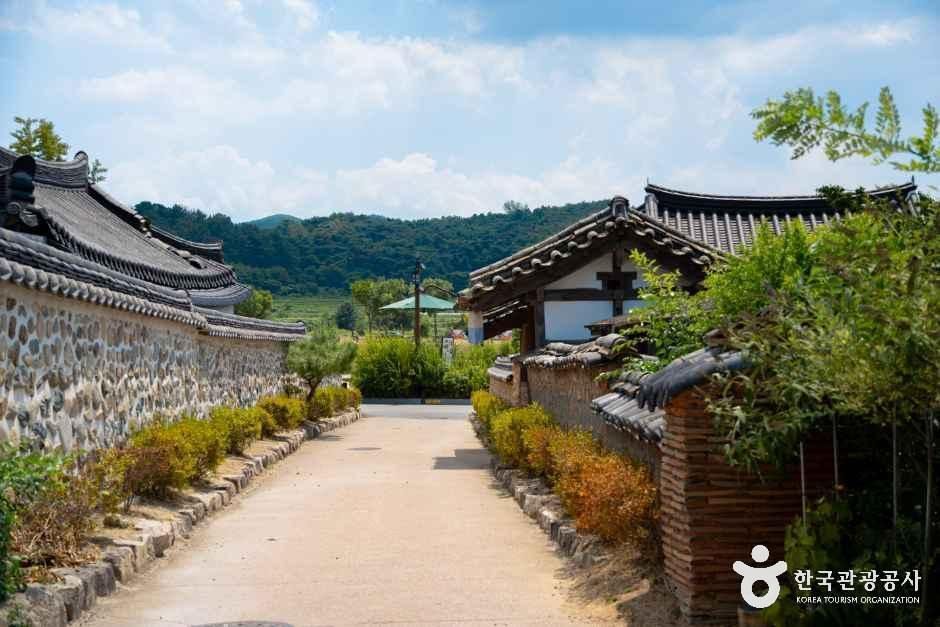
🚶 How to Walk Gyochon Village
Gyochon Village is flat and compact, which is unusual for Korean heritage sites. Most of them involve hills. Visitors say it’s easy to wander, and stone sculptures dotted along the lanes give you something to look at between houses. Here’s an order that works:
- House of the Gyeongju Choi Clan. Start with the context.
- Beopju and drinks. Taste while the story’s still fresh.
- One workshop. Rice cakes if you only pick one.
- Gyeongju Hyanggyo. The Confucian school the village is named after.
- The lanes and the bridge. Slow down and take photos.
- Out toward Gyerim Forest and Naemulwangneung. Carry on into the Silla tomb area.
The bridge
A reviewer calls the bridge by the village spectacular, and that’s the photo most people leave with. It’s Woljeonggyo, the large reconstructed covered wooden bridge over the stream at the edge of Gyochon. Walk across it and back. The view of the village rooftops is better from the far side.
Gyerim Forest and the Naemul tomb
Gyerim Forest and Naemulwangneung Royal Tomb are the Korea Tourism Organization’s top two neighbouring sights for Gyochon Village. Both are on foot from the village lanes, so you don’t need a bus or taxi in between. Under old trees on a hot afternoon, the forest is noticeably cooler than the open lanes.
⏰ When to Go
Gyochon Village never closes. Both the Korea Tourism Organization and Google list it as open 24 hours, every day, with no closing days. That applies to the public lanes. The shops, workshops and restaurants inside keep their own hours, and those aren’t published in either source.
In practice, you get two different visits:
- Daytime (late morning to afternoon): everything’s open. You can join a workshop, buy beopju and eat lunch. This is the visit most people mean when they recommend the place.
- Evening: quiet lanes and a nicer walk, but expect closed doors. Good if you’re heading to Donggung and Wolji Pond for the night view anyway.
One reviewer says it’s best on a sunny day, and I’d agree. Hanok courtyards look flat under grey skies, and the stone lanes get slick in rain. Wear shoes with grip.
📋 Practical Details
Gyeongju Gyochon Village is free to enter, with no ticket gate and no age rules, so foreign visitors of any age walk straight in. These details come from the Korea Tourism Organization’s Korean-language listing, cross-checked against Google Maps.
| Admission | Free |
| Opening hours | 24 hours (village lanes). Shops and workshops keep their own hours |
| Closing days | None. Open all year |
| Parking | Available (capacity and fees not published) |
| Phone | +82-54-779-6834 |
| Address | 39-2 Gyochon-gil, Gyo-dong, Gyeongju, Gyeongsangbuk-do |
| Korean name for maps | 경주 교촌마을 |
| Toilets | Yes, including an accessible toilet |
Type 경주 교촌마을 into Naver Map or Kakao Map. Both work better in Korea than Google Maps for walking directions. For festival dates and city updates, the Gyeongju city website is the official source.
♿ Step-Free Access and Family Facilities
Gyochon Village is one of the easier heritage sites in Gyeongju for wheelchair users and parents with strollers. The Korea Tourism Organization’s barrier-free survey records the following:
- Accessible parking: 2 dedicated spaces on the Sungmundae exhibition hall side (숭문대 전시관).
- Route to the entrance: no steps, so a wheelchair can get in.
- Main entrance: step-free.
- Accessible toilet: yes. The survey doesn’t say exactly where, so ask at a shop when you arrive.
Inside the houses it’s a different story. Traditional hanok have raised wooden floors and high door sills, so plan on seeing courtyards from ground level. The survey doesn’t mention stroller rental or a nursing room, so bring what you need.
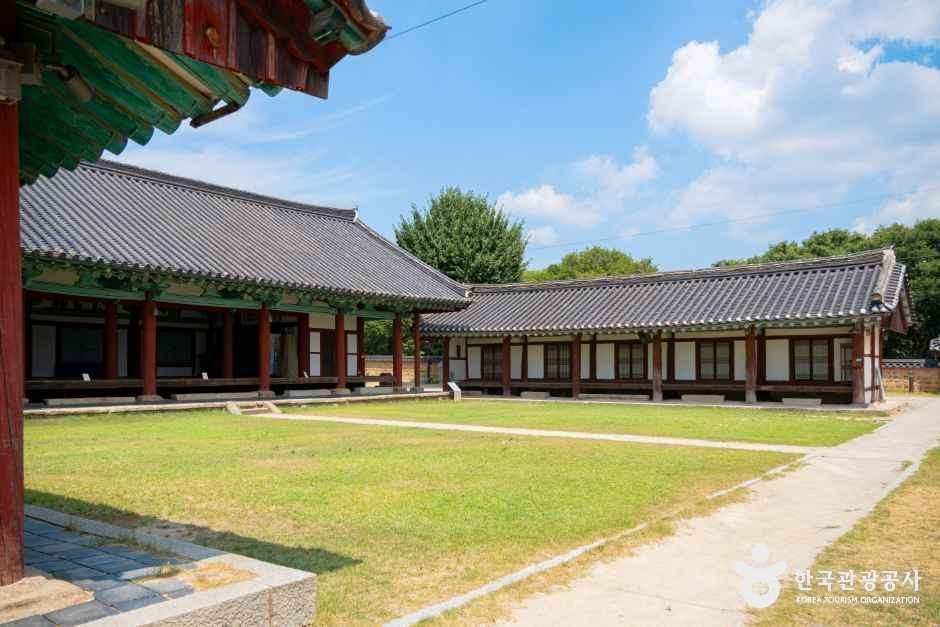
🗺️ Fitting Gyochon Into a Gyeongju Day
Gyochon Village fits best in the afternoon of a day spent in the old city centre. Do the tombs and Gyerim Forest, have a late lunch and a rice cake session in Gyochon, then walk on to the pond at dusk. Our guide to Donggung and Wolji Pond explains why you should arrive there before the sun goes down.
Keep the mountain sights for a separate morning. Seokguram and Bulguksa are out east and take a bus. Our Seokguram Grotto guide has the bus-up, walk-down plan.
If you’re torn between Gyochon and Yangdong, here’s the difference. Gyochon is central, flat, free and built for short visits with food and workshops. Yangdong is a bigger trip out of town, and people still live in the houses. Read our Yangdong Folk Village guide before deciding. With time for both, do Yangdong first and save Gyochon for a lighter afternoon.
❓ Short Answers
Is Gyeongju Gyochon Village free?
Yes. Gyeongju Gyochon Village charges no admission and has no ticket gate, so visitors of every age and nationality walk in free. Workshops such as rice cake pounding, pottery and hanbok rental are paid separately at each centre, and so are drinks and food.
What are Gyochon Village’s opening hours?
Gyochon Village is open 24 hours a day, all year, with no closing days, according to the Korea Tourism Organization. Individual shops and workshops set their own hours, which aren’t published, so go between late morning and afternoon if you want everything open.
What is Gyodong Beopju?
Gyodong Beopju is a traditional rice liquor from Gyochon Village, listed as Important Intangible Cultural Asset No. 86-3. It’s linked to the area of the Gyeongju Choi Clan’s house, and the village is the most reliable place to taste or buy it.
How long do you need in Gyochon Village?
About 90 minutes covers the Choi house, a beopju tasting and the lanes. Add an hour if you join a workshop. Walking on to Gyerim Forest and the Naemul tomb adds more, though both are on foot.
Is Gyochon Village wheelchair accessible?
Mostly, yes. The route in and the main entrance are step-free, there’s an accessible toilet, and 2 accessible parking spaces sit on the Sungmundae exhibition hall side. House interiors have traditional raised floors and door sills, so expect to view them from the courtyards.
Is there parking at Gyochon Village?
Yes. The Korea Tourism Organization lists parking as available, but doesn’t publish capacity or fees. If you need certainty, call +82-54-779-6834 before driving in, especially on weekends and holidays.
📝 Summary
- Gyeongju Gyochon Village is a free hanok village in central Gyeongju, open 24 hours with no closing days.
- Start at the House of the Gyeongju Choi Clan (Important Folklore Material No. 27), home of a family that stayed wealthy for 12+ generations.
- Try Gyodong Beopju, a rice liquor listed as Important Intangible Cultural Asset No. 86-3.
- Pick one workshop. Rice cake pounding gets the best reviews.
- Go late morning to afternoon if you want shops open, and in the evening for quiet lanes.
- The entrance is step-free, there’s an accessible toilet, and 2 accessible parking spaces are by the Sungmundae exhibition hall.
- Walk on to Gyerim Forest, Naemulwangneung and Donggung and Wolji Pond to finish the day.
- Phone: +82-54-779-6834. Map search: 경주 교촌마을.