Seoul to Busan by KTX is one train, no transfer, and it ends inside Busan’s subway system. You board at Seoul Station, you get off at Busan Station, and Metro Line 1 starts under your feet. Nobody meets you, nobody stamps anything, and there is no security line. If you have used a train in Japan or Europe, the shape of the day will feel familiar.
Book it in advance. That is the single thing that matters. Weekend departures and holiday weeks sell out, and the fare and the timetable both shift by departure, so check them live on letskorail.com rather than trusting a number you read in somebody’s blog post from two years ago. Everything else in this article is the stuff that isn’t printed on the ticket.
🚄 Seoul to Busan by KTX: the short version
You buy online or at a booth. You show up maybe twenty minutes early, which is generous. You walk onto the platform without a gate check, find your car number painted on the platform floor, sit in your assigned seat, and that’s it. Korean high-speed rail is not a ceremony. It’s a bus that happens to go very fast.
The no-gate part surprises people. Your ticket is checked by a conductor walking the aisle after departure, or sometimes not at all, because the system already knows which seat was sold. That trust runs both ways: sitting in a seat you didn’t buy gets sorted out quickly and awkwardly when its owner boards two stops later.
- Start: Seoul Station, 2 Sejong-daero 18-gil, Jung District, Seoul (4.3 stars, 1,642 reviews)
- End: Busan Station, Jungang-daero, Dong-gu, Busan (4.4 stars, 1,749 reviews)
- Transfers: none
- Reservation: yes, and earlier than you think for Friday and Sunday
- Fare and timetable: live on Korail’s site, because both vary by train
🎫 Buying the ticket without a Korean phone number
Three ways, in the order I’d actually recommend them.
Online, before you fly
Korail’s English site takes foreign cards and gives you a ticket you can show on a phone screen. Do this for anything departing Friday afternoon, Saturday morning, or the Sunday evening return. Those three windows are where people get stuck standing in the vestibule between cars for the whole trip, which is legal and also miserable.
Screenshot the ticket once it’s issued. Station wifi is fine and mobile data is fine, but a screenshot means you are never reloading a booking page while a queue builds behind you at a machine.
At the ticket booths
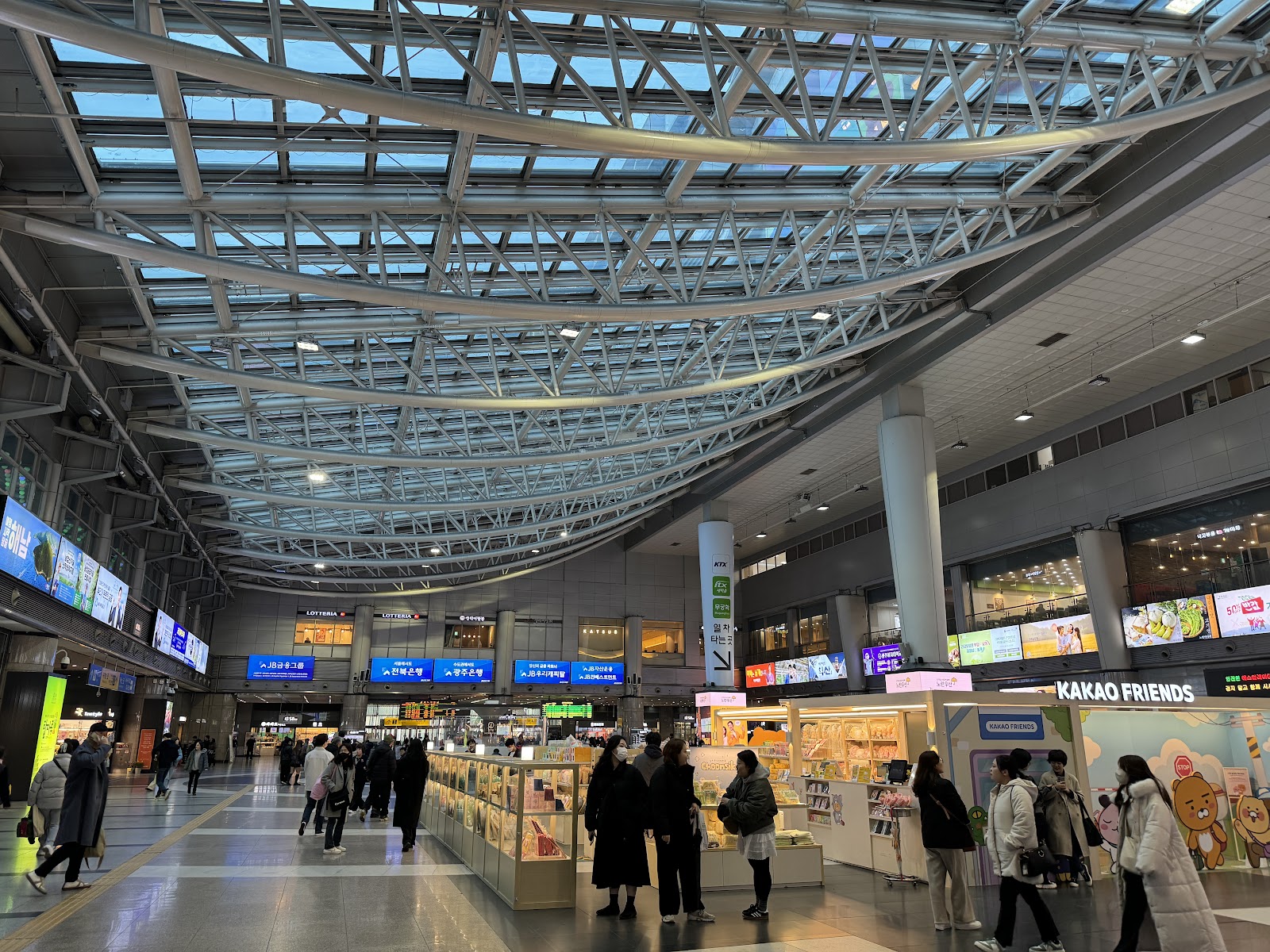
The KTX concourse at Seoul Station has a row of staffed windows, and the signage above them is translated. Staff English is functional rather than fluent. Write your date, time and destination on your phone in big text and hand it over. That works better than speaking, every time.
Machines
Fine for a same-day seat if one exists. Less fine at 5pm on a Friday when there is a queue behind you and you are hunting for the English button. Use them when the station is quiet.
One traveller I read about cancelled a first-class booking by mistake, thinking it was a different reservation entirely, and then had to rebuild the whole trip at the counter. Cancellations are easy in Korea. That’s the problem. Read the screen twice before you confirm anything.
The failure mode there is specific: a released seat goes straight back into the pool, and on a busy departure somebody else takes it within minutes. You can’t undo a cancellation, only rebook whatever is left.
🧭 The Seoul Station trap: metro level is not train level
This catches more people than any other part of the journey, and it is worth reading twice if you are arriving by subway.
Seoul Station is several stations wearing one name. There’s the subway station. There’s the AREX line from Incheon Airport. There’s the main KTX terminal. And there’s the old red-brick building out front that isn’t a working station at all any more. They are connected, but not in a straight line.
Coming off the subway, you tap out through the gates, walk outside into the open air, and then take the escalators up into the KTX concourse. Travellers stand on the metro platform looking for a sign that says KTX and don’t find one, because the connection happens above ground. Budget ten minutes for this walk with luggage. Fifteen if you’re two people and one of you wants coffee.
Weather makes that outdoor stretch worse than the map suggests. In summer rain or a January wind you are exposed for the whole crossing, and a wheeled suitcase on wet paving slows you down further. Add a buffer rather than trimming one.
Two information counters exist, one inside the concourse and one outside near the plaza. The inside one is staffed by people who deal with confused foreigners all day and are unbothered by it. Ask them. It costs you nothing.
⏱️ What the ride is actually like
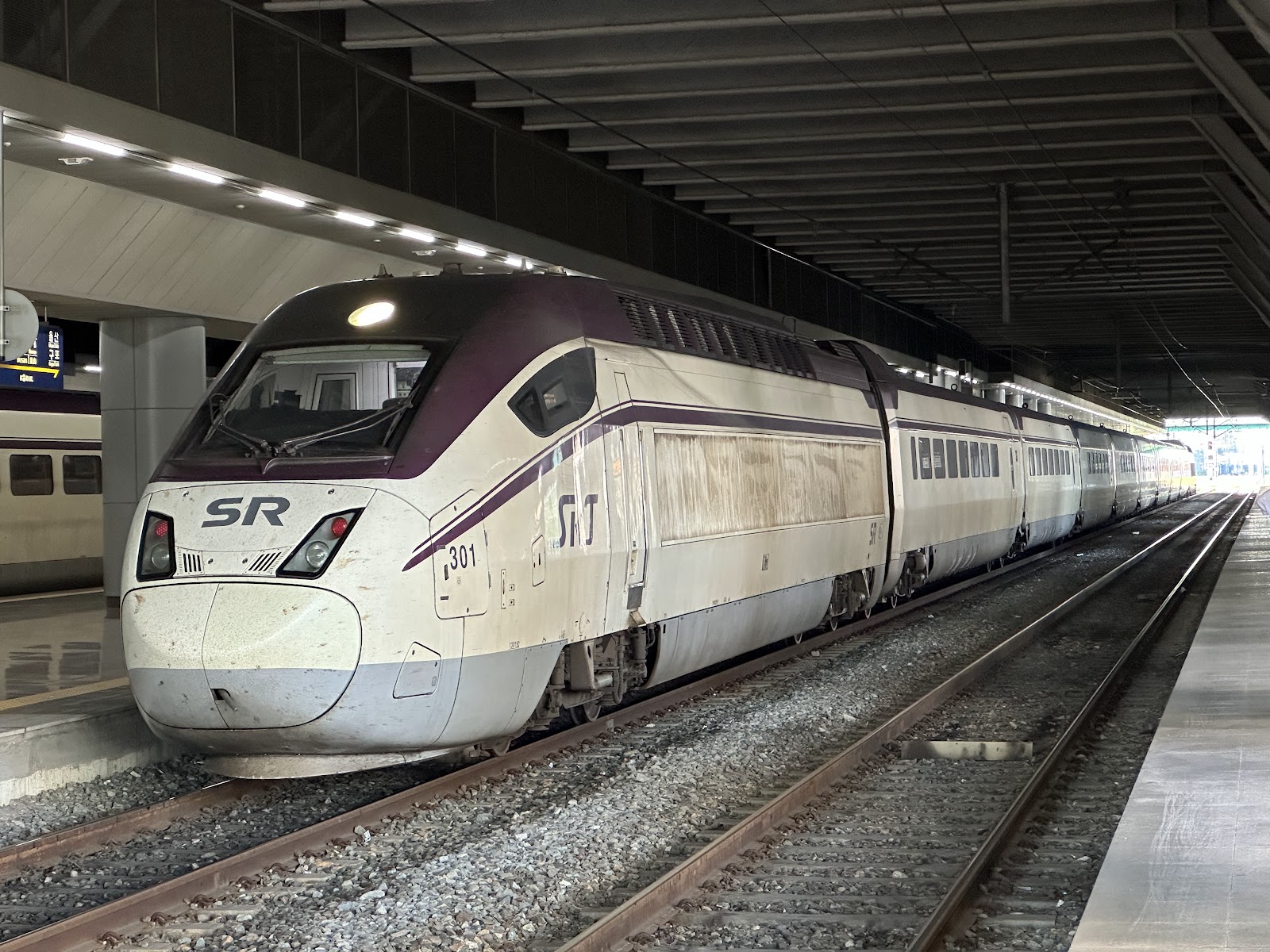
Quiet. Genuinely quiet. Koreans treat train cars as libraries, phone calls happen in the vestibule, and if your group is loud you will feel it in the back of your neck. Seats face forward in standard class and have a tray table. Overhead racks take a carry-on; there are luggage shelves at the end of each car for the big suitcases, and nobody guards them, and nothing happens to them.
The in-car display climbs to around 240 km/h on the open stretches between cities and then drops for the tunnels and the station approaches. Punctuality is close to absolute. If the board says a departure time, the train is moving at that time, and the doors closed before it.
Treat that as a hard deadline rather than a target. There is no announcement calling stragglers, no held door, and the next train is a fresh ticket. Being on the platform five minutes out costs you nothing and removes the only real risk in the day.
First class buys you wider seats in a 2+1 layout and a calmer car. It is a nice-to-have, not a fix for anything. If you’re travelling alone and want to sleep, it’s worth the difference. If you’re two people who plan to talk the whole way, standard is fine.
Eat before you board
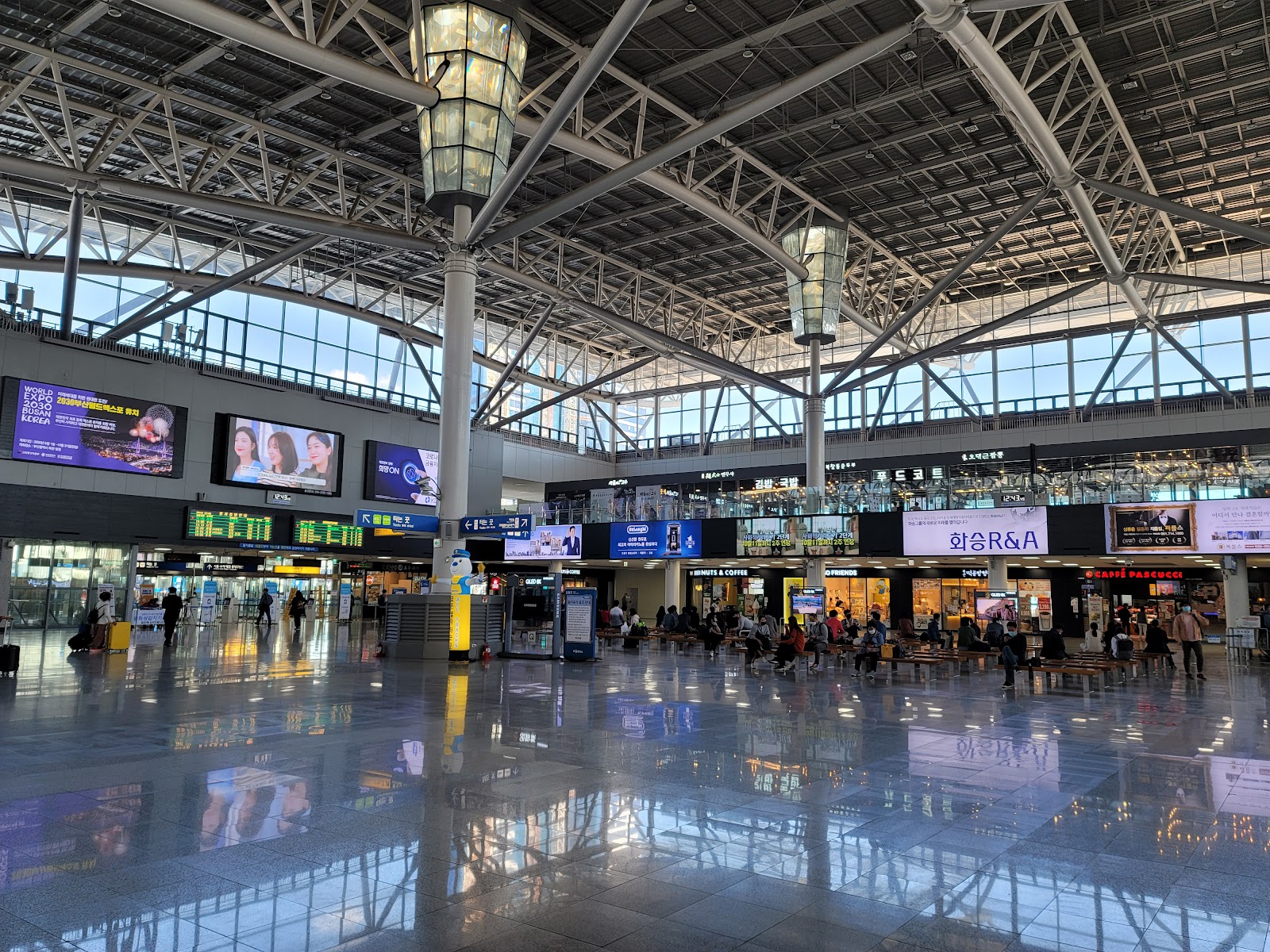
Onboard catering is thin. Both stations, however, are full of food. Seoul Station has a whole dining floor plus the outlet mall attached, and Busan Station sells fish cake skewers (eomuk) that people specifically get off the train to buy. Grab something in the concourse, eat it at your seat, take the wrapper with you.
Keep it dry and low-smell. In a car this quiet, a hot soup container is conspicuous in a way a rice roll never is, and there’s no bin at your seat to hide the evidence.
🛫 KTX vs the plane vs the bus
| Option | Where it drops you | Honest read |
|---|---|---|
| KTX | Busan Station, downtown, on Metro Line 1 | Default choice for a first visit |
| Plane | Gimhae Airport, west of the city | Air time is short, everything around it isn’t |
| Express bus | Nopo terminal, far northern end of Line 1 | Cheapest, and then a long subway ride into town |
The bus terminal itself is clean, well signed in Korean and English, and easy to use. That isn’t the issue. The issue is geography: Nopo sits at the top of the subway map, and your hotel almost certainly doesn’t. The plane has the same shape of problem at the other end of the city.
Compare door to door, including the check-in window, the ride out to the terminal, and the transfer at the far end. Once those are on the same line of the spreadsheet, the gap between the three options narrows a long way.
Busan Station puts you in the middle of everything, which is why the train wins for most short trips. If you’re weighing where to base yourself once you arrive, Where to Stay in Busan: Four Bases, One First Visit lays out the four neighbourhoods and what each one costs you in travel time.
🏁 Getting off at Busan Station
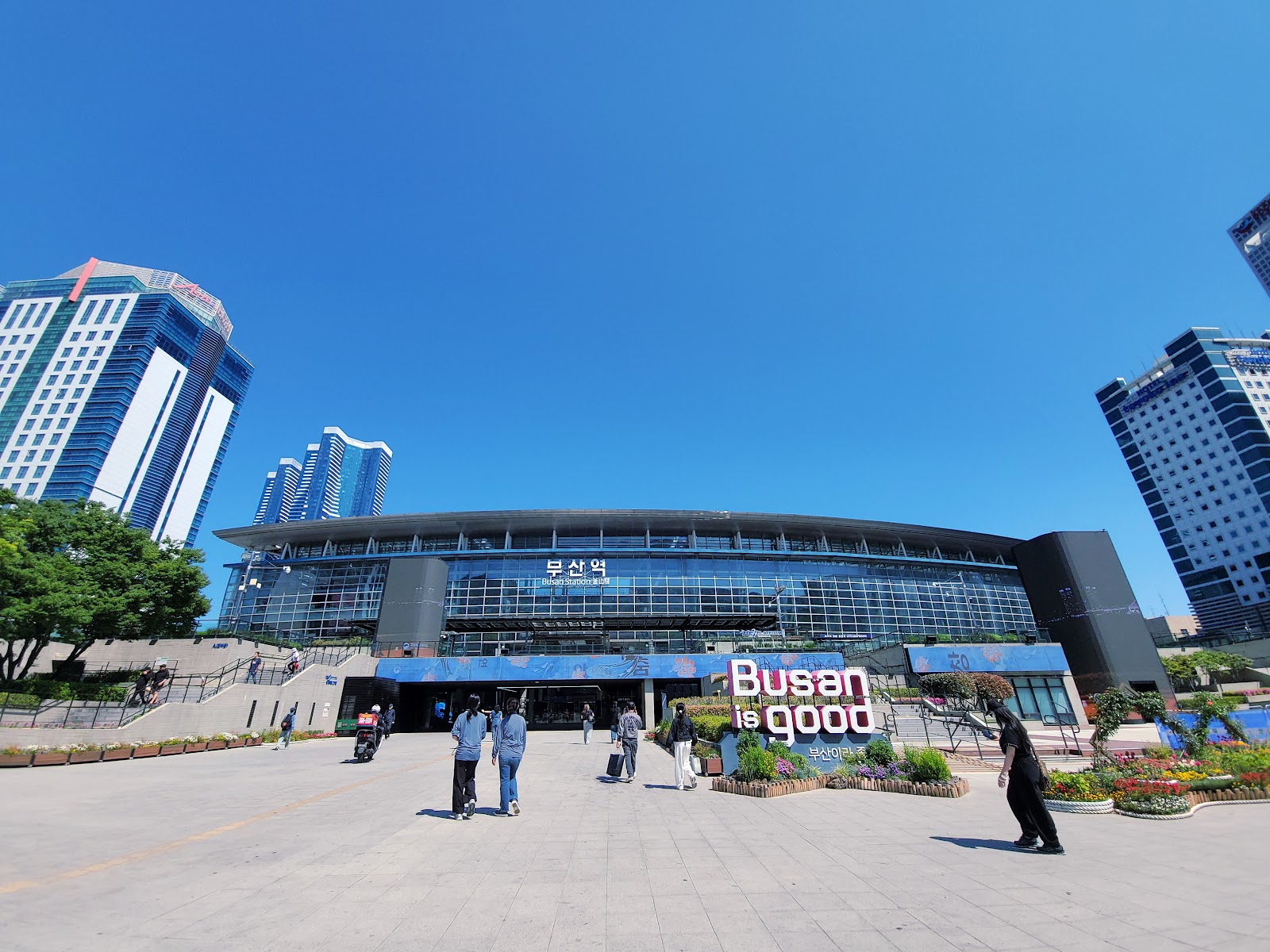
You come up into a hall that’s clean, wide, and easy to read even if you can’t read Korean. Metro Line 1 is right there, downstairs, same building. Taxi rank out front. The plaza outside is worth a two-minute look at night, when it’s lit, and there are outdoor events on it often enough that you may walk into one.
Busan’s Chinatown starts across the road from the station exit. It’s compact, a little rough around the edges, and a reasonable place to eat if you arrive hungry at an hour when nothing else is open.
Do this in the first ten minutes
- Buy a transport card. Convenience store inside the station, cash, done in a minute. Details in Buy the Card First: Getting Around Busan.
- Download Naver Map or Kakao Map. Google Maps does not do walking directions in Korea.
- Drop the bag first. Hotel or a coin locker. Do not start sightseeing dragging a suitcase up Busan’s hills.
Do the app download before you leave home if you can. Setting up a new map app while standing in an arrivals hall, with a suitcase between your feet, is the worst possible moment to discover it wants an account.
If you arrive on a morning train and want the day to already be productive, the west side of the city is the right first move from Busan Station. Busan in 2 Days: West Side First, East Side Second is built around exactly that arrival.
🙃 Mistakes people actually make
- Booking the day before a holiday weekend. Korean domestic travel peaks hard and predictably. Seats vanish.
- Confusing Seoul Station with Yongsan Station. Both are major Seoul rail terminals. Check which one your ticket says, because they are not walking distance apart.
- Getting off at Gupo. Some southbound trains stop in northern Busan before the terminus. That stop is not downtown. Stay on until Busan Station unless your hotel is genuinely up there.
- Cutting the connection too fine at Seoul Station. Subway to KTX concourse is an outdoor walk plus an escalator, not a corridor.
- Assuming the return will be easy to book on the day. Sunday evening trains northbound are the busiest of the week.
The Gupo one bites hardest because the stop looks like an arrival: people stand, bags come down, the platform fills. Check the car display before you join them.
💬 Short answers
Do I need to reserve the Seoul to Busan KTX?
Yes for weekends and holidays. Midweek off-peak you can often walk up and buy a seat, but the downside of being wrong is standing for the entire journey.
How much is the ticket?
It depends on the departure and the class, and Korail changes it, so pull the live fare on their site rather than trusting a fixed figure. Budget for standard class and treat first class as an optional upgrade.
Can I use a foreign credit card?
On the English booking site and at the staffed counters, generally yes. Carry some cash anyway. Small food stalls inside and around both stations are often cash-only.
Is there space for a large suitcase?
Yes, on the shelves at the end of each car. No fee, no tag, no reservation. Board a few minutes early if you have two big bags so you aren’t wrestling them past seated passengers.
Is the KTX comfortable enough for kids?
It’s smooth and there are toilets in every other car. The quiet norm is the harder part. Bring headphones and something to occupy them.
What’s the first thing worth eating in Busan?
Pork soup, within walking distance of where you land. Dwaeji Gukbap: Busan’s Pork Soup, and Why Yours Tastes Bland explains how to season the bowl so it tastes the way locals eat it.
📌 In one screen
- One train, no transfer, Seoul Station to Busan Station.
- Book ahead. Weekends and holidays sell out properly.
- Check fare and timetable live on Korail’s site. Both move.
- At Seoul Station, subway to KTX means going outside and up an escalator. Allow ten minutes.
- Eat before boarding. Both concourses are better than the train.
- Trains leave on time to the minute. Cars are quiet.
- Busan Station sits on Metro Line 1 downtown. The bus terminal and the airport do not.
- First ten minutes off the train: transport card, Korean map app, drop the bag.