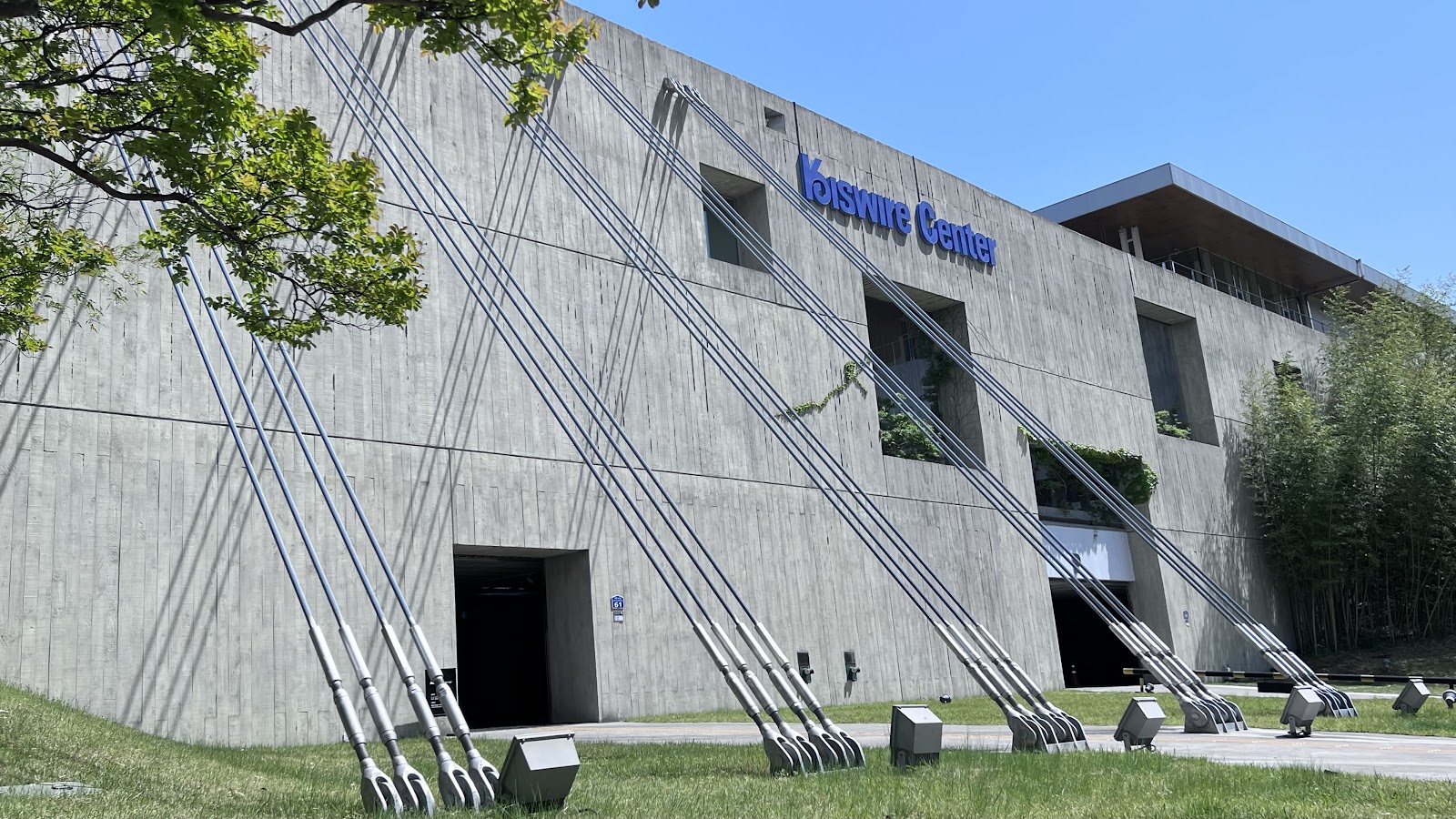
Goryeo Jegang Memorial Hall is a free company museum in Suyeong-gu, Busan, built by the steel wire rope maker that most of the world knows by its export brand, Kiswire. It opens Tuesday to Saturday, 9:00 to 17:00, and it is closed both Sunday and Monday. Entry costs nothing. Google lists it at 4.2 from 59 reviews, which for a corporate museum is a genuinely good score.
Here is the honest version before you rearrange your day for it. This is a small, careful, architecturally serious building about wire rope, sitting on the old factory land that became the F1963 culture complex. Give it 40 to 60 minutes. If you are already coming to F1963 for coffee or beer, it is one of the best free hours in this part of Busan. If you are in Haeundae with two days total, it is not the thing to sacrifice Gwangalli for.
🏭 Goryeo Jegang Memorial Hall, Busan: What It Actually Is
Goryeo Jegang (고려제강) makes steel wire rope. The stuff inside elevator shafts, suspension bridges, cranes, ski lifts, offshore rigs. It sells that rope worldwide under the name Kiswire, which is why the Google listing says KISWIRE Museum while the sign and the Korean maps say Goryeo Jegang Memorial Hall. Same building. Two names.
Plenty of visitors arrive knowing none of this. One reviewer came to Busan in a heatwave, found the beach empty, went looking for somewhere indoors, ended up here, and learned for the first time that a Korean company from this neighbourhood had become a global supplier of an invisible product. That reaction shows up again and again in the reviews, and it is the real appeal of the place.
Call it what it is: a corporate visitor centre with a museum’s manners. The exhibits tell a company story. Nobody is pretending otherwise. What lifts it above a lobby display is the scale of the physical objects, the mock-ups, and the building itself.
Who gets the most out of it
- Anyone interested in industrial design, manufacturing, or how modern Korea was actually built
- Architecture travellers already circling F1963
- Families needing a free, air-conditioned, shoe-friendly hour in August
- Rainy-day travellers based in Gwangalli or Haeundae
- Kids who like machines. Adults who pretend they don’t
🕘 Hours, Closed Days, and the Price
| Day | Hours |
|---|---|
| Monday | Closed |
| Tuesday | 9:00 – 17:00 |
| Wednesday | 9:00 – 17:00 |
| Thursday | 9:00 – 17:00 |
| Friday | 9:00 – 17:00 |
| Saturday | 9:00 – 17:00 |
| Sunday | Closed |
Two closed days, and they are the two that hurt. Sunday closure catches weekend travellers, and Monday closure catches everyone who planned museums for their Monday. If your Busan trip is Saturday to Monday, Saturday morning is your only window.
Admission is free. Visitors who walked in during posted hours were not asked to book anything. There is a phone number, 051-760-2604, and it earns its keep for one specific reason explained further down.
Arrive by 16:00 at the very latest. A 17:00 close in Korea means the doors stop letting people in before that, and this is not a building you want to sprint through with a security guard watching the clock.
🚇 Getting There Without Circling the Block
The address is 63 Gurak-ro 141beon-gil, Suyeong-gu, Busan. Type the address, not the museum name, into Naver Map or Kakao Map. The name resolves to three different English spellings depending on the app, and one of them is a factory gate.
Nearest subway access is Line 2, at either Mangmi or Suyeong station, followed by a walk of roughly ten to fifteen minutes through flat back streets. It is not a scenic walk. It is warehouses, small workshops, and parked delivery trucks, which is exactly what you would expect around a wire rope plant.
From Gwangalli or Haeundae, a taxi is the sane choice for two people. Use Kakao T so the destination is typed in Korean rather than pronounced at a driver. If you have not sorted your transport card yet, read Buy the Card First: Getting Around Busan before you do anything else in this city.
One thing to know before you step out of a car here. This is still working company land, and there is security at the entrance area. Reviewers have been approached and asked where they were going, in Korean, within seconds of arriving. It reads as rude if you were not expecting it. Say “기념관” (gi-nyeom-gwan, memorial hall) and point. The conversation ends there.
🔒 The Locked Door Problem
This is the single most useful paragraph in this article, so read it twice. The lowest-rated reviews here are not about the exhibits being boring. They are about rooms being locked while the museum was officially open.
Two specific complaints repeat. The upper terrace, which has the best view in the building, was locked. And on one Thursday afternoon, the main exhibition section was shut while the rest stayed accessible. Visitors walked in at a posted open time, started on the first floor, and then ran out of building.
Free entry means nobody owes you a refund for a locked door. It also means the phone call that prevents it costs you nothing.
So call 051-760-2604 the morning of your visit. Ask whether the main exhibition hall and the terrace are open today. If your Korean is thin, have your hotel front desk make the call, or send a message in Korean through a translation app. Thirty seconds of admin protects a 40-minute round trip across the city.
And if you arrive to find something closed, ask. Corporate buildings lock doors for events, cleaning, and internal visits. Sometimes a staff member simply opens it.
🎧 The Audio Guide Lives On Your Phone
There is no headset counter and no deposit to leave. The guide runs on your own phone, which foreign visitors have found and used, so bring headphones and some battery. Nobody enjoys holding a phone speaker to their ear in a quiet gallery.
Do use it. Wire rope is one of those subjects where the object in front of you means very little until someone tells you what load it was built to carry and what happened when an earlier version failed. Without commentary, you are looking at coils of metal. With it, you are looking at the reason a bridge stays up.
🧱 What You Are Actually Looking At
The strong parts are the big physical ones. Mock-ups get named specifically in the reviews as the highlight, and that tracks: cross-sections of rope thick as your arm, machinery, the company’s own artefacts kept in better condition than most public museums manage.
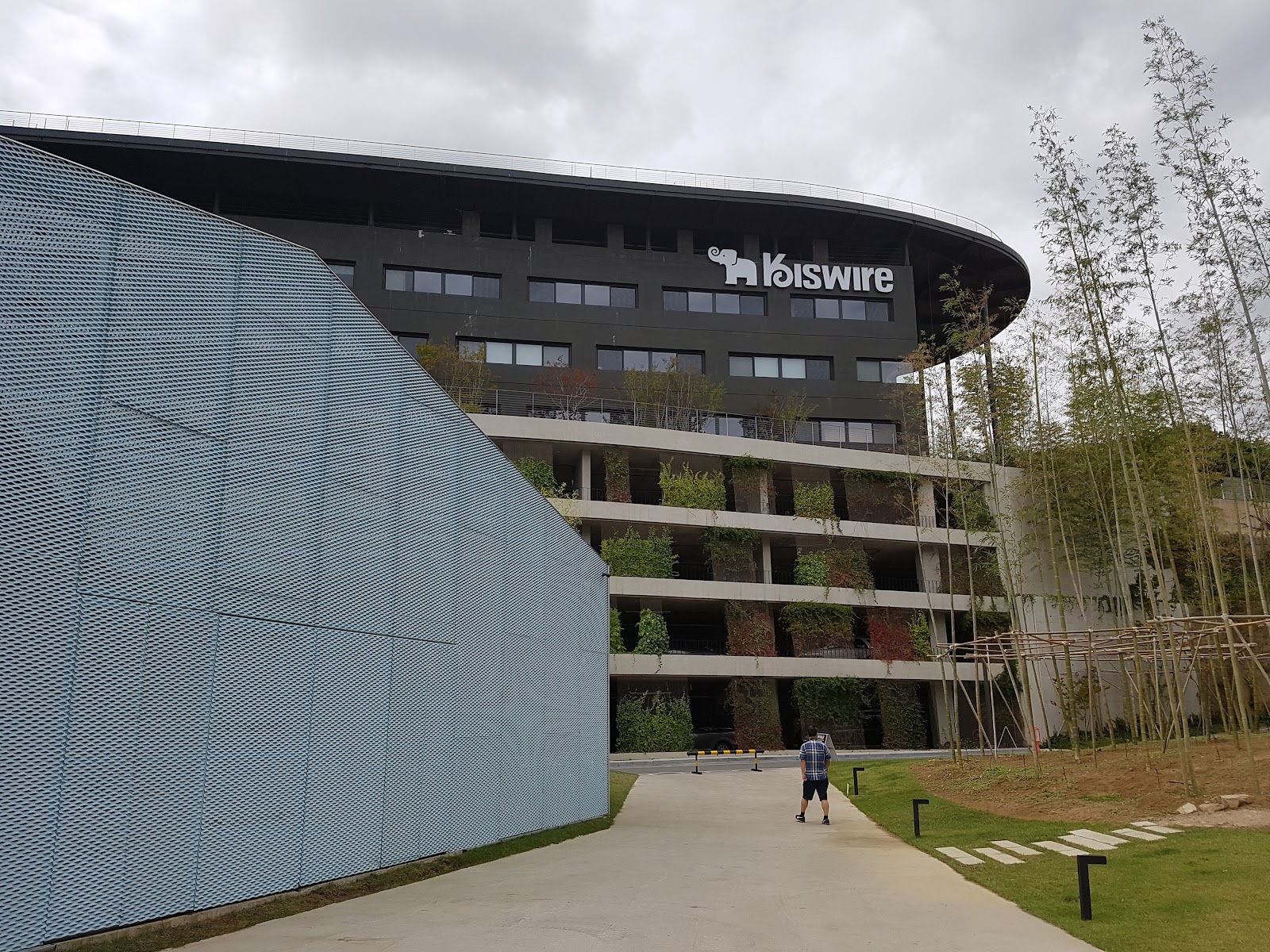
The building earns its own mention. Visitors who came for the subject matter stayed for the architecture, and several who rated the exhibits only fair still praised the space. Concrete, controlled light, and the discipline of a company that clearly hired a real architect rather than a display contractor.
The upper terrace is the photo. When the door is open, you get height over the old industrial quarter of Suyeong, which looks far better from above than it does from the pavement you just walked along. Go up before you do the exhibits, in case the door state changes.
Manage your expectations, then enjoy it
The 4.2 average comes from two kinds of visitor. People who expected a national museum and got a company hall, and people who expected nothing and got an hour of genuine interest plus a terrace view. Arrive as the second type.
☕ The Real Reason to Come: What Sits Around It
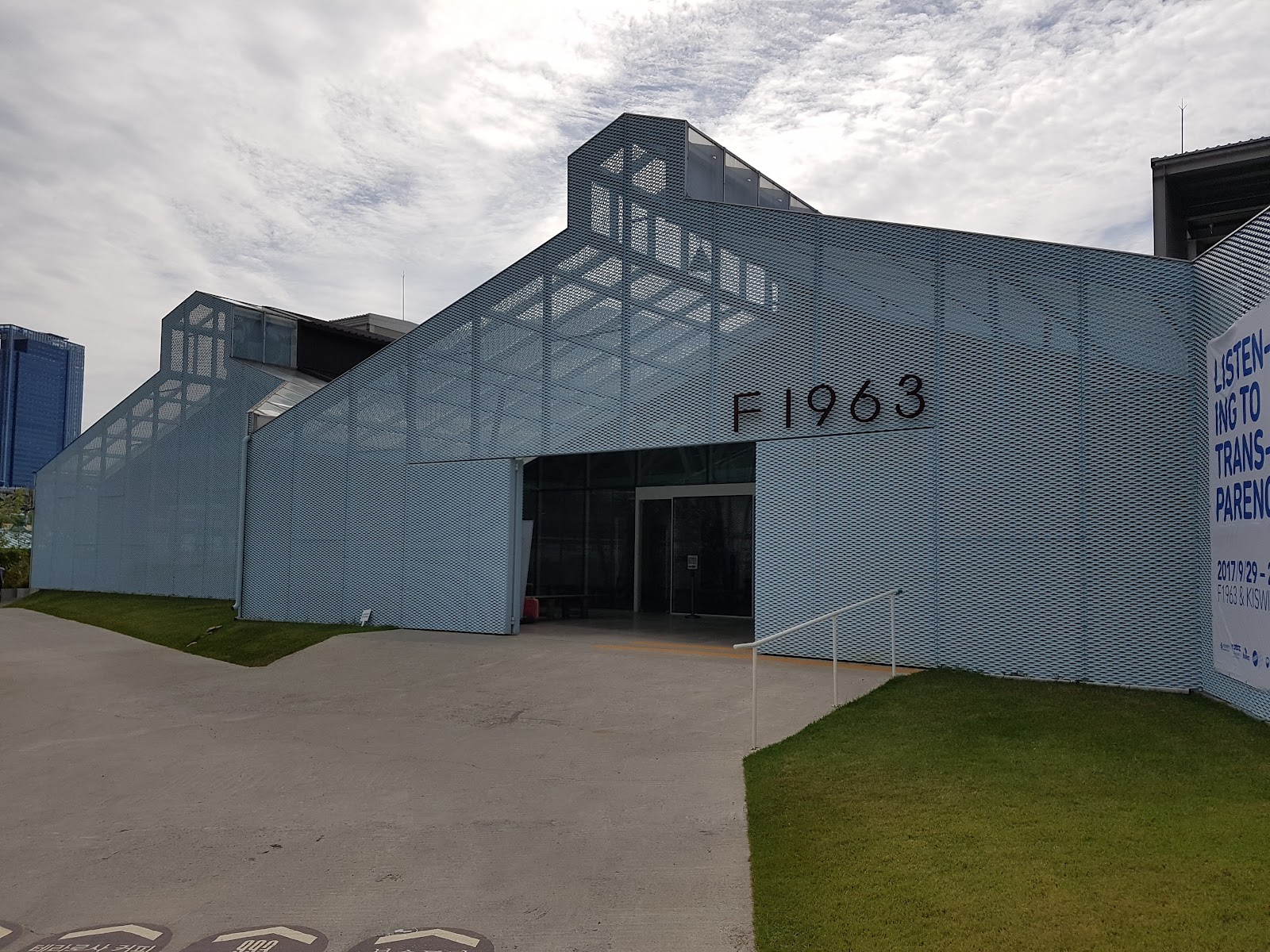
The old Kiswire factory land next door is now F1963, and that is what turns a small museum into a half-day. Visitors here mention Terarosa, one of Korea’s better coffee roasters, in a space that used to be industrial. It is a good coffee, in a very good room.
There is also a brewery on the site, Praha 993, which reviewers describe eating full meals at rather than just drinking: chicken wings and chips, tandoori chicken, vegan Mexican-style balls. Nobody comes to Busan for tandoori. But after a factory museum and a terrace, a cold beer under old steel beams is a very easy yes.
That combination is the actual pitch for this trip. Free museum, serious coffee, brewery, all on one former rope factory, all within walking distance of each other. Almost nobody plans for it.
Suyeong-gu rewards a bit more walking too. If you want a shop that is open when everything else in Busan is closed, see Breeze Archive, Suyeong: Open Every Day Until Seven. For lunch nearby that does not need a booking, there is Anmok in Suyeong, and for a bakery worth a detour, Delibong in Busan: The Ham Takes Months.
⏱ A Half Day That Actually Works
- 09:30 Call to confirm the main hall and terrace are open
- 10:30 Taxi or Line 2 from Gwangalli, arrive at 63 Gurak-ro 141beon-gil
- 10:45 Terrace first, then the exhibits with the phone audio guide
- 11:45 Walk over to the F1963 side
- 12:00 Coffee at Terarosa, or straight to lunch at the brewery
- 13:30 Back toward Gwangalli, or a Suyeong shop and bakery loop
- Evening Gwangalli bridge lights, ten minutes away by taxi
Morning beats afternoon here. The building closes at 17:00, the locked-door reports cluster in the afternoon, and an early visit leaves the whole evening free. If the light is what you care about, pair it with Busan After Dark: Where the City Actually Looks Good.
👟 Practical Notes
- Cost: free. Bring a card anyway for coffee and lunch next door
- Time needed: 40 to 60 minutes inside, three hours for the whole site
- Booking: walk-in visitors have not been turned away during posted hours
- Phone: 051-760-2604, worth using before you travel across town
- Bring: headphones, phone battery, and patience for the gate
- Skip if: it is Sunday or Monday. The building is shut, full stop
- Rain plan: this plus F1963 is one of the better wet-weather pairings in east Busan
For opening days across other Busan attractions on the same trip, the city tourism site is the least wrong source: visitbusan.net.
❓ Short Answers
Is Goryeo Jegang Memorial Hall free?
Yes. Visitors report walking in at no charge during posted hours.
What are the opening hours?
Tuesday to Saturday, 9:00 to 17:00. Closed Sunday and Monday.
Do I need to book?
No booking has been needed for walk-in visits. Calling 051-760-2604 on the day is still smart, because sections are sometimes locked.
Is there an English audio guide?
There is an audio guide that runs on your own phone, and non-Korean-speaking visitors have used it. Bring headphones.
How long does a visit take?
Around 40 to 60 minutes for the building. Budget two to three hours if you add coffee and a meal on the F1963 side.
Is it worth the trip on its own?
On a two-day Busan trip, no. As part of a Suyeong and F1963 morning, or as a rain plan, yes.
Is it good for kids?
Machine-minded kids do fine with the mock-ups. It is quiet, indoors, and free, which covers a lot of parenting problems.
Why does Google call it KISWIRE Museum?
Kiswire is the company’s export brand. Korean signage and maps use Goryeo Jegang Memorial Hall. One building.
📝 The Short Version
- Free company museum about steel wire rope, in Suyeong-gu, Busan. 4.2 from 59 reviews
- Open Tuesday to Saturday 9:00 to 17:00. Closed Sunday and Monday. Arrive by 16:00
- Address to type into a map app: 63 Gurak-ro 141beon-gil, Suyeong-gu. Line 2 plus a flat walk, or a short taxi from Gwangalli
- Call 051-760-2604 the same morning. The main hall and the terrace have both been found locked during open hours
- Terrace view first, exhibits second. Mock-ups and the architecture are the strongest parts
- Audio guide runs on your phone, so bring headphones and battery
- Security may stop you at the entrance. Say 기념관 and point
- Pair it with the F1963 side next door: Terarosa coffee and the Praha 993 brewery