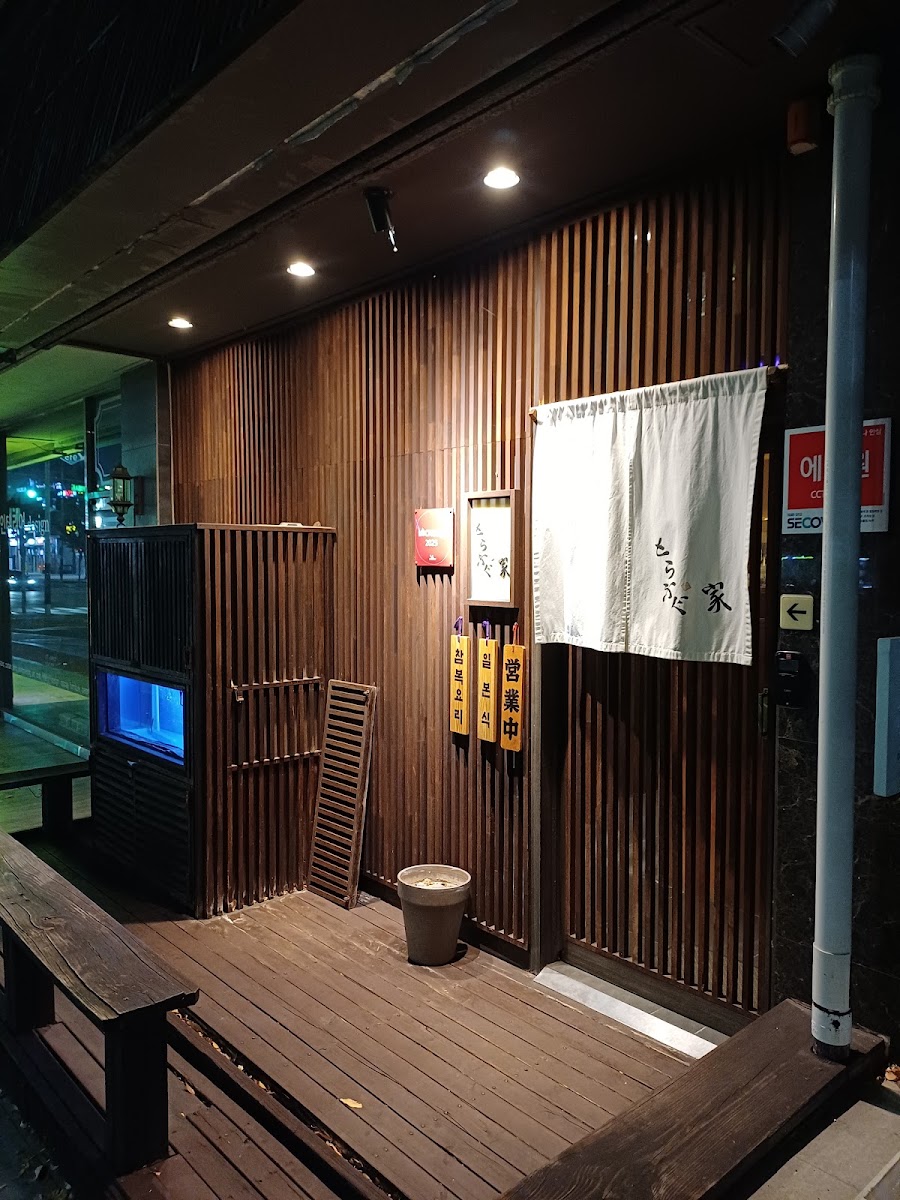
Torahuguga is a pufferfish restaurant in Jwa-dong, the inland part of Haeundae, and the single most useful fact about it is the clock. Dinner only. 6:00 PM to 10:30 PM, Monday through Saturday. Closed Sunday. If your Busan trip has one free evening and it lands on a Sunday, this place is not on your list, and no amount of planning changes that.
The second fact: Google files it in its highest price band, VERY_EXPENSIVE, and its rating sits at 4.6 from 17 reviews. Seventeen is a small number. It means the room is small and the turnover is slow, and it means the people who do write reviews are people who cared enough to finish a whole fugu course and then go home and type about the fried plate. A place with a thousand reviews tells you about crowds. A place with seventeen tells you what the meal did to the few who sat through it, which is a narrower signal and, for a booking decision, a more honest one.
🐡 What the Torahuguga Busan pufferfish course actually is
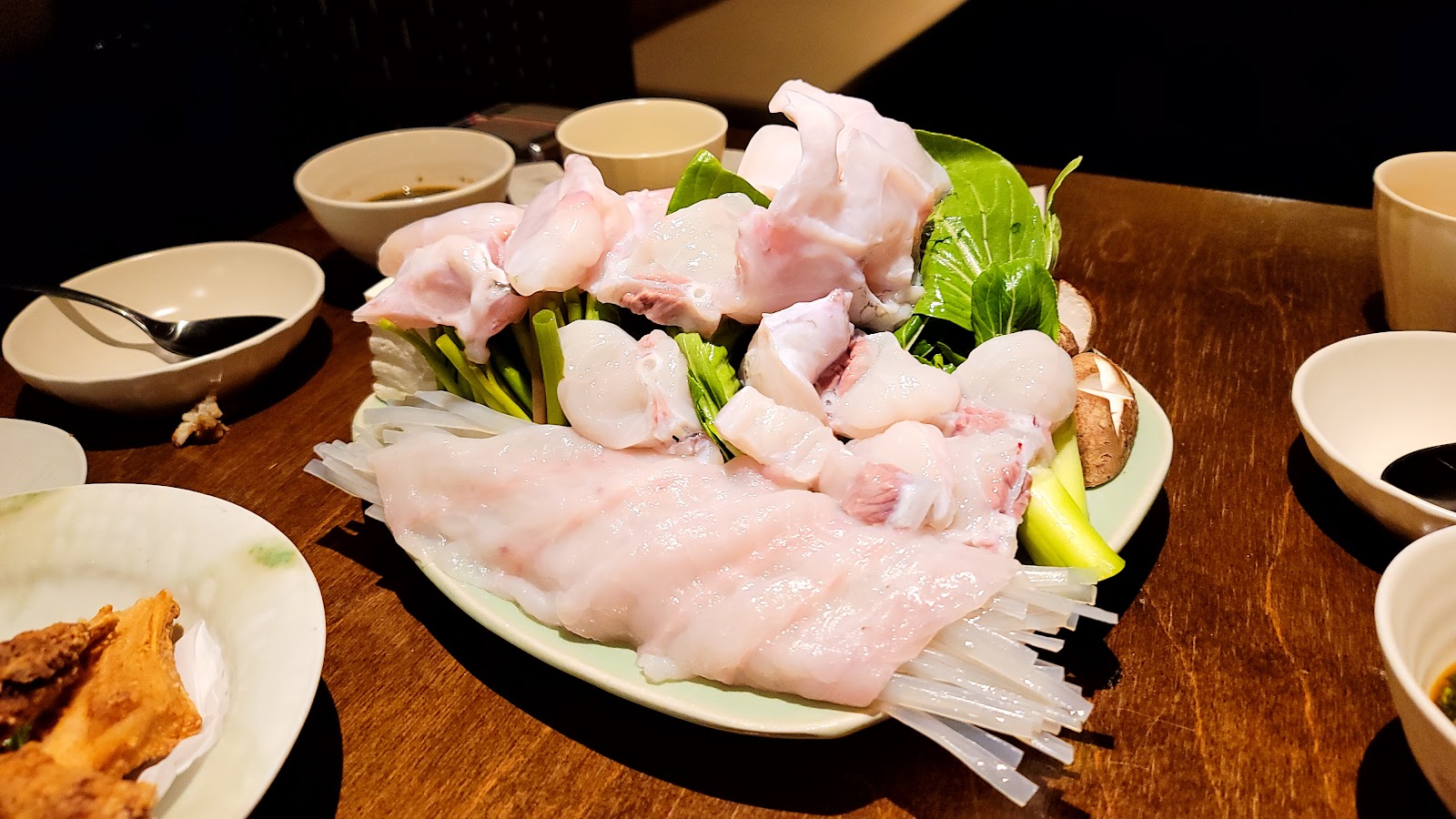
Fugu, or bok (복) in Korean, is not served as one dish. It arrives as a sequence, and one fish gets taken apart into several completely different textures across the meal. Diners here describe a full menu that runs the fish through style after style, each one handled properly rather than one signature plate padded out with filler.
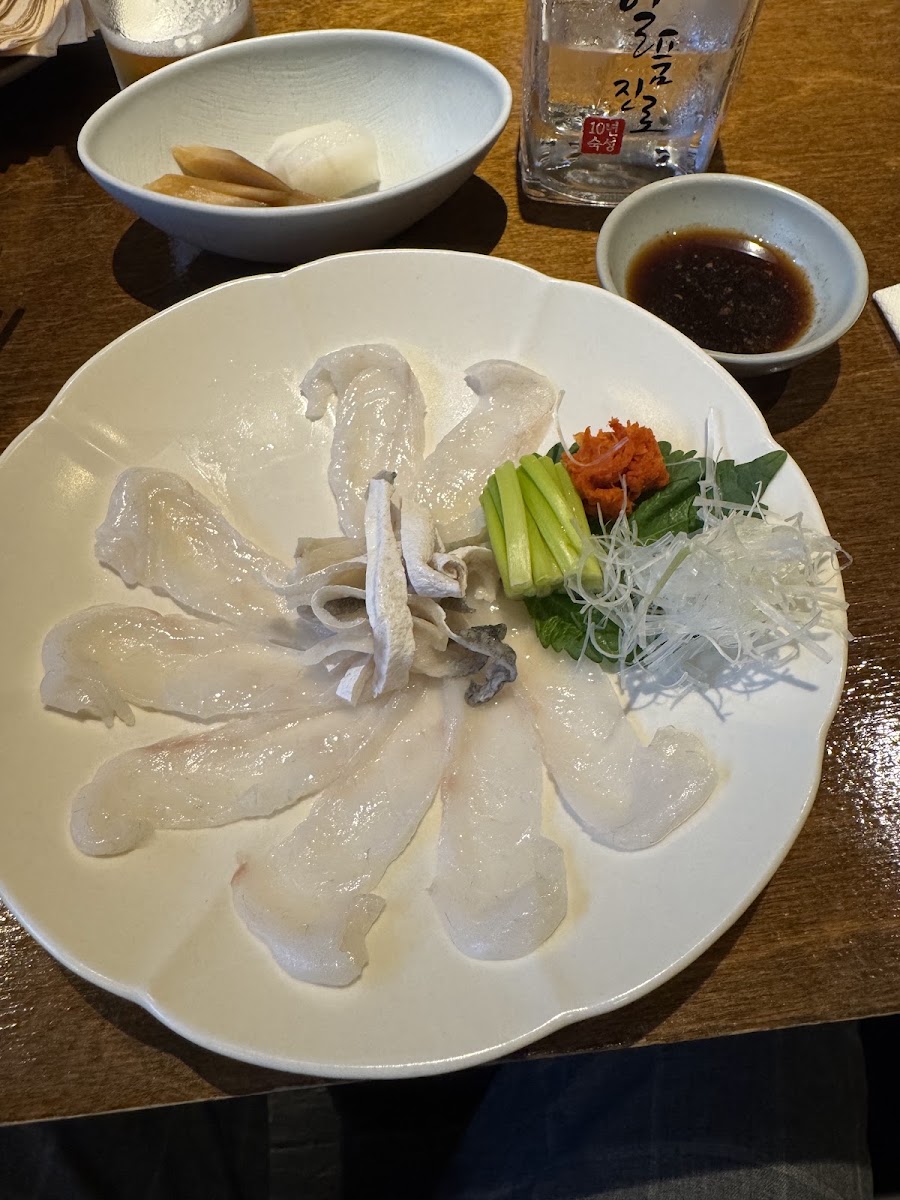
The thing people keep circling back to is the fried course. Multiple reviewers name it as the best part of the night, above the raw plates. That surprises first-timers. Pufferfish sashimi is the famous version, sliced so thin you can read the plate through it, but the flesh is lean and firm and quietly flavored. Fry it and the same lean meat turns dense and savory. Heat concentrates what the raw slices only hint at, and the crust holds the juice in place long enough for you to notice it.
The other detail worth knowing: the condiments do a lot of work. Salt and acidity get tuned against each course so the dipping sauce lifts the fish instead of burying it. If you have eaten fugu somewhere flat and wondered what the fuss was about, this is the variable that was missing. Use the sauces lightly at first and taste one slice bare before you dip anything, so you know what the kitchen is adjusting toward.
Order everything the counter offers, then eat the fried plate last while it is still too hot. That is the one people fly back for.
🕕 The hours, in a table, because they decide your week
| Day | Hours |
|---|---|
| Monday | 6:00 – 10:30 PM |
| Tuesday | 6:00 – 10:30 PM |
| Wednesday | 6:00 – 10:30 PM |
| Thursday | 6:00 – 10:30 PM |
| Friday | 6:00 – 10:30 PM |
| Saturday | 6:00 – 10:30 PM |
| Sunday | Closed |
No lunch. Not on weekends either. A four-and-a-half hour window, six days a week, is the entire operating life of this restaurant, and a multi-course fugu dinner eats two hours of it comfortably. Arriving at 9:40 PM and expecting the full sequence is optimistic. Aim for the 6:00 or 6:30 end if you want the kitchen unhurried.
Plan the rest of the evening around finishing late. Haeundae’s night trains stop earlier than most visitors assume, and you can check current first and last train times on the Busan Metro site before you commit to getting home by subway. A taxi back to a beach hotel is a short ride regardless.
📍 Jwa-dong is not the beach, and that matters
The address is Jwadongsunhwan-ro 480, in the Geumho Eoullim commercial building, Haeundae-gu. Jwa-dong sits inland from Haeundae Beach, up behind the hotel strip, in a residential district where locals live rather than where tourists sleep. That is why you have probably never walked past it.
- Save the pin from Google Maps or search the same address in Naver Map before you leave your hotel.
- Show the driver the Korean address written out: 부산 해운대구 좌동순환로 480 금호어울림상가.
- Kakao T is the taxi app that actually works in Busan. A foreign card sometimes fails on it, in which case you pay the driver directly.
- Walking from the beach is possible and uphill. In August, do not.
Being in a commercial building also means the signage sits among other tenants, so give yourself a few extra minutes at the door rather than assuming a street-facing storefront. If you are still working out how the metro, buses and taxis fit together, our Busan transport guide covers buying the card first, which is the step most people skip and then regret at a bus door.
💰 What “very expensive” means before you sit down
No set prices are published in the listing, so treat any number you see quoted secondhand with suspicion and ask when you book. What is documented is the price band: the top one Google assigns, the same tier as Busan’s serious tasting counters.
Diners who have paid it make a consistent argument. Pufferfish is expensive as a raw ingredient anywhere in Korea, before anyone cooks it. Against that baseline, and against the quality of every course rather than just the headline plate, they read the set menu as fair. That is a different sentence from “cheap.” Nobody is calling it cheap.
The context that keeps coming up in reviews is hosting. This is where people take a guest they want to impress, a client, a parent visiting from abroad. If that is your evening, the price does a job. If you are on a backpacker budget and just curious about pufferfish, spend the money on two nights of good Busan food instead.
🍶 Hiresake, and the part of the meal nobody photographs
Hiresake is hot sake poured over a toasted pufferfish fin. The fin steeps in the cup, the sake picks up something smoky and marine, and you drink it while the fried course arrives. Regulars here rate the version at this restaurant highly, which is a specific compliment because a bad hiresake tastes like fish water. Let it sit a moment before the first sip; the fin needs time in the cup to give anything up.
The clear pufferfish hot pot, jiri (지리) in Korean, is the other thing to leave stomach room for. It is a pale broth with almost nothing in it, and it is the course that separates a real fugu kitchen from a place that bought fish and hoped. Deep without being heavy. That is the whole trick. There is nowhere to hide in a broth that clear, which is exactly why it is worth ordering.
One reassurance for nervous first-timers: in Korea, cooking pufferfish requires its own national license, separate from a general cooking qualification. Restaurants that serve it are not improvising. You are eating something regulated at the level of the person holding the knife.
🪑 The room: quiet, small, and Japanese in temperament
Expect calm. Reviewers use the word quiet more than any other, along with cozy and clean, and describe an interior that is plain on purpose. No music fighting you. No group of twelve at the next table. Service reads as friendly and professional at the same time, which is harder than it sounds.
This is a room where conversation happens at normal volume and the food gets the attention. It also means you should not roll in from the beach in swimwear and flip-flops. Nobody will stop you at the door. You will simply feel it.
- Two people: the natural configuration. Most of the reviews read like couples or a pair of colleagues.
- Solo: workable if you book ahead and take an early slot, though a full course for one is a lot of food and a lot of money.
- Groups: ask when reserving. Small rooms have small limits.
- Children: a two-hour tasting menu of raw and fried pufferfish is a difficult sell to a seven-year-old.
📵 Booking when there is no phone number listed
The listing carries no public phone number. For a restaurant this size with a four-and-a-half hour service window, walking in on a Friday and hoping is a bad plan. Work around it in this order.
- Ask your hotel front desk to call. In Haeundae this is a routine request and staff do it daily. Give them the restaurant name in Korean and the date.
- Check Naver Map for the venue, which is where Korean restaurants keep their live contact and booking details.
- Go on a Monday or Tuesday if your dates allow. Weeknight demand is a different animal from Saturday.
- Have a second option in the same neighborhood in case the answer is no.
When the desk calls, have them confirm the party size and the arrival time in the same sentence, since both matter in a room with few tables and one long sequence to run. If you are stacking counter dinners across a trip, Mori in Haeundae is the sushi omakase you book before the flight, and it books out further ahead than this one. Different fish, same category of evening.
🗓️ How the evening fits together
A dinner-only restaurant in an inland neighborhood shapes the whole day around it. Here is a shape that works without a car.
| Time | Where |
|---|---|
| 3:00 PM | Haeundae Beach or Dongbaekseom coastal walk. Light lunch only. |
| 5:00 PM | Back to the hotel, shower, change out of beach clothes. |
| 5:45 PM | Taxi to Jwa-dong. Short ride from the beach hotels. |
| 6:00 PM | Seated. Full course, unhurried, roughly two hours. |
| 8:30 PM | Taxi to Gwangalli or the Haeundae Blueline area for the night view. |
The eat-light-at-lunch rule is not optional. A multi-course fugu dinner starting at six is defeated by a 1:00 PM pork soup. If the beach part of your day needs planning, our Haeundae Beach guide covers when the sand is actually pleasant, and Busan After Dark handles where to go once you are full.
❓ Short answers
Is Torahuguga open for lunch?
No. Dinner only, 6:00 PM to 10:30 PM, six days a week.
What day is it closed?
Sunday. Every Sunday. Build your itinerary around that before anything else.
Do I need a reservation?
Treat it as yes. The room is small and the service window is under five hours. No phone number is published, so have your hotel call or check Naver Map.
Is pufferfish safe to eat in Korea?
Preparing it legally requires a dedicated national license held by the cook. Restaurants serving it are working inside that system.
How much does it cost?
No prices are published. The listing sits in the top price band. Ask when you reserve so the bill holds no surprises.
What should I order?
The full course. The fried plate is the one people remember, the clear jiri broth is the one that proves the kitchen, and hiresake belongs alongside both.
Can I walk there from Haeundae Beach?
Physically yes, comfortably no. Jwa-dong is inland and uphill. Take a taxi with the Korean address on your phone screen.
Will English work?
Foreign diners report warm, professional service and no trouble getting through a meal. Point at what you want, say the course name, and the staff will carry the rest. A set sequence helps here, since most of the ordering decisions are already made for you.
📌 The short version
- Hours: 6:00 – 10:30 PM, Monday to Saturday. Closed Sunday. No lunch, ever.
- Where: Jwadongsunhwan-ro 480, Geumho Eoullim building, Jwa-dong, Haeundae-gu. Inland, not beachfront.
- Rating: 4.6 from 17 reviews. Small sample, small room.
- Price: top band, no published set prices. Ask at booking.
- Book ahead. No listed phone number, so use your hotel desk or Naver Map.
- Eat light at lunch. A full fugu course starting at six needs an empty stomach.
- Order the fried course and the hiresake. Those are the two things reviewers come back for.
- Arrive early in the window if you want the sequence served at its proper pace.