If you searched eddeum irori yakiniku haeundae expecting Korean beef and lettuce leaves, adjust now. The grill here runs on fish. It sits on the second floor of a building on Gunam-ro, the street that carries everybody from Haeundae Station down to the sand, and it serves a set course built around an irori, the sunken Japanese charcoal hearth. Google lists it as Eutteum Iroribata (으뜸 이로리바타), which is the name you should type into a map app.
Short version for people deciding tonight: 4.7 stars across 61 reviews, one seating that starts at 6:30 PM on weekdays and 5:30 PM on Friday and Saturday, closed Sunday, and diners report the course landing around ₩100,000 a head. Reserve. Walking in cold on a Friday in Haeundae is optimism, not planning.
🔥 What “eddeum irori yakiniku haeundae” actually gets you
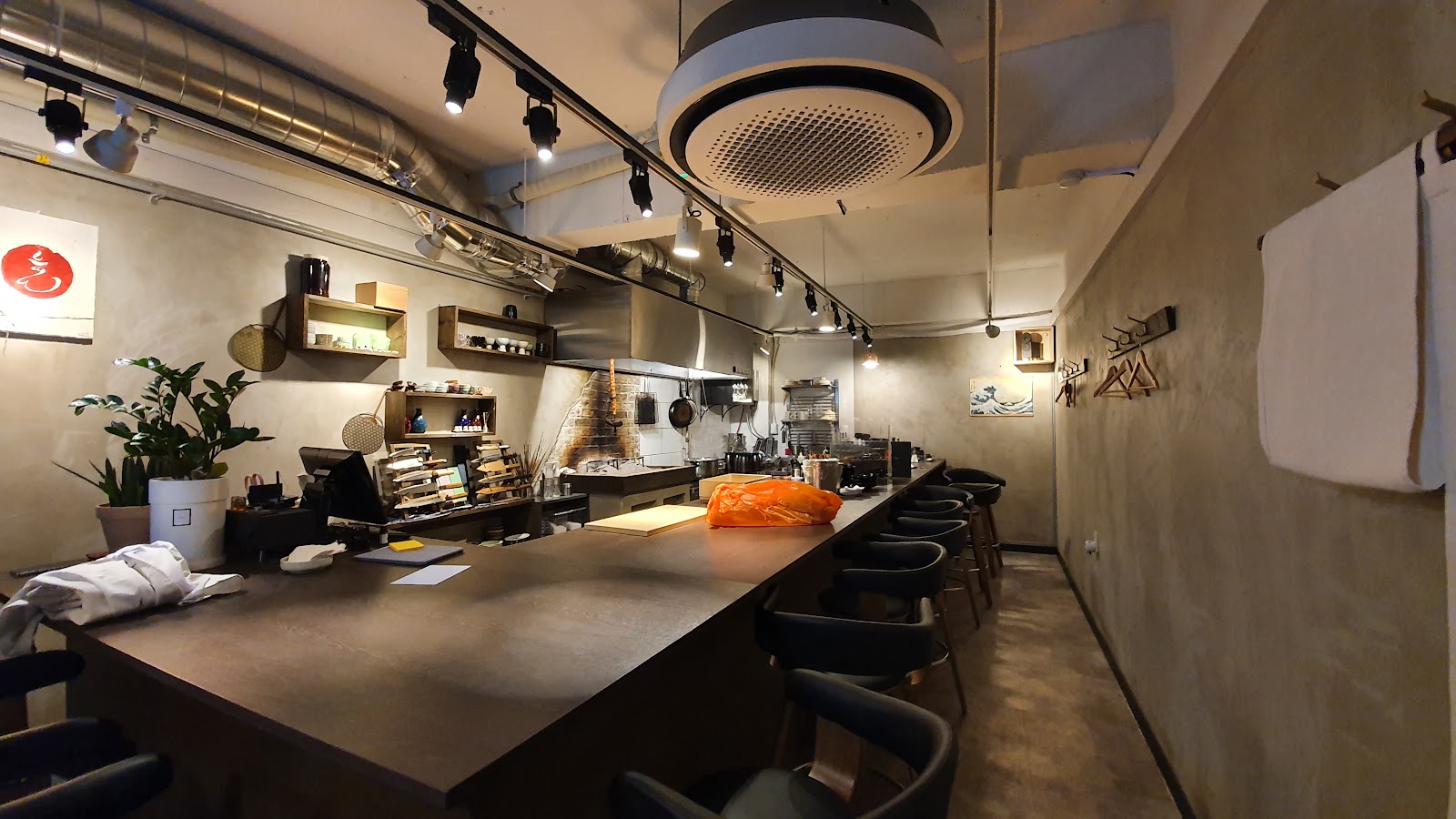
The romanization is a mess, and that’s why the search phrase floats around in three spellings. Eddeum, Eutteum, 으뜸. All the same room. The second half of the name is the useful part: irori (囲炉裏) is the open charcoal hearth of an old Japanese farmhouse, and bata comes from robatayaki, the style where the cook grills in front of you and hands the food across.
So the format is a seafood course, cooked over live coals, a metre from your face. Reviewers who have eaten their way around Busan describe it as the only grilled-fish omakase they’ve found in the city. That’s a strong claim in a port town with a fish market the size of Jagalchi, and after a night here it’s easy to see why nobody else bothers. The labour is absurd.
What you are paying for is a chef standing over coals for three hours, turning things by hand, for maybe a dozen seats. No conveyor. No kitchen you can’t see.
🐟 The hearth, and what it does to a fish
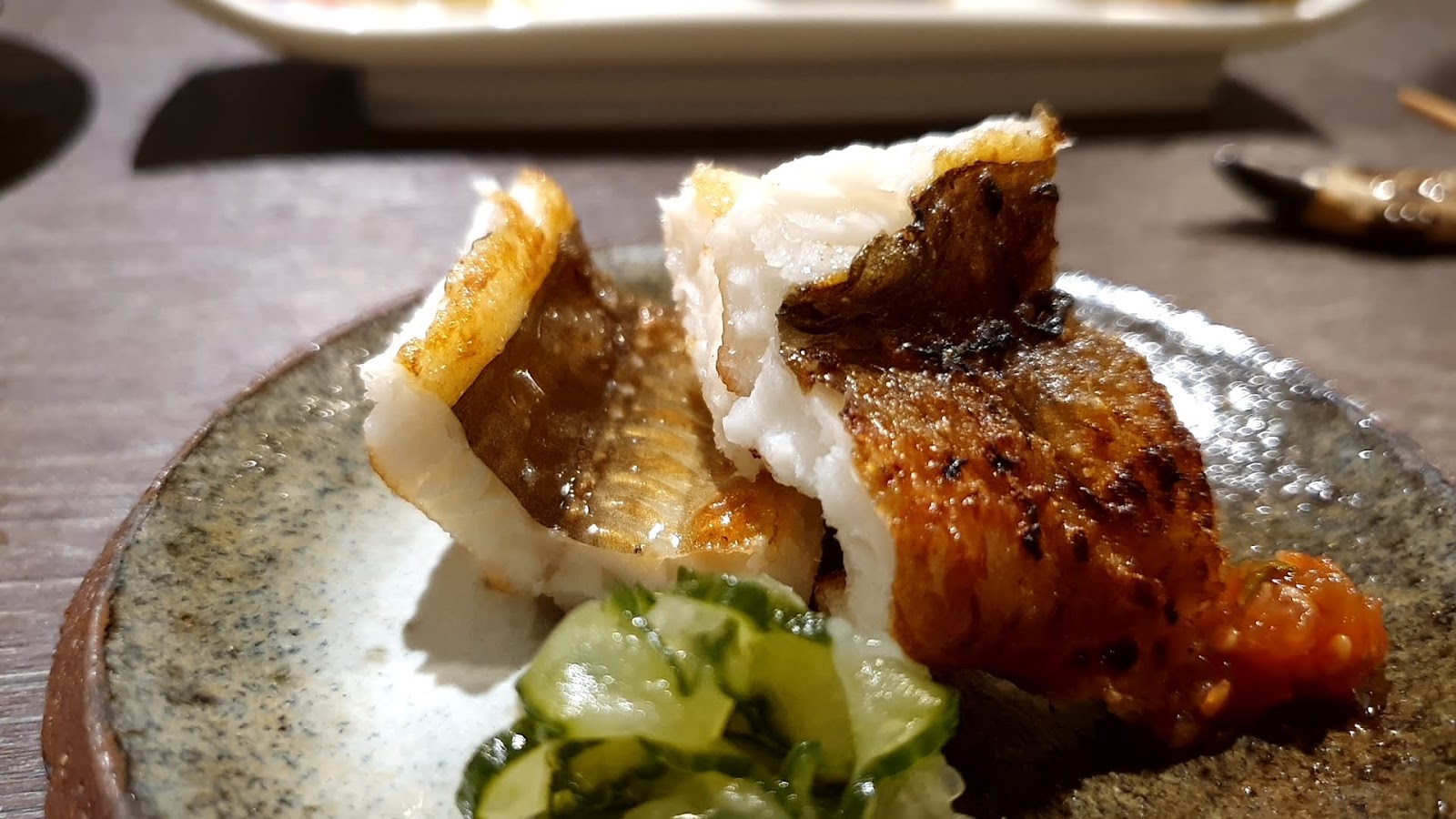
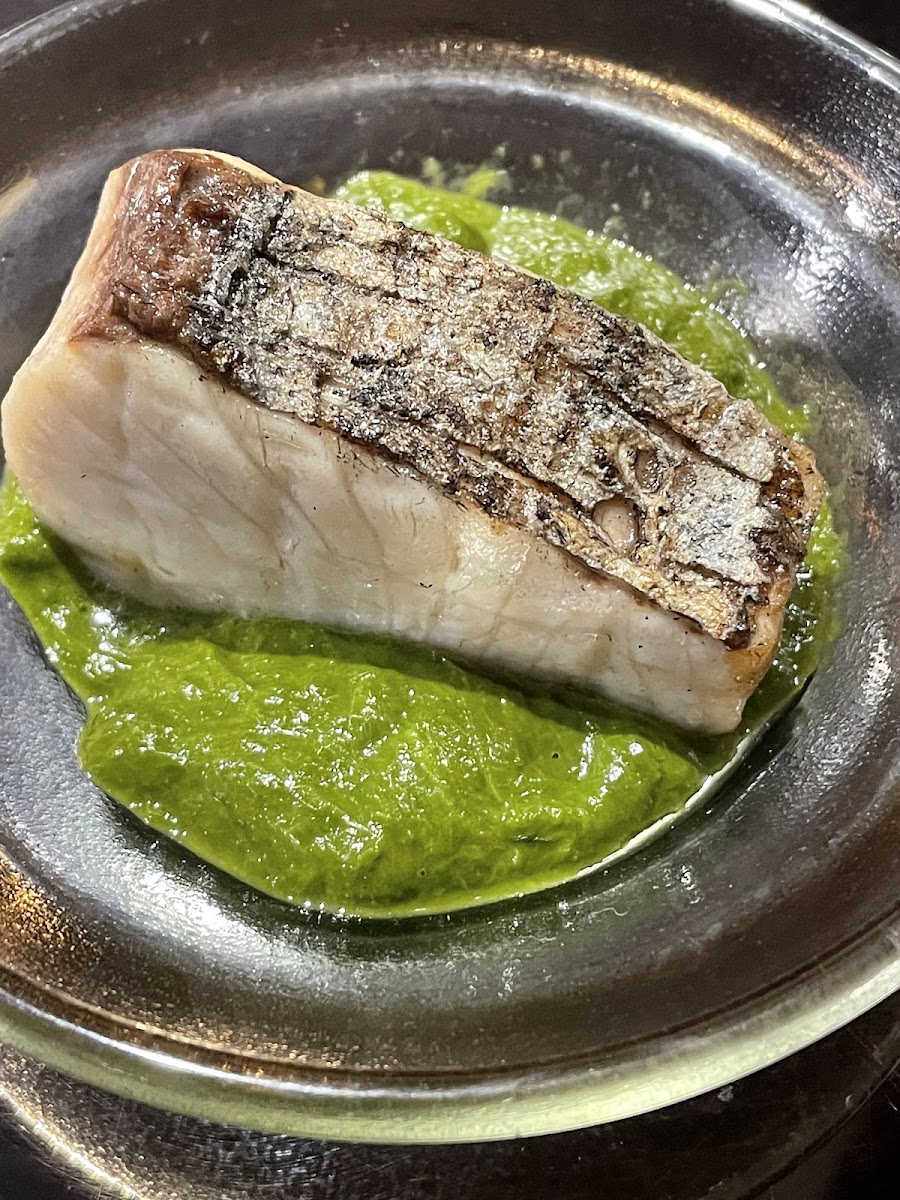
Charcoal is not a gimmick here, it’s the whole argument. Fish cooked over coals loses water from the skin fast while the flesh underneath stays where it is. You get skin that cracks and flesh that hasn’t tightened into cotton. A pan cannot do this. A gas grill gets close and still misses.
Guests consistently single out the grilled fish as the thing that lands. Sashimi appears in the course too and holds its own, but the grill is the reason the place exists. Watch the chef’s hands rather than your phone for the first twenty minutes. He moves pieces between hot and cool zones of the hearth constantly, which is the part that separates this from a restaurant that simply owns some charcoal.
Sit, don’t talk for the first course, and eat each piece the moment it reaches you. Anything off a hearth is at its best for about ninety seconds. Photograph it after the first bite, not before.
🍶 What shows up on the counter
The course is set, so there is no menu decision to agonise over. Based on what diners have posted, the arc runs roughly like this:
- Small cold openers. One that comes up repeatedly is boiled octopus dressed with tiny beads that read like caviar on the tongue.
- Sashimi, cut to order.
- The grilled run. Fish over the irori, several rounds, the heart of the evening.
- A rice or soup course to close, in the Japanese sequence.
Exact items shift with what came in that day, which is the correct way to run a place like this and also the reason nobody publishes a fixed list. If you have an allergy or you genuinely cannot eat something, say so when you book, not when you sit down.
💴 The price, and whether it’s worth your evening
Google files this under its most expensive bracket. Diners report the course at roughly ₩100,000 per person, and the ones who paid it call it fair. That’s the useful signal. Plenty of Busan restaurants charge six figures and leave people writing careful, polite reviews. This one leaves people writing “best meal in Busan.”
Set your expectations against what ₩100,000 buys elsewhere in Korea. It is roughly one mid-tier Seoul sushi omakase, or four excellent Busan seafood dinners at a market stall. If your trip has room for exactly one splurge dinner and you like fish more than beef, this is a defensible place to spend it.
Drinks are extra. Cold draft beer is the standard opener people describe, and it works better against charcoal smoke than you’d guess.
📞 Booking, which is the part that trips foreigners up
The room is small and the course starts on the clock. Both facts mean the same thing: book ahead. The phone number is 051-743-1020.
The chef does not speak much English. Calling in English is a coin flip. Some workarounds that actually function in Korea:
- Ask your hotel front desk to call. Haeundae hotels do this ten times a day and will not think it strange.
- Have a Korean-speaking friend send a text (문자) with date, time and number of people. Korean restaurants often answer texts faster than calls.
- If you’re already in Korea with a local SIM, Naver Map sometimes carries a booking button for restaurants that use it. Check the listing before you dial.
- Give a phone number they can reach. A no-contact booking at a twelve-seat counter is a cancelled booking.
Turn up on time. The course begins when it begins, and arriving twenty minutes late at a hearth restaurant means eating the second half of somebody else’s rhythm.
🚇 Getting there without wandering Gunam-ro twice
Address: 부산광역시 해운대구 구남로 21, second floor. Screenshot that. Gunam-ro is the wide pedestrian-friendly spine running from Haeundae Station down to Haeundae Beach, lined with fried chicken, coffee and convenience stores, and the building numbers climb as you approach the sand.
From Haeundae Station on Metro Line 2, come out on the beach side and walk down Gunam-ro. It’s a few minutes on foot, not a taxi distance. The restaurant is upstairs, so look up. Second-floor restaurants in Korea advertise with a vertical sign on the building face, and if you only scan shopfront level you will pass it. Twice, probably.
Use Naver Map or Kakao Map, not Google Maps, for walking directions in Korea. Google’s Korean walking data is restricted and the routes it draws are frequently worse than the ones your legs would pick. For the wider question of cards, fares and transfers, see Buy the Card First: Getting Around Busan. Line 2’s last-train times are on Busan Transportation Corporation if you’re cutting it fine.
🕕 Hours, and the two that matter
| Day | Hours |
|---|---|
| Monday | 6:30 – 10:00 PM |
| Tuesday | 6:30 – 10:00 PM |
| Wednesday | 6:30 – 10:00 PM |
| Thursday | 6:30 – 10:00 PM |
| Friday | 5:30 – 10:00 PM |
| Saturday | 5:30 – 10:00 PM |
| Sunday | Closed |
Two things to burn into your itinerary. Sunday is closed, and a lot of short Busan trips are Friday to Sunday, so the window is tighter than it looks. And there is no lunch. Nothing happens here before 5:30 PM, ever.
The weekend hour is earlier, which is quietly the best news in this article. A 5:30 PM Saturday seating means you finish around 8 PM with the whole evening still ahead of you.
🗣️ The language situation, honestly
English is limited. Foreign diners have still had a good time, and the recurring note is that the chef is engaging company even across a language gap. Cooking in front of someone is its own conversation.
Practical moves: download the Papago app before you go, since it handles Korean far better than the alternatives. Learn three phrases and you’ll cover most of the evening.
- 마시써요 (ma-si-sseo-yo) — delicious. Deploy freely.
- 이거 뭐예요? (i-geo mwo-ye-yo) — what is this? You’ll want it.
- 맥주 한 잔 더요 (maek-ju han jan deo-yo) — one more beer.
Pointing at the hearth and looking curious does most of the rest.
⚠️ Who should skip this
Not everybody should book. Some straight answers:
- You don’t eat fish. There is no rescue dish here. Go get Korean barbecue.
- You’re travelling with small kids. A quiet counter, live coals and a two-hour course is a hard evening for a four-year-old and everyone sitting near them.
- You want volume. A course is calibrated portions in sequence. You will leave satisfied and not stuffed.
- You booked a late flight. A 6:30 PM start ending near 9 PM leaves less airport buffer than you think.
- You need a firm budget. Drinks stack on top of a six-figure course quickly.
Everybody else: it is one of the better ways to spend three hours in Haeundae.
🌙 Building an evening around it
Dinner at 6:30 PM anchors the night, so plan backwards from it. A workable Haeundae day: beach and coastline in the afternoon, back to the hotel by 5 PM to shower off the salt, dinner at 6:30, then out again. Salt and charcoal do not mix well on the same shirt.
For the afternoon half, Sky Capsule at Cheongsapo runs from the same side of town and eats about two hours once you factor in the queue. If you’d rather stay on the sand, Haeundae Beach covers where to actually sit when the crowds arrive.
Afterwards, you’re a short taxi from Gwangalli. Finishing dinner by 9 PM on a Saturday puts you in reach of the drone show, which is free and worth the ride. See Gwangalli Drone Show for the schedule and where to stand.
👔 Small practical notes
- Dress: smart casual. Beachwear reads badly at a quiet counter. No jacket required.
- Smell: charcoal is charcoal. Your clothes will carry it home. Don’t wear the coat you plan to fly in tomorrow.
- Time budget: block two to two and a half hours. Courses do not rush.
- Payment: Korean restaurants at this level take cards as standard. Bring a backup card anyway, since foreign cards occasionally get refused by older terminals.
- Group size: counters suit two. Larger parties should mention the number when booking rather than assuming.
❓ Short answers
Is Eddeum Irori Yakiniku actually yakiniku?
The cooking is charcoal-grilled seafood in the robatayaki style, over an irori hearth. Come for fish.
Do I need a reservation?
Treat it as required. Small room, fixed start time, one seating. Call 051-743-1020 or have your hotel do it.
How much is it?
Diners report around ₩100,000 per person for the course, with drinks on top. Google rates it in the highest price bracket.
Is it open for lunch?
No. Weekdays start at 6:30 PM, Friday and Saturday at 5:30 PM, and Sunday is closed.
Does anyone speak English?
Limited English. Foreign guests have enjoyed themselves regardless. Bring Papago and a willingness to point.
Where exactly is it?
Gunam-ro 21, Haeundae-gu, second floor, a few minutes’ walk from Haeundae Station toward the beach. Search 으뜸 이로리바타 in Naver Map.
Is it good for a special occasion?
Yes. Quiet room, attentive service, food that arrives one piece at a time. It reads as an occasion without any effort from you.
📌 The whole thing in seven lines
- Grilled-fish course over a Japanese charcoal hearth, second floor, Gunam-ro 21, Haeundae.
- 4.7 stars, 61 reviews, and a repeated claim that it’s the only grilled-fish omakase in Busan.
- Around ₩100,000 per person by diner reports, drinks extra.
- Mon–Thu from 6:30 PM, Fri–Sat from 5:30 PM, closed Sunday, no lunch.
- Book ahead on 051-743-1020, or get your hotel desk to call. Give a contact number.
- Little English spoken. It has not stopped foreign diners from rating it highly.
- Weekend 5:30 PM seating finishes early enough to make the Gwangalli drone show afterwards.